
CASE STUDIES
LED Grow Light
What is growth lights
Grow light, also known as plant light is an artificial light source that stimulate plant growth by emitting an electromagnetic spectrum appropriate for photosynthesis. It provides a light spectrum either similar to that of the sunray, or a spectrum that is customized to the needs of the plants being cultivated.
They are commonly used for horticulture, indoor gardening, plant propagation and food production, including indoor hydroponics and aquatic plants. Whereas, outdoor plant lights are mimicked with various colour temperatures, spectral output and light intensity output (lumen) depending on the type of plant and its stage of cultivation.
How it works
Grow lights provide a light similar to sunray that its visible light spectrum could promote photosynthesis for indoor and outdoor plants throughout the vegetative and reproductive growth stages. In some cases, it may be customized to a specific spectrum to mimic varying color temperature and spectral outputs according to the needs of plants being cultivated.
The photoperiod required by the plants, specific ranges of spectrum, luminous efficacy and colour temperature are desirable for use with specific plants and time periods. Growth lights could be mimicked various colour temperatures and spectral outputs as well as lumen output (intensity) for plants during the stages of cultivation, which include the germination and vegetative phase or the flowering and fruiting phase.
The initial vegetative stage requires a blue spectrum of light, whereas the later "flowering" stage is usually promoted with red–orange spectra. Therefore, various light level may be specified by the horticulturist as the plants use the photosynthetically active portion of the visible light spectrum throughout both vegetative and reproductive growth stages are varied.
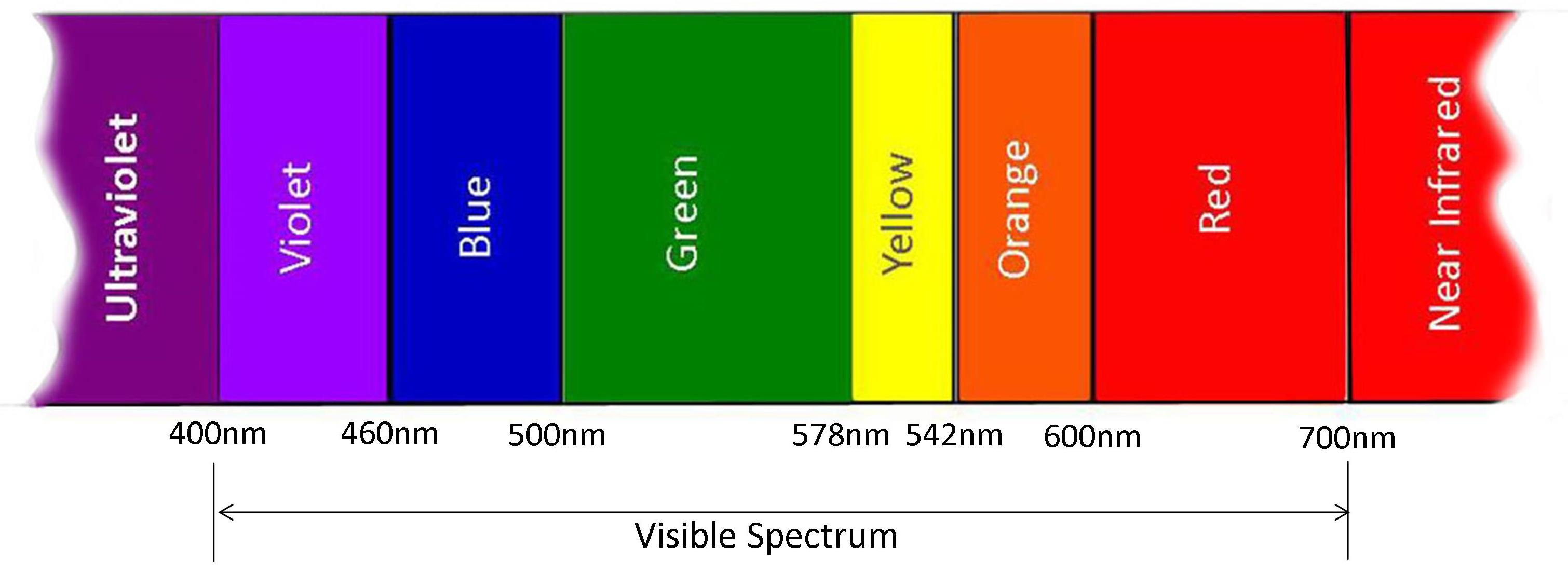
The lighting levels in a horticultural lighting system are quantified as amount of radiation in the wavelength range from 400 to 700 nm, or photosynthetically active radiation (PAR). It can be expressed in units of energy flux (W/m2) or photon flux (mol m−2s−1). It determines which lighting is most appropriate for optimum growth.
Artificial light must mimic the natural light to which the plant is best adapted. If a plant does not get enough light, it will not grow. In addition, many plants also require both dark and light periods (which is also known as photoperiodism) to trigger flowering. Therefore, lights may be turned on or off at set times. The optimum photo/dark period ratio depends on the species and variety of plant, as some prefer long days and short nights and others prefer the opposite or intermediate "day lengths".
The traditional growth lights
Traditional growth lights are mostly using bulbs, such as high intensity discharge lamp, fluorescent lamps. These light sources would essentially require ballasts to excite the lights with specific wavelength and produce a great deal of heat. Thus, they may not be generally corresponding to specific requirements of various vegetative stages of plants.
Metal halide lamps is characteristically yield blue spectrum and ultraviolet light. Blue spectrum light could trigger greater vegetative response thus suitable for vegetative and reproductive growth stages of plants.
High-pressure sodium lights are preferred supplement greenhouse light. It is highly efficient in producing blue light, which is naturally required by the plants grown in the greenhouse. However, it may not appear healthy by using HPS growth light due to its poor color rendering that causes the plants look pale, washed out or nitrogen starved.
HPS and MH combination lights being made as one of the solution attempted to provide a wide spectrum of a luminaire before LED growth lights being introduced as an alternative. It combines the red spectrum of high pressure sodium lamp and blue spectrum of metal halide lamp in a single lighting fixture. Theoretically, this may however promote photosynthesis for propagating and growing of the plants throughout the entire life cycle from vegetative growth through flowering.
Fluorescent lights are available in color temperatures ranging from 2700 K to 10,000 Kelvin. Tubular fluorescent lamps are usually used for indoor vegetables and herbs growing or for starting seedlings to get a jump start on spring plantings. Whereas, compact fluorescent lamps may be used for propagation as well as larger plants growing. It works in a specially designed reflector casting directly towards the plants similar to HID lamps.
NOVETE® LED grow lights
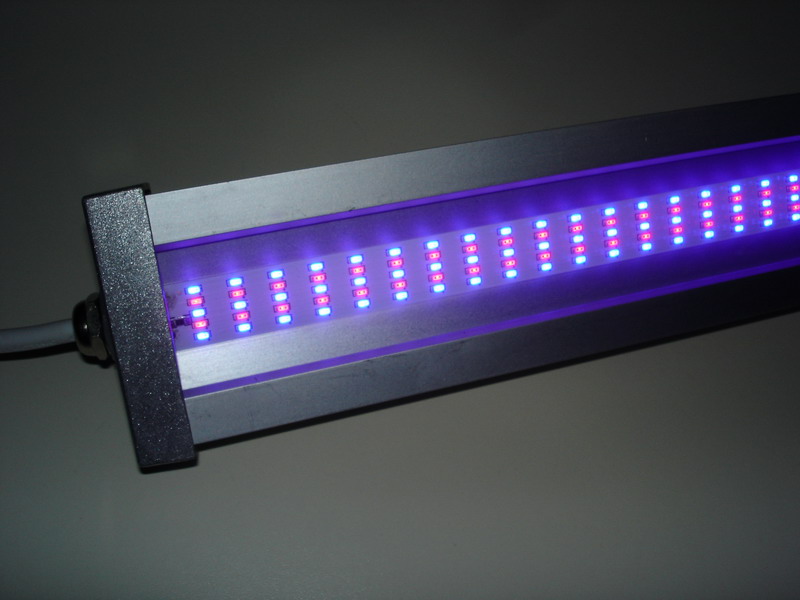
LED growth lights were introduced to the market as an alternative to the traditional growth during this decade attributed by the advancement of technology. The high color rendering LED grow light could provide a wide range of visible wavelength from 400 to 700nm. In term of relative intensity, the latest luminous efficacy had been developed as high as 126 lumen per watt. thus, it is in all respect compatible to fluorescent and high intensity discharge lamps.
Generally, LED grow light is operating at around 45 to 60 degrees celsius that surmounting the technical deficiency of HID lamps and fluorescent. Moreover, it could be featuring switchable, convertible and two-way functions for propagating and vegetatively growing plants growth.
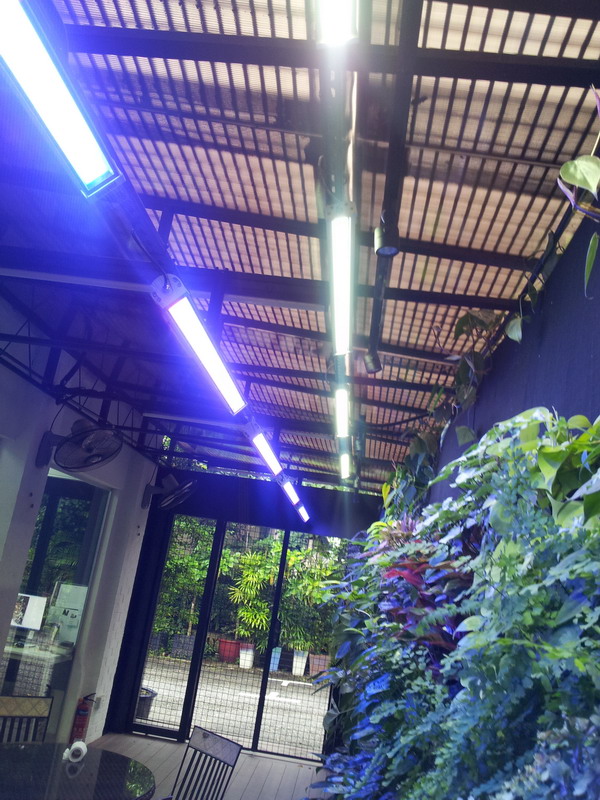
Picture on left exhibits one of the NOVETE® 6630-H series grow light in vegetative and reproductive growth stages of indoor plants. Light source of the luminaire is deep blue mixed with deep red SMD module complete with built-in driver.
NOVETE® 6630-H series is high intensity LED grow light designed in elongated shape with standard length of 0.6 and 1.0 meter. The sturdy body structure is made of high grade aluminum material anodized in silver color. The luminaire is IP65 compliant which is also resistance to dust and corrosion.
Light source is customized in accordance with horticulturist’s designated spectrum promoting the photosynthesis for plants throughout the vegetative and reproductive growth stages.
LED VS HID
High intensity LED luminaire
NOVETE® high intensity LED luminaire is an ideal alternative to traditional high intensity discharge lamp (HID) for effective saving of operation cost for commercial and industrial applications. In particular, the following characteristics are significant.
Construction
HID lamps are mostly constructed of internal arc tube enveloped by an outer bulb made of glass that operates under high pressure at the temperature of approximately 1100°C.
Unlike HID lamps, NOVETE® high intensity LED luminaire is uniquely designed to integrate with lighting fixture and the thermal management system as an all-in-one unit. It uses either high power LED chips or hybrid COB (chip-on-board) operates under operating temperature of not exceeding 70°C. Thus, it anticipates no risks of burn, fire or rupture as compare to HID lamps.
Luminous Efficacy
The electrical power (watts) convert into light (lumens) is measuring by LPW (lumen per watt). LPW is commonly referred to as key factor for evaluating the economy of lighting applications.
The LPW of NOVETE® high intensity luminaire is found very much higher than that of the traditional HID lamp. The collective LPW data of HID lamp exhibits in figure 1 may be of good reference for decision maker in the proposed LED replacement plan. Nevertheless, operating cost relates to electricity and maintenance could be substantially reduced by 60~75% if NOVETE® high intensity luminaire is adopted.
Life Span
The rated life of HID lamps as specified in most of the lighting catalogues are based on laboratory test under controlled conditions. In reality, its life span is mostly affected by the on/off cycle versus the total on time. Generally, if the burning cycles is shorter than 10 hours per start, its life could be shorten by 75% of rating according to physical application.
In the case of NOVETE® high intensity LED luminaire,, the rated life is proven stable attributed by its unique design of thermal management system. Under any operating conditions, the junction temperature would be sustainably maintained not exceeding 57°C irrespective of lighting cycles.
Color Rendering
The appealing of light source in visual clarity to various objects is represented by color rendering index (CRI). It is a relative measurement of a scale from 0 to 100 basing on rates of light sources. The higher CRI could render more vibrant colors appearance. For example, a source like a low-pressure sodium vapor lamp which is monochromatic, the CRI is nearly zero, but a source like an incandescent light bulb, it emits essentially black body radiation, it is nearly one hundred. Good CRI (70~80) could make an object looks more appealing whereas excellent CRI (>80) could increase visual clarity and create more pleasing and productive working environment.
Comparison
Ceramic Metal Halide
Quartz Metal Halide
Multi-Vapor Metal Halide
High Pressure Sodium
INDOOR BADMINTON COURT LIGHTINGS
Case Outline
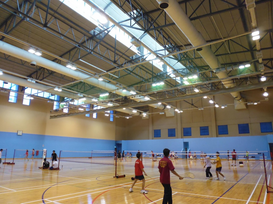
An indoor stadium with covered area of 870m2 was opened for public recreation and training since early 2000. The premises provides 162 units of 400W metal halide floodlights mounted on the structural beams at the height of 10 meters illuminating 6 standard badminton courts.
The stadium is operating 14 hours daily throughout the year with an occupancy rate of 75% or thereabout. The power consumption was estimated to an average of 310400kWh annually. Provision for cost of maintenance for replacement of light bulbs was budgeted for $20,000 to $25,000 per annum mainly covering the expenses for hiring of scaffolding and labours. The annual operation cost is therefore estimated for a total of not less than $100,000 or approximately $280.00 daily.
For the purposes of cost saving, we were invited to provide a scenario for transformation of the existing lighting system. Our task is to providing a solution for minimizing the operation cost by replacement of LED luminaire with rational capital outlay and quick payback.
Facts Finding
The following facts were found during the physical site survey:
- The atmospheric room temperature was maintained at the level of 25~26°C;
- Lighting fixtures are mainly fitted with 400W metal halide bulbs;
- The color temperature of light bulbs are cool white (3900~4000K);
- Light bulbs were generally replaced twice a years; The average luminous flux on floor level was 265 lux;
Solutions
162 units of 30W high intensity LED floodlight were recommended for replacement of the existing 400W metal halide fixture basing on the following criterions:
- Lightings classification: Compliances with Class III of EN12193-2007.
- Illumination on floor level: ≥400 lux (Eav); Uniformity: 0.5~0.6 (u0).
- Glaring index: UGR ≤25
- Lighting profile: Same as the existing lighting installation plan including mounting height.
- Correlated color temperature (CCT): 4000~4500K.
- Beam angle of luminaire: 30 degree.
- Color rendering: >80. Environmental impact: Not applicable as the stadium located within the premises of a sport complex is facilitated for training and recreation purposes.