Allen & Heath was in the vanguard of the first wave of great British mixer companies, starting life at the heart of London’s swinging music scene in 1969. In those early days Allen & Heath hand built mixers for the top bands of the era, including Genesis, Pink Floyd and The Who.
Fast forward to the second decade of the 21st Century and some the artists touring with Allen & Heath desks recently include Adele, Pete Tong, Frank Ocean and Rita Ora. Today’s Allen & Heath range is used and loved by bands, rental companies, installers, houses of worship, DJs, clubs, broadcasters and studios in virtually every country across the globe.
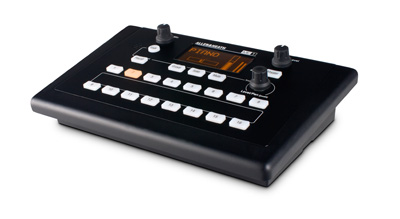
ME-1 is the cornerstone of the ME Personal Mixing System and is ready to use with the Allen & Heath iLive and GLD series digital mixers. ME-1 is complemented by the ME-U hub, which opens up the benefits of ME to users of other professional digital mixers via Dante, EtherSound or MADI. ME-1 also has an Aviom® compatibility mode for use with Aviom® Pro16® systems.
- Fully customisable
- Intuitive operation
- Compact, smart design
- 40 sources from GLD or iLive
- Compatible with MADI, Dante or EtherSound*
- Daisy chain or use standard PoE Ethernet hubs
- 16 assignable keys to suit application
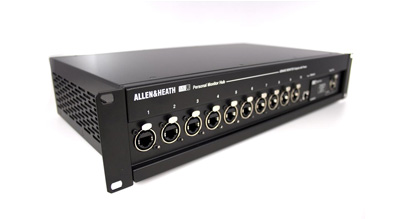
10 port PoE Monitor Hub for parallel connection of ME-1
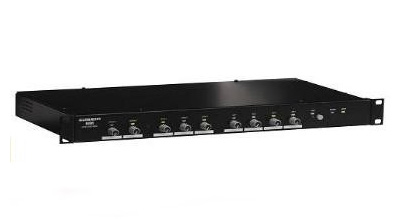
ME-U is a touring grade, 10 port PoE hub providing power and audio to connect multiple ME-1 personal mixers. It comes with a standard input card to interface with GLD dSnake, iLive ACE or Aviom® A-Net®, which can be replaced with a MADI, Dante or EtherSound card to take a digital feed of up to 40 sources from third party systems.
- 10 ports with locking Ethercon connectors
- Daisy chain for more outputs – up to 19 ME-1s with 2 hubs
- Each port provides power + 40 audio sources to connected ME-1s
- Touring grade build quality
- 2U rack or desk mounting
- Multi-purpose Network port:
- Connect PC or Mac for “Web Page” setup of unit name and IP address, and manual entry of channel names
- Connect iLive AH-Net network to pick up channel names automatically from an iLive system.
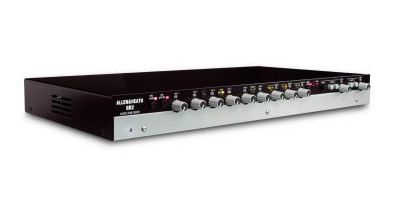
The GR2 is a 9-input, 4-output analogue zone mixer for sound installations requiring 6 mic/3 stereo line or 4 mic/4 stereo line to 1 stereo/1 mono zone and aux output. All settings are custom configurable from the front panel and are protected by a cover plate for day-to-day operation. Zone source selection, volume and more may be remotely controlled.
Specifications- 6 mic/line inputs with EQ
- 3 (or 4) stereo music inputs
- Paging and music priority override
- Mono and stereo zone outputs
- Mono aux output
- Remote control
- Configuration protection
GR05 is a 5-input, 4-output analogue zone mixer for sound installations requiring 2 mic and 3 stereo line to up to 4 mono or 2 stereo zones. Internal jumpers allow custom configuration protected for day-to-day operation by non-technical staff. Zone volume may be remotely controlled.
Ducking, EQ and muting can be configured. Further inputs and outputs are possible using the expander system.
GS05-ST version also available, with XLRs replaced by Euroblock (Phoenix) connectors.
GS-R24 combines refined analogue quality with a choice of analogue or Firewire / ADAT interface modules and MIDI control for your chosen Digital Audio Workstation or recording device. Designed to sit at the heart of a busy project studio, GS-R24 has the flexibility and audio excellence to enhance the impact of your recordings, whatever your workflow.
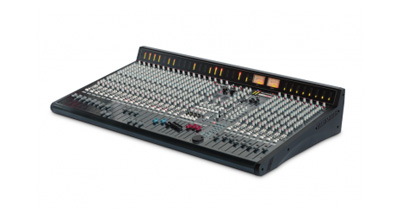
GS-R24 combines refined analogue quality with a choice of analogue or Firewire / ADAT interface modules and MIDI control for your chosen Digital Audio Workstation or recording device. Designed to sit at the heart of a busy project studio, GS-R24 has the flexibility and audio excellence to enhance the impact of your recordings, whatever your workflow.
The original concept for the GS-R24 was for a larger version of the ZED-R16 with similar routing philosophy, high quality preamps and EQ. Interaction with recording musicians and engineers has resulted in many new features being added a full width meterbridge for example, optional interface cards and more flexibility in workflow setup. The GS-R24 is the culmination of many things: exceptional analogue design, super-flexible usability, control and integration with digital workstations, and with an easily removed interface card it can be future-proofed against fast-moving technology, helping it to gain the status of a true modern classic.
A version with motorised faders, GS-R24M, is also available. GS-R24M is identical to GS-R24 in all other aspects.
Specifications- 24 mic/line input pre-amps
- 24 channels of 4 band EQ with fully parametric mids
- Choices of analogue or Firewire / ADAT interface modules*
- 2 dual stereo inputs with EQ
- 2 additional valve inputs
- 6 auxes
- 4 subgroups
- Main Stereo + Mono bus
- PFL, AFL + Solo in Place
- MIDI control
- 5.1 surround monitoring
- Integral meterbridge
- RPS15 external linear power supply*
Preamps
GS-R24 benefits from Allen & Heath’s ultimate pre-amps design to date. Wide bandwidth, super linear, extremely low noise and precisely controllable – the mono channel pre-amps are open, transparent and accurate. Two thermionic valve pre-amp channels can be used where classic 2nd harmonic warmth can be added or if mild overdriven tones are required without harsh clipping.
Workflow
The GS-R24 adapts to the way you like to work. Routing switches for the interface allow the signal sent to the DAW to be sourced either directly from the pre-amps or taken from the EQ and DAW return (or track return) buttons switch the signal from the DAW into the channel at either the pre-insert point or post EQ. Using these routing switches the GS-R24 can be set up to send a non-EQ`d signal straight from the pre-amp (also using the pre-amp signal as a source for the auxes), providing zero latency monitoring. Alternatively, the record send can be EQ`d with the DAW track switched to the fader – a similar configuration to a traditional “inline” channel path providing a monitor mix on faders sourced from the equivalent of the tape machine replay head. Or the DAW can play straight into the insert point and EQ for equalisation during mixdown.
EQ
With its fully parametric mids, GS-R24 provides tremendous corrective and creative equalisation. The Q is continuously variable from 0.8 to 6 and the low mid sweep extends down to a super-low 18Hz for controlled band-pass equalisation at bass frequencies. The circuit implemented ensures low noise contribution and minimal distortion at all settings.
DAW Control
GS-R24 puts you in control of your DAW. In addition to the MIDI transport controls, there are rotary controllers, switches and a jogwheel to give you easy control of the track pane in the DAW. The 24 channel faders are MIDI enabled for multiple controls of DAW levels, and the channel Solo switches can also be used for solo, track arming or muting DAW tracks. On the GS-R24M the channel faders are also motorised so they can follow automated moves recorded to assigned parameters in the DAW.
Valve Channels
Two flexible valve channels are provided in addition to the mono and stereo input channels. They can be used as additional microphone pre-amps or with line level signals, or straight from a guitar or instrument pickup. The valve stage can also be fed from a digital track in your DAW and then re-recorded, ideal for warming up a final mix. A retro styled control allows you to dial in just the right amount of 2nd harmonic content from the valve stage so you can achieve sounds from mildly warm to saturated and compressed but avoiding the harshness of solid state overdrive.
Monitoring
The input channels can be monitored either pre-fade, post fader in stereo, or solo-in-place. This makes the GS-R24 is a joy to use during both tracking and mixing processes. There’s even 5.1 surround monitoring facilities for producing surround sound mixes. The six auxes mean you can create plenty of artists'cue mixes, while Studio 1 and Studio 2 mixes can be fed by auxes, groups, L-R and Mono outputs.
Recording Interface
A choice of Analogue or Firewire 32 x 32 channel interface modules are available to purchase, enabling easy integration with your DAW of choice. The interface can be switched in and out of different points in the channel path allowing for different workflows from dry multi-tracking to mixdown, dubbing, processing effects or even using the GS-R24 circuitry as analaogue plug-ins in your DAW.
Studio Console Power Supply
The slimline RPS15 power supply unit is a high performance, low noise linear power supply producing DC voltages by rectifying, smoothing and regulating AC voltages from the secondary sindings of a main transformer. Allen & Heath mixing consoles employ a number of DC voltage supply levels in their operation and these are provided at the output of the power supply unit. Full protection and thermal sensing fan cooling ensures the power supply unit will operate consistently. The RPS15 is purchased separately.
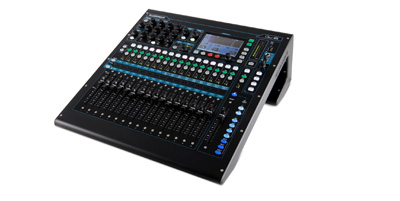
Specification:
- 16 Mono Inputs (TRS + XLR)
- 3 Stereo Inputs (TRS)
- 4 Stereo FX Returns
- 16 Busses
- 12 Mix Outputs (LR, Mono Mix 1-4, Stereo Mix 1-3)
- 4 FX Engines
- AES Digital Out
- 19” Rack Mountable
- Moving Faders
- Recallable AnaLOGIQ Preamps
- Qu-Drive direct Multitrack Recording / Playback on USB drives
- 800x480 Touchscreen
- iLive FX Library
- dSNAKE Remote Audio Port
- Compatible with ME Personal Mixing System
- Qu-Pad iPad App
- USB Audio Streaming
- DAW MIDI Control
- 4 Mute Groups
- Trim, polarity, HPF, gate, insert, 4-band PEQ, compressor and delay on all Inputs
- Insert, 1/3 octave GEQ, compressor and delay on Main LR and Mono Mix outputs
- Insert, 4-band PEQ, compressor and delay on Stereo Mix outputs
- Built-in Signal Generator
- RTA with Peak Band indication
Allen & Heath pioneered the concept of dual-function front-of-house and monitor mixers with the GL series. The current models update our proven GL designs with new tools such as ambient matrix recording, fast IEM mixing, aux-fed sub and engineer’s wedge monitor.
There are 3 models for the GL series, GL2400, GL2800 and GL3800 for 16 channels onwards.
GL3800
The GL3800 features an enhanced capability for the latest in live sound mixing, and is truly dual-function with all 10 auxes configurable to fader control with insert point and XLR drive. Available in frame sizes up to 48 channels, with the choice of all mono, 4 or 8 stereo channels, the mixer also includes a meterpod with illuminated VU’s, and front and rear ident strips. GL3800 is a large format, dual function, LR, M, 8 group, 10 aux, 12x4 matrix console. Frame sizes range from 24 to 48 channels, with A, B, C, A options for more stereo channels. This great sounding, well-featured console has a familiar, walk-up-and-go layout and responsive feel, giving the engineer the very best of analogue console engineering. A= all mono channels B= 4 stereos to right of masters C= 4 stereos on far right side D= 8 stereos on far right side
- 24, 32, 40, and 48 channel frames
- A, B, C, D mono/stereo channel options
- LR and M main mixes
- 8 Audio groups with pan and routing to LR and M
- 10 Auxes including a dedicated stereo send with level and pan controls
- 2 multi-function stereo channels each with mic stereo line inputs
- 2 extra dual stereos provide 4 summed or independent stereo returns
- Fully featured 12x4 Matrix
- Proper dual functionality for front-of-house, monitor mixing, or both
- Recording capable with channel direct outputs
- M can be used for centre/sub mix, LR mono sum, or engineers wedge
- Matrix external inputs with level trims and common input capability
- Stereo channel mic inputs can cross patch into matrix for ambience feed
- Responsive 4 band, 2 sweep EQ
- 100Hz channel high pass filters
- Individual phantom power and polarity switching
- Integral meterpod with 11-LED illuminated, moving coil VU meters
- Wide angle LED channel and master meters
- Dedicated stereo monitor meters
- Per channel pre/post-EQ switches for user preference
- Mutes on all faders masters
- 100mm premium grade dual rail faders as used on the top-of-the-range ML Series
- Assignable talkback to all outputs, includes a talk switch latch mode
- 1kHz oscillator/pink noise generator with a patchable external output
- 2-track monitoring and replay to LR
- 3 headphones/earpiece sockets and local monitor outputs
- Electronically balanced XLR outputs with +26dBu drive capability
- Preamp 74dB range with +34dBu input capability for mic or line
- Ultra low noise mix head amp design
- Uses RPS11 high performance, external linear power supply
- Built-in combiner for redundant backup supply
- Individual circuit card assembly with nutted pots
- Sys-Link V2 console input/output linking option
- 4-pin XLR lamp sockets – Allen&Heath LEDlamp available
GL2800
This classic dual function mixer offers a well thought out feature set built into a rugged, small footprint chassis ideal for flight casing and venue installation where space is tight. Uniquely, at this level, the GL2800 is equipped with 10 auxiliary sends, including a dedicated stereo aux and using the 12x4 matrix, provides the ideal solution for IEM and stereo recording. 8 audio groups and L, R and M busses are also provided, allowing for full dual functionality with 10 mixers with faders, inserts and XLR drive. At the heart of this design is the gain structure allowing a whopping 34dBu maximum input capability and a new ultra-quiet mix head amp section, delivering excellent audio performance.
- 24, 32, 40, 48 and 56 channel frames
- LR and M main mixes
- 8 Audio groups with pan and routing to LR and M
- 10 Auxes including a dedicated stereo send
- 2 multifunction stereo channels each with mic and stereo line inputs
- 2 extra dual stereos provide 4 summed or independent stereo returns
- Fully featured 12x4 Matrix
- Proper dual functionality for FOH/Monitor mixing
- Recording capable with channel direct outputs
- M can be used for centre/sub mix, LR mono sum, or engineers wedge
- Matrix external inputs with level trims and common input capability
- Stereo channel mic inputs can cross patch into matrix for ambience feed
- Responsive 4 band, 2 sweep EQ
- 100Hz channel high pass filters
- Individual phantom power and polarity switching
- Wide angle channel and master meters
- Dedicated stereo monitor meters
- Per channel pre/post fader aux switching for full flexibility
- Internal jumper plugs for pre/post-EQ aux, direct out and other options
- Mutes on all faders masters
- Assignable talkback to all outputs, includes a talk switch latch mode
- 1kHz oscillator/pink noise generator with patchable external output
- 2-track monitoring and reply to LR
- 3 headphones/earpiece sockets and local monitoring outputs
- Electronically balanced XLR outputs with +26dBu drive capability
- Preamp 74dB range with +34dBu input capability for mic or line
- Ultra low noise mix head amp design
- Uses RPS11 high performance external linear power supply
- Built-in combiner for redundant backup supply
- Individual circuit card assembly with nutted pots
- Sys-Link V2 console input/output linking option
- 4-pin XLR lamp sockets – Allen&Heath LEDlamp available
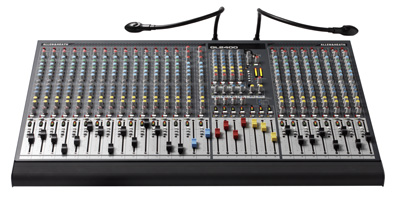
GL2400
The GL2400 is a mixing classic, industry standard in venues and hire stocklists across the globe. The ultimate 4 group dual-function mixer, the GL2400 is designed for the latest in modern engineering techniques, and every detail in this uniquely capable small footprint mixer has been carefully thought out to provide the very best mixing experience. Whether mixing FOH, monitors, or both, recording live or in the studio, installed in a busy or house of worship, out on the road touring or earning its keep in rental stock, the GL2400 provides the perfect solution.
- 16, 24, 32, 40 channel frames
- LR and M main outputs
- 4 Audio groups with pan control
- 6 Auxiliary sends with per-channel pre/post fader switching
- 2 stereo channels each with mic and dual stereo line inputs
- 7x4 Matrix
- Proper dual functionality for FOH and/or Monitor mixing
- M can be configured as LR sum, wedge, or aux-fed sub or C master
- Recording capable with channel direct outplus
- Matrix external inputs with level trims and common input capability
- Stereo channel line inputs can be independently routed to LR
- Stereo channel mic input breakpoints for cross patching into matrix
- Responsive 4 band, 2 sweep EQ
- 100Hz high pass filters
- Individual phantom power and polarity switching
- Dedicated channel, master and stereo monitor meters
- Internal jumper plugs for pre/post-EQ aux, direct out and other options
- Mutes, meters and AFL on all fader masters
- Assignable talkback
- 1kHz oscillator and pink noise generator
- 2-track monitoring and replay to LR
- Headphones and local monitor outputs
- Electronically balanced XLR outputs with +26dBu drive capability
- Preamp 74dB range with +34dBu input capability for mic or line
- Ultra low noise mix head amp design
- Internal power supply with socket for MPS12 backup supply (16 to 32 channel models)
- External RPS11 power supply and socket for another RPS11 as backup (40 channel model)
- 100mm dust protected faders
- Individual circuit card assembly with nutted pots
- Sys-Link V2 console input/output linking option
- 4-pin XLR lamp sockets – Allen&Heath LEDlamp available
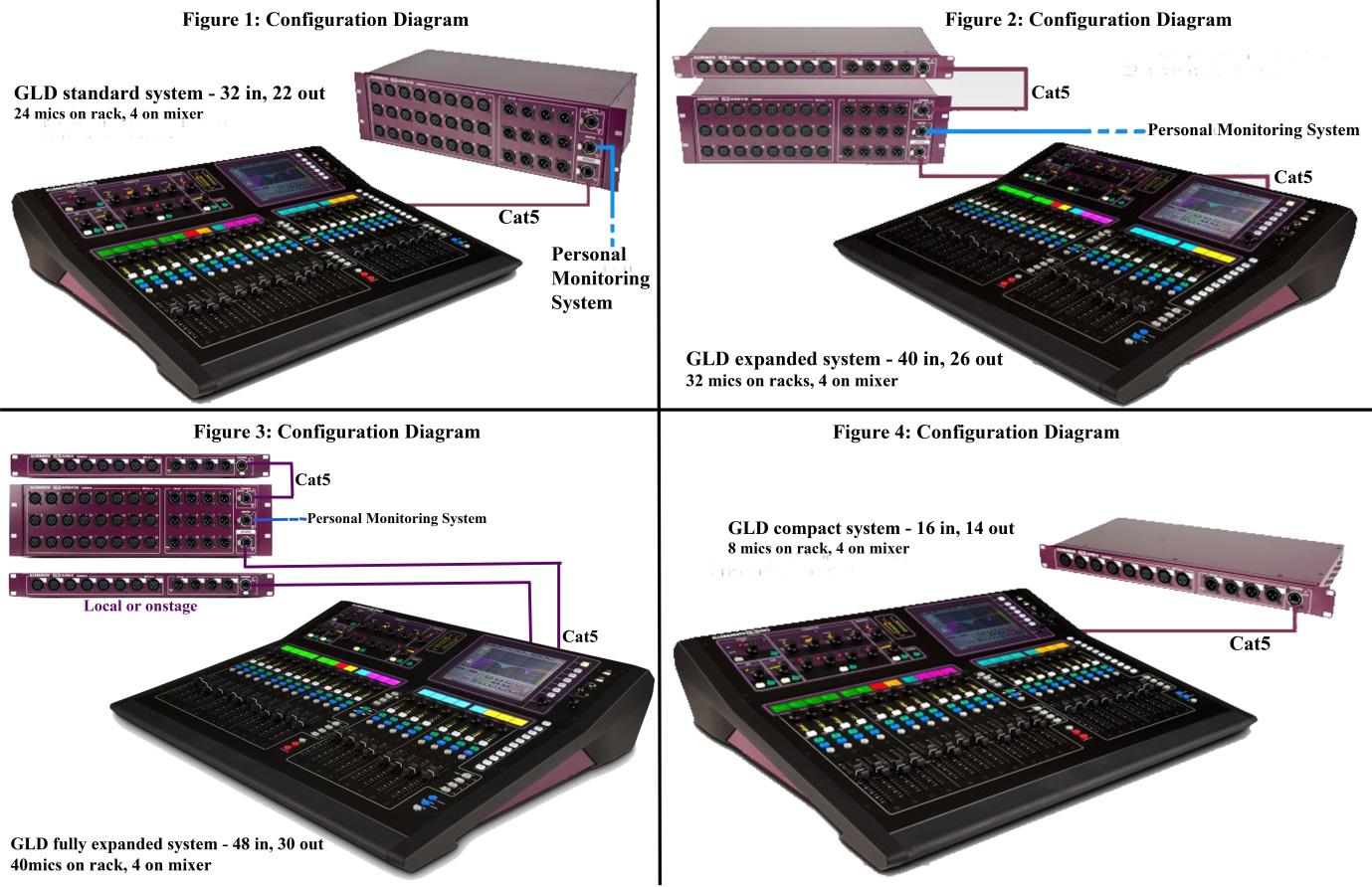
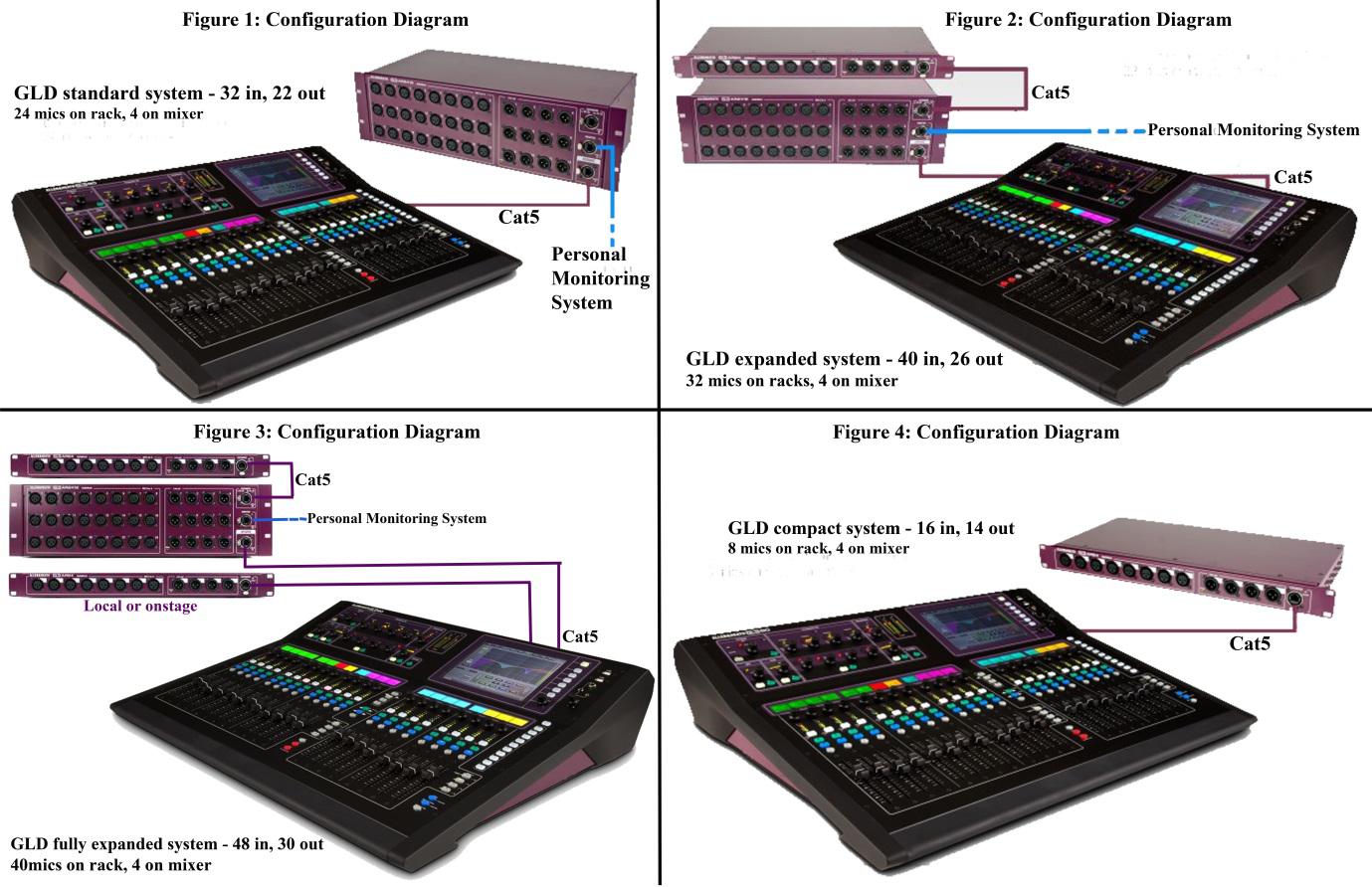
GLD is a user-friendly, cost effective and scalable live digital mixing system, conceptually based on the hugely successful digital iLive series. A standard GLD 32 input system offers 28 XLR mic inputs with plug n'play I/O expanders allowing easy expansion up to 48 inputs (44 XLR mic inputs).
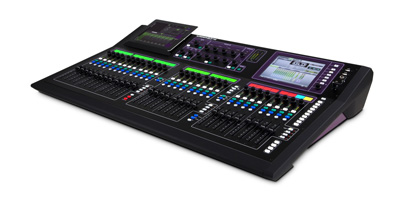
GLD-112 is a larger version of the popular GLD-80 mixer, with an extra bank of 8 control strips, increasing the channel count to 28 fader strips in 4 layers.
GLD-112 has an analogue-style channel processing control section complemented by a graphical 8.4 inch touch screen. A fully-customisable drag 'n drop layout allows quick and easy assignment of inputs and mixes to fader strips. There are 28 fader strips in 4 layers, each with motorised fader, a channel LCD display which can be named and colour-coded, plus a rotary control for direct access to gain, pan and aux/FX sends. The mixer's local I/O comprises 4 XLR mic/line inputs, 4 XLR line outs, 4 RCA inputs, 2 RCA outputs, and digital outputs in SPDIF and AES3 formats.
GLD-112 connects to a range of plug 'n play I/O racks to 'build'28, 36 or 44 mic input systems. A primary AR2412 rack (24 XLR inputs, 12 XLR outs) and up to two AR84 expander racks (8 XLR inputs, 4 XLR outs each) can be connected over 120m CAT5 runs using A&H’s dSNAKE protocol. dSNAKE provides control to the remote preamp, and all mic preamps are scene recallable. AR2412 also includes a connection for personal monitoring systems.
GLD has the ability to record and playback a stereo signal on a USB memory stick. Standard iLive audio I/O option cards for Dante, MADI, EtherSound and Allen & Heath's ACE protocols can be fitted, allowing multi-channel record/playback, FOH/monitor splits, and connection to A&H iLive systems, which can easily be configured using GLD's extensive soft-patching.
The GLD Remote app provides wireless control for GLD-112, giving the engineer the freedom to walk the room or stage and control the sound right where it is needed. GLD-112 and GLD Remote can work together to provide simultaneous control of independent functions, for example one engineer using the console to mix FoH sound and another using the iPad to mix monitors on stage.
GLD is fully compatible with the ME Personal Mixing System.
Specifications:- Compact digital mixer with scalable, remote I/O
- Systems from 4 to 44 mics
- Easy to use, quick to access, analogue style interface
- dSNAKE Cat5 digital snake—up to 120m cable length
- 8.4 inch colour touchscreen for graphical view and setup
- 28 faders, 4 layers, 112 channel strips in a freely customizable layout
- 48 input channels into 30 assignable buses (Aux, Group, Matrix, Main, FX Send) into 20 mix outputs
- 8 stereo RackFX engines* with dedicated 'short'returns with 4-band PEQ
- Full processing on all inputs including trim, polarity, HPF, insert, gate, 4-band PEQ, compressor and delay
- Full processing on all outputs including insert, PEQ, GEQ, compressor and delay
- LR, None (monitors), LR+M (sum), LR+M (bus), LCR main mix modes
- 16 DCAs / mute groups
- Built-in Talkback, RTA and Signal Generator
- I/O module options for FOH/Monitor split, multitrack recording, link to iLive and more
- MIDI In/Out and Ethernet Network port
- AviomTM Pro16 compatible Monitor port on main AudioRack
- High end 1dB step recallable mic/line preamps
- User definable channel names and colours
- Engineer’s mono Wedge and stereo IEM strips
- Input, output and insert soft patchbays
- Quick copy, paste and reset of mixes and parameters
- Libraries, Scenes and Show memories with USB transfer
- Get started quickly with Template Shows
- 14 assignable SoftKeys for scene recall, DCA mutes and more
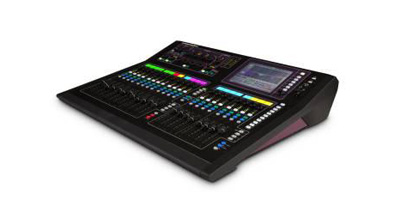
Specifications:
- Compact digital mixer with scalable, remote I/O
- Systems from 4 to 44 mics
- Easy to use, quick to access, analogue style interface
- dSNAKE Cat5 digital snake—up to 120m cable length
- 8.4 inch colour touchscreen for graphical view and setup
- 20 faders, 4 layers, 80 channel strips in a freely customizable layout
- 48 input channels into 30 assignable buses (Aux, Group, Matrix, Main, FX Send) into 20 mix outputs
- 8 stereo RackFX engines* with dedicated 'short'returns with 4-band PEQ
- Full processing on all inputs including trim, polarity, HPF, insert, gate, 4-band PEQ, compressor and delay
- Full processing on all outputs including insert, PEQ, GEQ, compressor and delay
- LR, None (monitors), LR+M (sum), LR+M (bus), LCR main mix modes
- 16 DCAs / mute groups
- Built-in Talkback, RTA and Signal Generator
- I/O module options for FOH/Monitor split, multitrack recording, link to iLive and more
- MIDI In/Out and Ethernet Network port
- AviomTM Pro16 compatible Monitor port on main AudioRack
- High end 1dB step recallable mic/line preamps
- User definable channel names and colours
- Engineer’s mono Wedge and stereo IEM strips
- Input, output and insert soft patchbays
- Quick copy, paste and reset of mixes and parameters
- Libraries, Scenes and Show memories with USB transfer
- Get started quickly with Template Shows
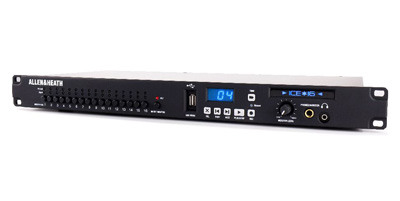
ICE-16 also functions as a 16 x 16 channel interface to your computer in the studio, streaming high quality digital audio at 24bit, up to 96kHz sample rate over FireWire or high speed USB 2.0. Units can be linked when streaming over FireWire to expand the channel count even further.
Live or in the studio, ICE-16 makes multitrack recording easy.
Specifications:
- 16 analogue Inputs, 16 analogue Outputs
- Front USB socket for easy capture to USB storage devices
- Hybrid FireWire (IEE1394) / USB 2.0 16x16 audio interface
- Industry standard wav file format
- Up to 6 hours of 16 channel audio on a 32GB USB stick
- Signal Present and Peak LED metering on each channel
- Mono headphone bus for Input or Output monitoring
- Daisy chain multiple units over FireWire
- Familiar transport buttons and intuitive controls
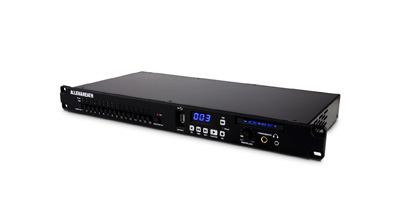
ICE-16D is a balanced I/O version of the popular ICE-16 multitrack recorder / interface. ICE-16D offers full balanced inputs & outputs on standard D Sub connectors, making it ideal for use in professional studios or where long cable runs are needed.
ICE -16D records 16 tracks of audio directly to a USB key or hard drive. Just connect the 16 analogue inputs to any line level source (your mixer’s direct outs are ideal), plus in your memory and press record to capture live shows, band rehearsals, conferences or services for mixing or playback afterwards.
ICE-16D also functions as a 16 x 16 channel interface to your computer in the studio, streaming high quality digital audio at 24bit, up to 96kHz sample rate over FireWire or high speed USB 2.0 Units can be linked when streaming over FireWire to expand the channel count even further.
Live or in the studio, ICE-16D makes multitrack recording easy.
Specifications:- 16 analogue inputs, 16 analogue Outputs
- Front USB socket for quick capturing to USB mass storage devices
- Hybrid FireWire (IEE1394) / USB2.0 16 x 16 audio interfaces
- Industry standard wav file format
- Up to 6 hours of 16 channel audio on a 32GB USB stick
- Signal Present and Peak LED metering on each channel
- Mono headphone bus for Input or Output monitoring
- Daisy chain multiple units over FireWire
- Familiar Transport buttons and intuitive controls
- Connect
Multiple units can be daisy-chained over the FireWire bus, or kept in sync using the DIN connectors when recording on multiple USB devices, making ICE-16D the perfect companion for both small and large analogue consoles such as the acclaimed ZED, MixWizard and GL mixers, Plug into your desk Direct Outs or use a mix of Groups and Aux sends to save on channels. - Record
The USB DRIVE is automatically detected and checked by the system. Starting the recording is as simple as pushing a button. Remove and plug the key into a computer to access or transfer the WAV file to any DAW. - Interface
Removing the USB stick or powering up the unit without one enables the USB / FireWire interfaces. Signals present at the inputs will be sent to the Mac or PC on channels 1-16. WDM.ASIO drivers and USB2.0 class compliance ensure full compatibility with most DAWs, including Logic, Sonar, Cubase and Pro Tools. - Play
Fancy a “virtual soundcheck” or just need to play cues during a live gig? Tracks can be played back directly from the USB drive and full multichannel audio can be sent from the computer to the ICE-16D analogue Outputs.
iDR-4 and iDR-8 are 16 x 16 matrix mixer with an extensive array of audio management tools designed to reduce the need for additional devices for an installation, or carried in the hire inventory. Allen & Heath preamps, 24bit converters and fixed DSP architecture ensure that concert-quality low-latency sound is delivered efficiently to where it is needed.
Anyone with a basic knowledge of traditional console and outboard equipment will be able to design a distribution audio system on their PC using the 'mixer'based iDR System Manager software. iDR comes loaded with flexible DSP tools, essential in sound system configuration and installation. Input & output delays, 4- and 8-band parametric EQ, automatic microphone mixing, frequency conscious dynamics, look ahead limiter, ambient noise compensator, crossfader and much more are available at your fingertips without having to worry about running out of DSP. Its system of presets allow for full recall of the whole system or individual parameters at the touch of a button.
After programming, the iDR unit operates as a stand-alone system controller, with a host of remote control devices available for day-to-day operation. The PL Series complements the powerful features of iDR and comprises wall plates, infra-red hand-held or desk mount controllers connecting the main unit using CAT5 cable over the RS485-based proprietary PL-Anet protocol. All the major third party devices may also be used to control iDR. For complex systems, the iDR system can be driven in real time by a PC via an Ethernet port, allowing the iDR to be used in hire/live audio situations such as matrix distribution in theatres, or clean feed system for an outside broadcast. Why not connect a WiFi card to your laptop, connect to the internet, set up your system and save your settings on the move? Stay in control from anywhere in the world!
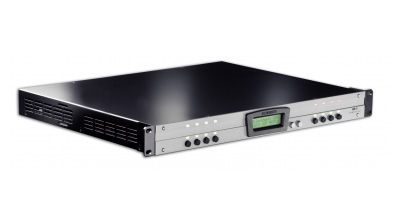
- iDR DSP system
- 16 processing channels (inputs and outputs)
- 2 analogue mic/line inputs on XLR and 20V phantom power
- 4 analogue line inputs on TRS jack
- 4 line outputs on XLR
- iDR-4ST version also available, with XLRs replaced by Euroblock (Phoenix) connectors
- 2 line outputs on TRS jack
- Digital audio expansion ports (8 channels in, 8 channels out)
- Hot Plug 'n'Play PL Series remote controllers
- High quality audio signal path and DSP processing
- Monitor with mouse and ripplethrough capability
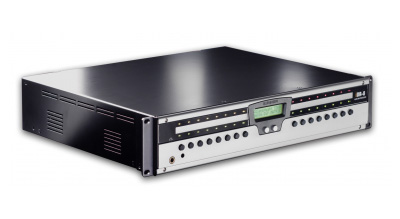
- iDR DSP system
- 16 processing channels (inputs and outputs)
- 8 analogue mic/line inputs on XLR with 48V phantom power
- 8 analogue line outputs on XLR
- iDR-8ST version also available, with XLRs replaced by Euroblock (Phoenix) connectors
- 2 line inputs on TRS jack
- 2 line outputs on TRS jack
- Digitial audio expansion ports (8 channels in, 8 channels out)
- Hot Plug 'n'Play PL Series remote controllers
- High Quality Audio Signal Path and DSP processing
- Headphone monitor with mouse and ripple-through capability
- MIDI In/Out/Thru connections
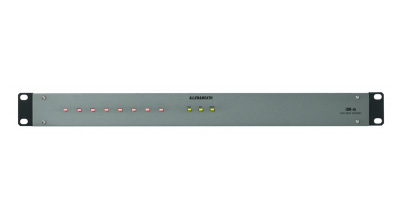
The iDR-In audio expander provides an additional 8 mic/line inputs on XLR when connected to an iDR-4 or iDR-8.
iDR-In converts the analogue audio to an 8 channel wide digital bus which feeds the main iDR unit, which can be up to 250 metres away, via CAT5 STP cable, iDR-In features high grade mic/line preamps with PC configured gain, pad and phantom power switching via DR-Link, and a built-in soft clip. The expander has 8 front panel LEDs in addition to the 3 status indicators – these are 3-colour soft LEDs which can be assigned as audio meters, mute indicators or presets related indicators and are programmed in the usual way using the iDR System Manager software.
iDR-InST version also available, with XLRs replaced by Euroblock (Phoenix) connectors.
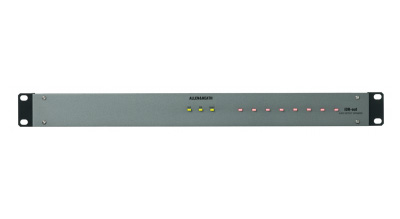
The iDR-Out audio expander provides an additional 8 line outputs on XLR when connected to an iDR-4 or iDR-8.
iDR-Out connects to the main iDR unit, which can be up to 250 metres away, via CAT5 STP cable. iDR-Out has 8 front panel LEDs in addition to the 3 status indicators; these are 3-colour soft LEDs which can be assigned as audio meters, mute indicators or presets related indicators and are programmed in the usual way using the iDR System Manager software.
iDR-OutST version also available, with XLRs replaced by Euroblock (Phoenix) connectors.
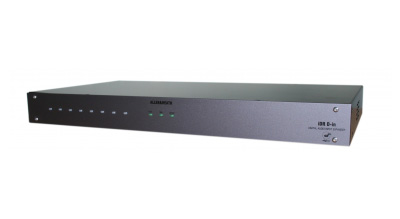
iDR D-in is an add-on digital audio expander for the iDR-4 and iDR-8 audio mix processors. It provides AES3 and SPDIF format digital audio inputs to add to the analogue audio connections on the main unit. The iDR D-in has 8 inputs arranged as 4 pairs. Either the AES3 (XLR) or the SPDIF (RCA phono) input may be selected for each pair. Only one input and one output expander may be added to the iDR system bringing it up to the maximum 16x16 audio matrix. This may be any combination of the analogue and digital expanders available for the iDR system.
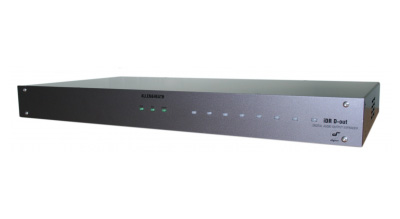
iDR D-out us an add-on digital audio expander for the iDR-4 and iDR-8 audio mix processors. It provides AES3 and SPDIF format digital audio outputs to add to the analogue audio connections on the main unit. The iDR D-in has 8 inputs arranged as 4 pairs. The iDR D-out has 8 outputs arranged as 4 pairs. These provide AES3 and SPDIF outputs simultaneously available. Only one input and one output expander may be added to the iDR system bringing it up to a maximum 16x16 audio matrix. This may be any combination of the analogue and digital expanders available for the iDR system.
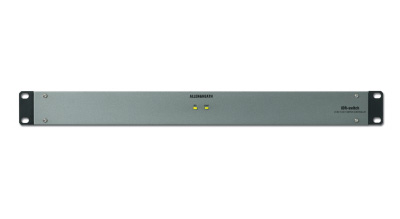
iDR-Switch extends the capability of the iDR-8 and iDR-4 by enabling custom wall plate and remote equipment control. It provides 24 switch closure inputs and 16 logic control outputs which can be custom wired by the installer to suit the application. Up to 3 units can be connected, so providing an iDR unit with 72 switch and 48 logic outputs. The controls are easily programmed using the System Manager software.
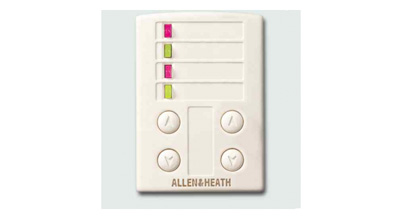
The PL-3 wall plate has 4 programmable switches and 4 programmable tri-colour LEDs and is ideal for local operator control of iDR-based audio systems. They maybe be used, for example, for source selection for an output zone, or local volume control.
The PL-3 is one of the several remote control devices available for the iDR audio mix processor system. It is a wall plate or furniture mounted module comprising plastic control panel and attached circuit assembly. It can be mounted in a single unit wall box using a standard face plate (UK, EU or US version supplied). A suitable template with cutting details is provided for custom application. The PL-3 interfaces with the Allen & Heath RS485 based PL-Anet serial port. Multiple PL-3 units can be daisy chained together along with other PL-Anet devices using CAT5 cable. The wall plate control and indicator functions are programmed using the iDR System Manager software. Space is provided on the control panel for custom labelling of the programmed functions.
The installer can program the unit so that the non-technical operator has local control of volume, mute, source select, and preset changes which reconfigure the room for different functions.
4 switches can be assigned for level up or down control (input, output, crosspoint or group) mute toggle, polarity toggle, audio monitor select, or preset recall.
4 LED indicators can be assigned as audio meters (choice of 8 points in the signal path), mute status, polarity status, or as preset related static display. They can display four states: off, green, yellow or red.
Custom labels Recessed areas are provided for fitting custom adhesive labels. Recommended maximum sizes are 6x26mm and 26x9mm.
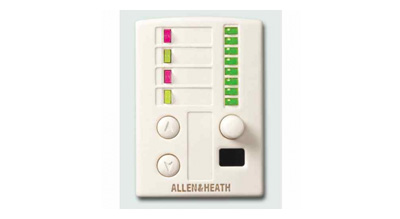
The PL-4 wall plate has 2 programmable switches, 4 programmable tri-colour LEDs and a rotary control with LED ladder. It has a built-in infra-red receiver, allowing it to be operated at a distance using the PL-5 handheld remote controller – these control options can be different to those set on the PL-4. PL-4 is ideal for local operator control of iDR-based audio systems. They may be used, for example, for source selection for an output zone, or for local volume control.
Introduction the PLD-4 is one of several remote control devices available for the iDR audio mix processor system. It is a wall plate or furniture mounted module comprising plastic control panel and attached circuit assembly. It can be mounted in a single unit wall box using a standard face plate (UK, EU or US version supplied). A suitable template with cutting details is provided for custom application. The PL-4 interfaces with the Allen & Heath PL-Anet serial port.
Multiple PL-4 units can be daisy chained together along with other PL-Anet devices using CAT5 cable. The wall plate control and indicator functions are programmed using the iDR System Manager software. Space is provided on the control panel for custom labelling. The PL-4 is ideal as a wall mounted room remote controller in installed audio systems. The installer can program the unit so that the non-technical operator has local control of volume, mute, source, select, and preset a change which reconfigures the room for different functions, as well as the convenience of the PL-5 infrared remote controller.
2 switches can be assigned for level up or down control (input, output, crosspoint or group) mute toggle, audio monitor select, or preset recall.
4 LED indicators can be assigned as audio meters (choice of 8x points in the signal path), mute status, or a preset related static display. They can display four states: off, green, yellow or red.
Rotary control can be assigned as a continuous level control (input, output, crosspoint or group).
An 8 LED meter bar displays the control position.
Infra-red controller allows wireless local control using the hand-held PL-5 remote controller. Each of the 14 keys on the PL-5 can be assigned in the same way as the switches. The PL-4 can be used without the IR controller. Custom labels
Recessed areas are provided for fitting custom adhesive labels. Recommended maximum label sizes are 6x14mm and 26x9mm.
Number and addressing of devices: -the maximum number of PL devices that be connected depends on their type and the cable lengths. Up to 12x PL-4 devices (more if using half speed scan) may be connected in an iDR system, with or without the PL-9 hub. Fewer devices may be connected if long distances or other PL types are also involved. The iDR allocates the device addresses automatically per PL type in the order they appear in the chain.
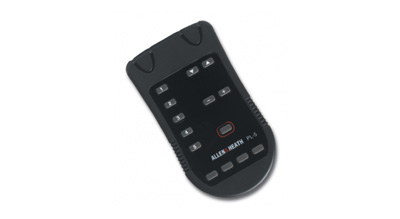
PL-5 is a stylish and compact battery powered hand held remote controller for use with the Allen & Heath PL-4 and PL-11 wall plates which are equipped with an IR (Infra-Red) sensor. It has 14 user programmable buttons. These would typically be programmed by the installer as a combination of volume up/down, signal mute, source, preset select or MIDI messages for convenient control by the day-to-day operator.
The PL-5 always sends out the same button codes. The associated iDR System Manager software. This means that the same remote can trigger different functions in different rooms. For example, the remote could be used for local volume control of different zones in different rooms, or select different sources in different rooms.
The PL-5 may also be used with the PL-12 wall plate for remote control of a GR2 audio zone mixer.
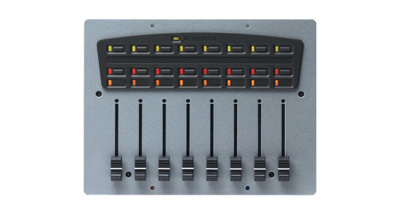
The PL-6 is ideal as a remote mix controller – typical applications include acting as a simple operated-controller fader panel in an installed sound system, or providing musicians with control over their monitor speakers or in-ear monitors. It has 8 x 60mm faders, 24 tri-colour LEDs and 16 soft switches which are all programmable via iDR System Manager. PL-6 can also act as a basic lighting controller via MIDI/DMX, and the unit can be wall-mounted or flange-mounted into a table or wall.
The PL-6 is one of several remote control devices available for iDR-4 and iDR-8 audio mix processor systems. It can be mounted into a plinth or custom furniture, or used free standing. A suitable template with cutting details is provided for custom application. The PL-6 interfaces with the Allen & Heath PL-Anet serial port. Multiple PL-6 units can be daisy chained together along with other PL-Anet devices using CAT5 cable. A terminator is provided for plugging into the last unit in the chain. The PL-6 control and indicator functions are programmed using the iDR System Manager software. Space is provided next to the controls for custom labelling. The PL-6 is ideal as a remote mix controller, for example as a simple operator controlled fader panel in an installed sound system, or as a personal musicians on-stage mix controller with in-eat monitors. The installer can program the unit according to the requirements of the application, providing the degree of control needed by the day-to-day operator.
8 Faders can be configured individually for input, output, group or crosspoint level control. Minimum and maximum ranges can be set. 16 Switches, arranged as two per fader, can be configured as combinations of level up/down, mute toggle, polarity toggle, audio monitor select, or patch recall, 24 LED indicators, arranged as three per fader, can be configured as unused if not required. A single 3 colour Status LED displays PL-Anet power and communication status. Custom labels can be fitted into the recessed areas provided.
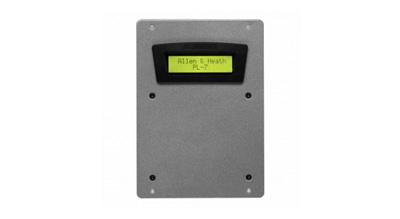
PL-7 is a stand-alone or surface mounted LCD panel, which enables remote display of status information and text messages which can be stored in recallable memory settings. The PL-7 can be embedded with PL-3 or PL-4 wall plates, allowing programmable control from a single unit. It can also be used for remote alarm/supervisor display.
PL-7 is part of the PL-Series of daisy chainable wall plates and remote controllers available for the iDR-4 and iDR-8 audio mix processor systems. Adding these devices greatly extends the capability of the system. The PL-7 features a 2 x 16 character LCD be able to display important system information and pre-programmed user text at locations remote from the iDR main unit. The display is backlit to ensure it can be easily read in all lighting conditions. Each line may be separately configurable by the installer using the iDR System Manager software to display:
- Day and time
- iDR unit name
- Current patch name
- User defined text up to 16 characters per line
The PL-7 module has an attractively styled face plate with fixing holes for wall cavity or custom furniture mounting, and rubber feet for free standing operation. It connects to the iDR PL-Anet serial port using CAT5 cable which can be conveniently routed around the installation to provide for a network of different types of PL remote controllers. Two underside RJ45 sockets connect the input and pass PL-Anet on to the next PL device. A terminator plug is provided to be plugged in if the PL-7 is the last unit in the chain.
PL-7 versions embedded with PL-3 or PL-4 provide remote controls such as switches, rotary encoder, LED displays and infra-red detector in addition to the LCD display. The fitted PL module is connected to the PL-Anet network within the PL-7.
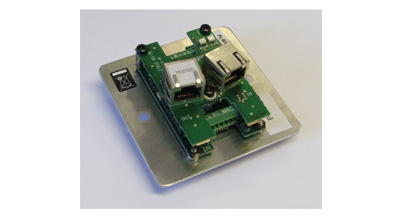
PL-8 is a 4 input, 4 output logic control panel mounted on a wall plate which can be connected to PL-Anet. It is designed to interface external systems such as alarm systems, juke boxes, room dividers, fader starts and lights at a convenient location.
The PL-8 is part of the Allen & Heath PL Series of wall plates and remote controllers available for the iDR-4 and iDR-8 audio mix processor systems. It is a small module comprising two circuit cards. This can be locally mounted in a single unit wall box using the standard UK, EU or US face plate supplied.
The PL-8 provides four contact closure switch inputs and four transistor logic outputs for external equipment control. Their function is programmed using the iDR System Manager software. The combination of switch input and logic output makes the PL-8 ideal as a multi-function remote controller in installed systems. The unit can interface to a variety of devices including alarm systems, room divider switching, paging controls, event triggers and various custom switches and indicators.
Control can be distributed where it is needed. The PL-8 interfaces via the Allen & Heath PL-Anet serial network. Multiple PL-8 units can be daisy-chained using CAT5 cables, along with other PL-Anet devices such as the PL-3 and PL-4 wall plates, PL-6 fader controller and so on.
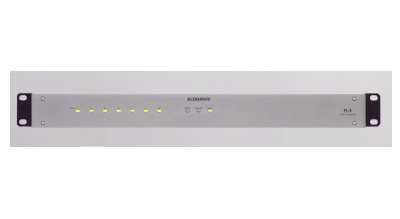
PL-8 is a 1U rack or desk mount hub which provides up to 7 individual connections to chains of PL devices, offering 'star wiring’, simplifying wiring and eliminating the need for complex daisy-chaining. This also provides the benefits of longer cable runs and allows easier 'plug and play'of devices such as the PL-6 and PL-10, and allows a larger number of PL controllers to be connected to a single iDR unit. As the PL-9 is the 'end of chain'on a PL-Anet branch, it offers greater flexibility by allowing PL wallplates to be plugged in and out easily – for example, a PL-6 could just be plugged into a PL-9 onstage, allowing local performer control, then removed after the event.
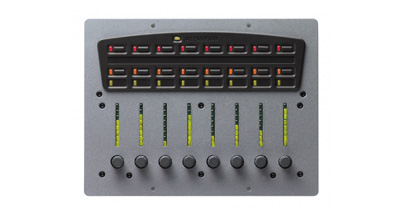
The PL-10 is a compact mixer interface with 8 rotary encoders and LED ladder displays, making it possible to mix live events within the iDR system. It’s ideal for creating and controlling an output mix of cross-point groups. The PL-10 can be assigned to read and adjust different mixes, as the LED bars indicate the levels managed by the iDR unit. The unit can be hand-held, or flange-mounted into a table or wall. As the PL-10 has encoders rather than faders, it can respond to changes in levels made from other controllers.
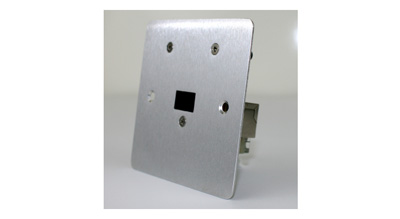
The PL-11 is an IR receiver which uses the proprietary PL-Anet CAT5 plug 'n play protocol employed in Allen & Heath’s iDR and iLive digital mixing systems. Built in to a wallplate backing, the PL-11 receives commands from the PL-5 hand held IR transmitter, which can be set to perform specific functions using iDR’s System Manager software or via the touchscreen in iLive mixing consoles.
The PL-11 IR receiver is useful where open or 'hidden'system settings need to be changed by authorised personnel, as they do not have any unguarded controls. 14 soft keys on the PL-5 can be programmed to manage functions such as levels, mutes, preset recall and MIDI strings for external equipment interfacing. iDR systems also provide tally / RS232 out, and IR protocol is contained in the System Manager software download bundle.
* Ships with PL5 IR Remote Controller
iLive is a uniquely flexible digital mixing system. By putting the DSP and audio in the MixRack also means opening up a whole world of control and networking possibilities. An iLive system can be anything from a full blown touring rig controlled by modular Surfaces that look and feel much like conventional mixing consoles, right through to an ultra-compact setup with just a MixRack controlled via a laptop or tablet.
Firmware and show files are compatible throughout the iLive family, making it easy to transfer settings from one iLive system to another. And that family is extended one, with no fewer than 6 MixRacks and 7 Surfaces to fit a range of roles and budgets, plus an array of software, apps and remote controllers.
The PL-11 IR receiver is useful where open or 'hidden'system settings need to be changed by authorised personnel, as they do not have any unguarded controls. 14 soft keys on the PL-5 can be programmed to manage functions such as levels, mutes, preset recall and MIDI strings for external equipment interfacing. iDR systems also provide tally / RS232 out, and IR protocol is contained in the System Manager software download bundle.
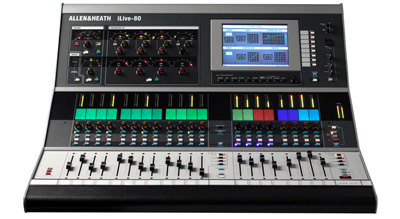
The Surface is simply a controller for the MixRack. It also has an audio rack built into it to conveniently provide local inputs and outputs at the mix position. It features a large analogue style, one control per function processing block, TouchScreen, name and colour virtual 'write-on'strip, banks of motorised faders with independent layers, SoftKeys , built-in headphones, local monitor and talkback. The modular iLive-80 allows a variety of audio I/O modules, network formats and redundant power supply options, and can be shipped in a touring flight case.
Specification- Smallest modular Surface
- 20 faders – 2 banks, 4 layers = 80 control strips
- Up to 32 audio sockets
- Wide range of I/O module options
- RAB2 module with Port A and Port B network options
- Choose a network option for Port A MixRack link
- Port B can be loaded with M-MMO card option
- Built in 3 port Ethernet switch
- MIDI and PL-Anet ports
- Word clock interface
- Socket LED indicators for 48V, Mute and PAFL
- External iPS10 redundant power supply option
- Touring grade flight case
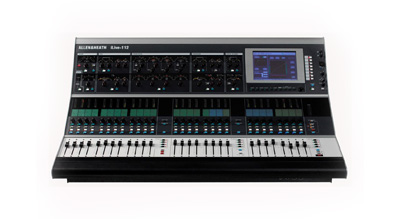
The Surface is simply a controller for the MixRack. It also has an audio rack built into it to conveniently provide local inputs and outputs at the mix position. It features a large analogue style, one control per function processing block, TouchScreen, name and colour virtual 'write-on'strip, banks of motorised faders with independent layers, SoftKeys, built-in headphones, local monitor and talkback. The modular iLive-112 allows a variety of audio I/O modules, network formats and redundant power supply options, and is shipped in a touring flight case.
Specifications- Small footprint modular Surface
- 28 faders – 3 banks, 4 layers = 112 control strips
- Up to 32 audio sockets
- Wide range of I/O module options
- RAB2 module with Port A and Port B network options
- Choose network option for Port A MixRack link
- Port B can be loaded with M-MMO card option
- Built in 3 port Ethernet switch
- MIDI and PL-Anet ports
- Word clock interface
- Socket LED indicators for 48V, Mute and PAFL
- External iPS10 redundant power supply option
- Touring grade flight case
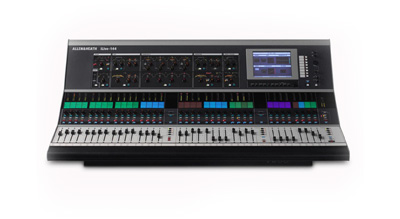
The Surface is simply a controller for the MixRack. It also has an audio rack built into it to conveniently provide local inputs and outputs at the mix position. It features a large analogue style, one control per function processing block, TouchScreen, name and colour virtual 'write-on'strip, banks of motorised faders with independent layers, SoftKeys, built-in headphones, local monitor and talkback. The modular iLive-144 allows a variety of audio I/O modules, network formats and redundant power supply options, and is shipped in a touring flight case.
Specifications- Popular modular Surface
- 36 faders – 3 banks, 4 layers = 144 control strips
- Up to 32 audio sockets
- Wide range of I/O module options
- RAB2 module with Port A and Port B network options
- Choose network options for Port A and MixRack link
- Port B can be loaded with M-MMO card option
- Built in 3 port Ethernet switch
- MIDI and PL-Anet ports
- Word clock interface
- Socket LED indicators for 48V, Mute and PAFL
- External iPS10 redundant power supply option
- Touring grade flight case
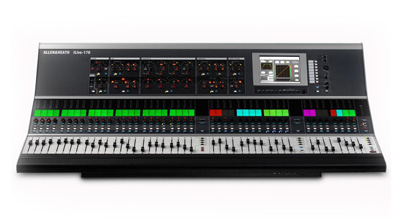
The Surface is simply a controller for the MixRack. It also has an audio rack built into it to conveniently provide local inputs and outputs at the mix position. It features a large analogue style, one control per function processing block, TouchScreen, name and colour virtual 'write-on'strip, banks of motorised faders with independent layers, SoftKeys, built-in headphones, local monitor and talkback, The flagship iLive-176 is the biggest of the modular series and allows a variety of audio I/O modules, network formats and redundant power supply options, and is shipped in a touring flight case.
Specifications- Largest, top of the range modular Surface
- 44 faders – 3 banks, 4 layers = 176 control strips
- Up to 32 audio sockets
- Wide range of I/O module options
- RAB2 module with Port A and Port B network options
- Choose a network option for Port A MixRack link
- Port B can be loaded with M-MMO card option
- Built in 3 port Ethernet switch
- MIDI and PL-Anet ports
- Word clock interface
- Socket LED indicators for 48V, Mute and PAFL
- External iPS10 redundant power supply option
- Touring grade flight case
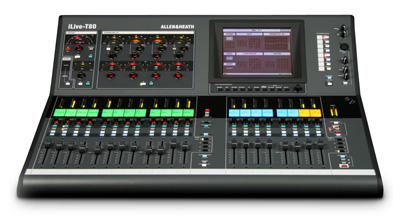
The Surface is simply a controller for the MixRack. It also has an audio rack built into it to conveniently provide local inputs and outputs at the mix position. It features a large analogue style, one control per function processing block, TouchScreen, name and colour virtual 'write-on'strip, banks of motorised faders with independent layers, SoftKeys, built-in headphones, local monitor and talkback. The iLive-T80 provides all iLive functionality in a cost-effective, light weight chassis with fixed format I/O.
Specifications- Small footprint fixed format Surface
- 20 Faders – 2 banks, 4 layers = 80 control strips
- 8 in, 8 out audio
- In = 4x TRS line, 2x phono, 1x SPDIF
- Out = 4x TRS line, 2x phono, 1x SPDIF, monitor TRS
- TB mic can be patched to talkback or channels
- ACE™ Surface link (audio and control over single CAT5)
- Built in 2 port Ethernet switch
- MIDI port
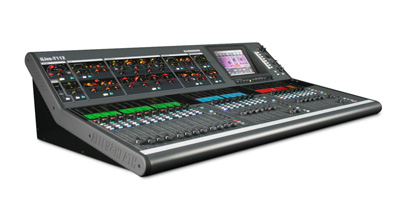
The Surface is simply a controller for the MixRack. It also has an audio rack built into it to conveniently provide local inputs and outputs at the mix position. It features a large analogue style, one control per function processing block, TouchScreen, name and colour virtual 'write-on'strip, banks of motorised faders with independent layers, SoftKeys, built-in headphones, local monitor and talkback. The iLive-T112 provides all iLive functionality in a cost-effective, light weight chassis with fixed format I/O.
Specifications- Larger fixed format Surface
- Same control as top of the range, modular iLive-112
- 29 faders – 3 banks, 4 layers = 112 control strips
- 16 in, 12 out audio
- In = 8x TRS line, 4x phono, 2x SPDIF
- Out = 8x TRS line, 2x phono, 1x SPDIF, monitor TRS
- TB mic can be patched to talkback or channels
- ACE™ Surface link (audio and control over single CAT5)
- Built in 2 port Ethernet switch
- MIDI port
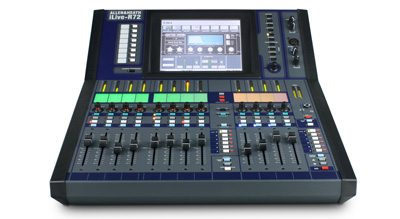
The Surface is simply a controller for the MixRack. It also has an audio rack built into it to conveniently provide local inputs and outputs at the mix position. The iLive-R72 provides an ultra-compact rack mountable solution with fixed format I/O. It features a backlit TouchScreen, name and colour virtual 'write-on'strip, banks of motorised faders with independent layers, SoftKeys, built-in headphones, local monitor and talkback.
Specifications- Compact, rack mountable, fixed format Surface
- Does the same job as the larger iLive Surfaces
- 12 faders – 2 banks, 6 layers = 72 control strips
- All processing control in TouchScreen
- 8 in, 8 out audio
- In = 4x TRS line, 2x phono, 1x SPDIF
- Out = 4x TRS line, 2x phon, 1x SPDIF, monitor TRS
- TB mic can be patched to talkback or channels
- ACE™ Surface link (audio and control over single CAT5)
- Built in 2 port Ethernet switch
- MIDI port
As the heart of the most flexible live mixing systems available today, the iLive MixRack is the 'mixer’, housing the DSP, most of the I/O, networking and control interfaces. It can even be operated without a Surface, for example, using just a laptop or touch tablet. There are 6 sizes of MixRack to choose from. Regardless of size, all feature the same 64x32 RackExtra DSP mix engine and can process a full 64 input channels, 32 mixes and 8 stereo FX. The main difference is the number of physical input (mic) and output sockets available. Choose the rack to suit your application. The modular iDR10 provides the largest I/O count, format flexibility and RAB2 module for more network options. The compact iDR0 is just the DSP in a rack, perfect when teamed with a larger MixRack using a digital mic split, for example linked FOH/Monitor systems. The tiny iDR-16 is ideal where the physical I/O requirement is small, but as with all the MixRacks can also be used to process the full 64 channels in a compact linked system with digital mic split.
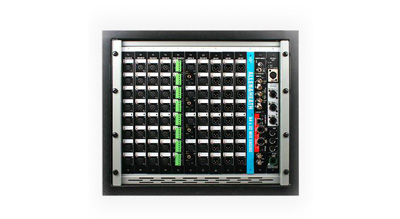
The MixRack is the heart of the iLive system, housing the DSP, most of the I/O, networking and control interfaces. The modular iDR10 provides the largest I/O count, format flexibility and RAB2 module for more network options.
Specifications- Provides the most I/O and network flexibility
- Wide range of I/O modules available
- RAB2 module with Port A and Port B network options
- Choose ACE, ES or MADI for Port A Surface link
- Built in 3 port Ethernet switch
- MIDI and PL-Anet ports
- Word clock interface
- Socket LED indicators for 48V. Mute and PAFL active
- Built in headphone amp with level control
- 4-pin XLR lamp socket
- Built in redundant power module option
- Optional shock mount flight case
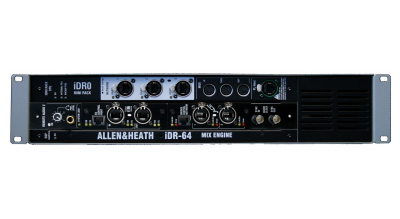
The MixRack is the heart of the iLive system, housing the DSP, most of the I/O, networking and control interface. The compact iDR0 is just a DSP in a rack, perfect when teamed with a larger MixRack using a digital mic split, for example linked FOH/Monitor systems.
Specifications- 2U MixRack – DSP without the audio sockets
- Audio interfaces via the digital networks
- Ideal for linked systems using a digital mic split
- Split FOH/Monitor/Recording/Broadcast applications
- 64x32 RackExtra DSP with 8 stereo FX
- RAB2 module with Port A and Port B network options
- Chose ACE, ES or MIDI for Port A surface link
- Built in 3 port Ethernet switch
- MIDI and PL-Anet ports
- Word clock interface
- Built in headphone amp with level control
- External iPS10 redundant power supply option
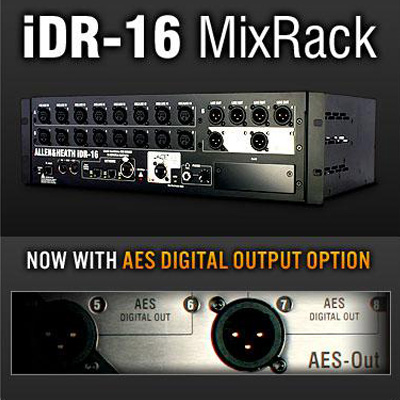
- 3U fixed format MixRack
- 16 mic/line in, 8 XLR out*
- 64x32 RackExtra DSP with 8 stereo FX
- ACE™ Surface link plus Port B network option
- Built in 3 port Ethernet switch
- Network bridges to Surface via ACE™
- MIDI and PL-Anet ports
- Built in headphone amp with level control
- External iPS10 redundant power supply option
*AES Digital Output Option available, offering 2 AES3 digital stereo outputs in place of 4 analogue line outputs. iDR-16 can be ordered with a single AES Digital Output Option pre-fitted. A retro-fit kit is also available, allowing single or multiple AES Digital Output Options to be fitted.
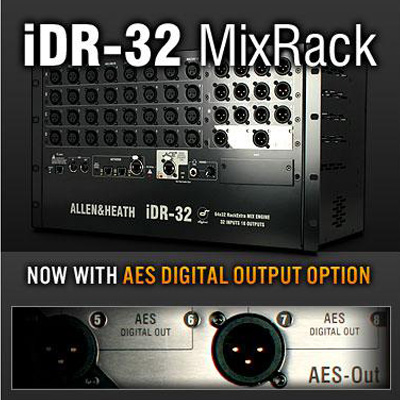
The MixRack is the heart of the iLive system, housing the DSP, most of the I/O networking and control interfaces. The iDR-32 sits in the middle of the fixed format range with 32 Mic/Line inputs and 16 XLR line outputs.
Specifications- 6U fixed format MixRack
- 32 mic/line in, 16 XLR out*
- 64x32 RackExtra DSP with 8 stereo FX
- ACE™ Surface link plus Port B network option
- Built in 3 port Ethernet switch
- Network bridges to Surface via ACE™
- MIDI and PL-Anet ports
- Built in headphone amp with level control
- External iPS10 redundant power supply option
*AES Digital Output Option available, offering 2 AES3 digital stereo outputs in place of 4 analogues line outputs. iDR-32 can be ordered with a single AES Digital Output Option pre-fitted. A retro-fit kit is also available, allowing single or multiple AES Digital Output Options to be fitted.
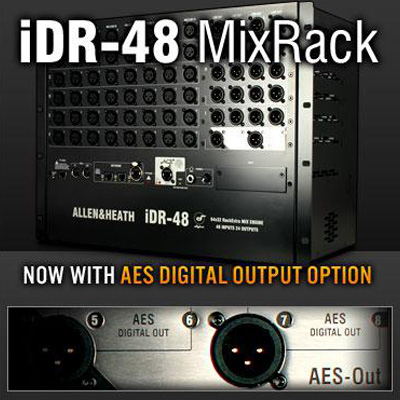
The MixRack is the heart of the iLive system, housing the DSP, most of the I/O, networking and control interfaces. The iDR-48 sits in the middle of the fixed format range with 48 Mic/Line inputs and 24 XLR line outputs.
Specifications- 8U fixed format MixRack
- 48 mic/line in, 24 XLR out*
- 64x32 RackExtra DSP with 8 stereo FX
- ACE™ Surface link plus Port B network option
- Built 3 port Ethernet switch
- Network bridges to Surface via ACE™
- MIDI and PL-Anet ports
- Built in headphone amp with level control
- External iPS10 redundant power supply option
*AES Digital Output Option available, offering 2 AES3 digital stereo outputs in place of 4 analogue line outputs. iDR-48 can be ordered with a single AES Digital Output Option pre-fitted. A retro-fit kit is also available, allowing single or multiple AES Digital Output Options to be fitted.
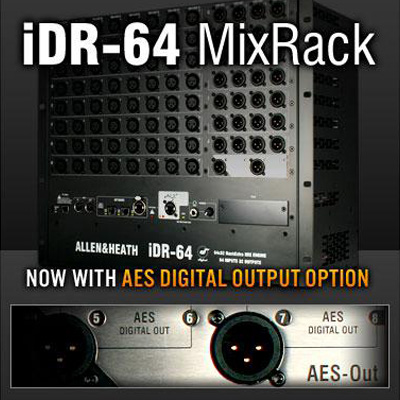
The MixRack is the heart of the iLive system, housing the DSP, most of the I/O, networking and control interfaces. The iDR-64 is the biggest of the fixed format range with 64 Mic/Line inputs and 32 XLR line outputs.
Specifications- 9U fixed format MixRack
- 64 mic/line in, 32 XLR out*
- Can process 64 in digital mic spilt applications
- 64x32 RackExtra DSP with 8 stereo FX
- ACE™ Surface link plus Port B network option
- Built in 3 port Ethernet switch
- Network bridges to Surface via ACE™
- MIDI and PL-Anet ports
- Built in headphone amp with level control
- External iPS10 redundant power supply option
*AES Digital Output Option available, offering 2 AES3 digital stereo outputs in place of 4 analogues line outputs. iDR-64 can be ordered with a single AES Digital Output Option pre-fitted. A retro-fit kit is also available, allowing single or multiple AES Digital Output Options to be fitted.
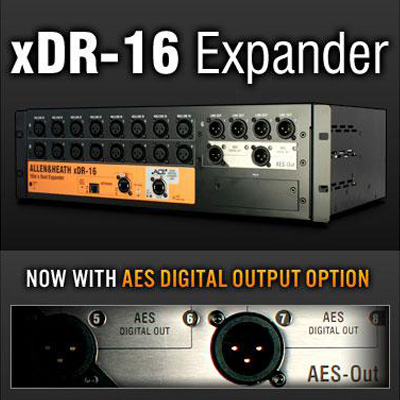
xDR-16 helps you satisfy the ever growing hunger for more inputs, more monitor mixes, more recording feeds, more everything that is a fact of pro audio life. xDR-16 puts the I/O where you need it – across the other side of the stage, at FoH, in another room, on the drum riser, even in a separate building. Connection is over a single CAT5 cable – saving the time, hassle and expense of running audio snakes and stage boxes.
xDR-16 is a 16 input, 8 output expander for iLive digital mixing systems. Whether you simply want to accommodate more sources or whether you want local I/O in different areas of a stage or venues, xDR-16 adds to the convenience and flexibility of the iLive concept.
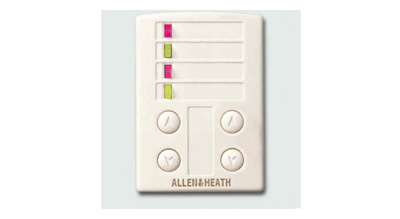
The PL-3 wall plate has 4 programmable switches and 4 programmable tri-colour LEDs and is ideal for local operator control of iDR-based audio systems. They may be used, for example, for source selection for an output zone, or local volume control.
The PL-3 is one of several remote control devices available for the iDR audio mix processor system. It is a wall plate for furniture mounted module comprising plastic control panel and attached circuit assembly. It can be mounted in a single unit wall box using a standard face plate (UK, EU or US version applied). A suitable template with cutting details is provided for custom application. The PL-3 interfaces with the Allen & Heath RS485 based PL-Anet serial port. Multiple PL-3 units can be daisy chained together along with other PL-Anet devices using CAT5 cable. The wall plate control and indicator functions are programmed using the iDR System Manager software. Space is provided on the control panel for custom labelling of the programmed functions.
4 switches can be assigned for level up or down control (input, output, crosspoint or group), mute toggle, polarity toggle, audio monitor select, or preset recall.
Custom labels Recessed areas are provided for fitting custom adhesive labels. Recommended maximum sizes for 6x26mm and 26x9mm.
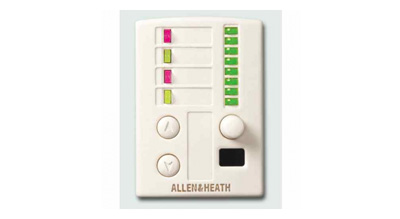
The PL-4 wall plate has 2 programmable switches, 4 programmable tri-colour LEDs and a rotary control with LED ladder. It has a built-in infra-red receiver, allowing it to be operated at a distance using the PL-5 handheld remote controller – these control options can be different to those set on the PL-4. PL-4 is ideal for local operator control for iDR-based audio systems. They may be used, for example, for source selection for an output zone, or for local volume control.
Introduction The PL-4 is one of several remote control devices available for the iDR audio mix processor system. It is a wall plate or furniture mounted module comprising plastic control panel and attached circuit assembly. It can be mounted in a single unit wall box using a standard face plate (UK, EU or US version supplied). A suitable template with cutting details is provided for custom application. The PL-4 interfaces with the Allen & Heath PL-Anet serial port.
Multiple PL-4 units can be daisy chained together along with other PL-Anet devices using CAT5 cable. The wall plate control and indicator functions are programmed using the iDR System Manager software. Space is provided on the control panel for custom labelling. The PL-4 is ideal as a wall mounted room remote controller in installed audio systems. The installer can program the unit so that the non-technical operator has local control of volume, mute, source select, and preset changes which reconfigure the room for different functions, as well as the convenience of the PL-5 infrared remote controller.
2 switches can be assigned for level up or down control (input, output, crosspoint or group), mute toggle, audio monitor select, or preset recall.
4 LED indicators can be assigned as audio meters (choice of 8x points in the signal path), mute status, or as preset related static display. They can display four states: off, green, yellow or red.
Rotary control can be assigned as a continuous level control (input, output, crosspoint or group).
An 8 LED meter bar displays the control position.
Infra-red controller allows wireless local control using the hand-held PL-5 remote controller. Each of the 14 keys on the PL-5 can be assigned in the same way as the switches described above. The PL-4 can be used without the IR controller.
Recessed areas are provided for fitting custom adhesive labels. Recommended maximum label sizes are 6x14mm and 26x9mm.
Number and addressing of devices: - the maximum number of PL devices that can be connected depends on their type and the cable lengths. Up to 12x PL-4 devices (more if using half speed scan) may be connected in an iDR system, with or without the PL-9 hub. Fewer devices may be connected if long distances or other PL types are also involved. The iDR allocates the device addresses automatically per PL type in the order they appear in the chain.
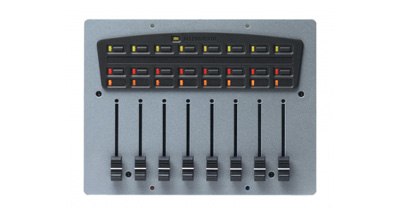
The PL-6 is ideal as a remote mix controller – typical applications include acting as a simple operator-controlled fader panel in an installed sound system, or providing musicians with control over their monitor speakers or in-ear monitors. It has 8x60mm faders, 24 tri-colour LEDs and 16 soft switches which are all programmable via iDR System Manager. PL-6 can also act as a basic lighting controller via MIDI/DMX, and the unit can be wall-mounted or flange-mounted into a table or wall.
The PL-6 is one of several remote control devices available for the iDR-4 and iDR-8 audio mix processor systems. It can be mounted into a plinth or custom furniture, or used free standing. A suitable template with cutting details is provided for custom application. The PL-6 interfaces with the Allen & Heath PL-Anet serial port. Multiple PL-6 units can be daisy chained together along with other PL-Anet devices using CAT5 cable. A terminator is provided for plugging into the last unit in the chain. The PL-6 control and indicator functions are programmed using the iDR System Manager software. Space is provided next to the controls for custom labelling. The PL-6 is ideal as a remote mix controller, for example as a simple operator controlled fader panel is an installed sound system, or as a personal musicians on-stage mix controller with in-ear monitors. The installer can program the unit according to the requirements of the application providing the degree of control needed by the day to day operator.
8 Faders can be configured individually for input, output, group or crosspoint level control. Minimum and maximum ranges can be set. 16 Switches, arranged as two per fader, can be configured as combinations of level up/downs, mute toggle, polarity toggle, audio monitor select, or patch recall. 24 LED indicators, arranged as three per fader, can be configured as unused if not required. A single 3 colour Status LED displays PL-Anet power and communication status. Custom labels can be fitted into the recessed areas provided.
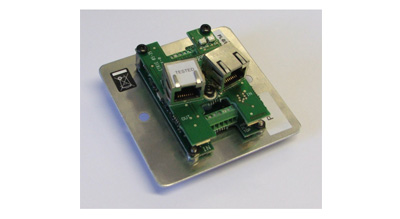
PL-8 is a 4 input, 4 output logic control panel mounted on a wall plate which can be connected to PL-Anet. It is designed to interface external systems such as alarm systems, juke boxes, room dividers, fader starts and lights at a convenient location.
The PL-8 is part of the Allen & Heath PL Series of wall plates and remote controllers available for the iDR-4 and iDR-8 audio mix processor systems. It is a small module comprising two circuit cards. This can be locally mounted in a single unit wall box using the standard UK, EU, or US face plate supplied.
The PL-8 provides four contact closure switch inputs and four transistor logic outputs for external equipment control. Their function is programmed using the iDR System Manager software. The combination of switch input and logic output makes the PL-8 ideal as a multi-function remote controller in installed systems. The unit can interface to a variety of devices including alarm systems, room divider switching, paging controls, event triggers and various custom switches and indicators.
Control can be distributed where it is needed. The PL-8 interfaces via the Allen & Heath PL Anet serial network. Multiple PL-8 units can be daisy chained using CAT5 cable, along with other PL-Anet devices such as the PL-3 and PL-4 wall plates, PL-6 fader controller and so on.
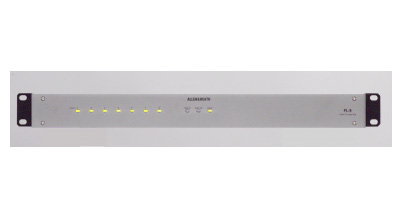
PL-9 is a 1U rack or desk mount hub which provides up to 7 individual connections to chains of PL devices, offering 'star wiring'simplifying wiring and eliminating the need for comple daisy-chaining. This also provides the benefit of longer cable runs and allows easier 'plug and play'of devices such as the PL-6 and PL-10 and allows a larger number of PL controllers to be connected to a single iDR unit. As the PL-9 is the 'end of chain'on a PL-Anet brunch, if offers greater flexibility by allowing PL wallplates to be plugged in and out easily – for example a PL-6 could just be plugged into a PL-9 onstage, allowing local performer control, then removed after the event.
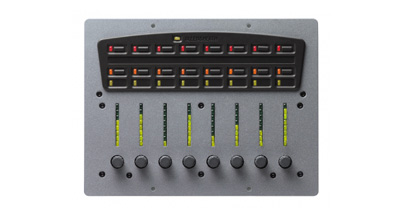
The PL-10 is a compact mixer interface with 8 rotary encoders and LED ladder displays, making it possible to mix live events within the iDR system. It’s ideal for creating and controlling an output mix of cross-point groups. The PL-10 can be assigned to read and adjust different mixes, as the LED bars indicate the levels managed by the iDR unit. The unit can be hand-held or flange-mounted into a table or wall. As the PL-10 has encoders rather than faders, it can respond to changes in levels made from other controllers.
The PL-10 adds to the extensive range of remote control devices available for the iDR-4 and iDR-8 audio mix processor systems. It offers an alternative to the PL-6 fader controller with the advantage that user settings can be store and recalled without the need to physically move the controls to the new settings. It can be mounted into a plinth or custom furniture, or used free standing. Template cutting details are provided for custom application. The PL-10 interfaces with the Allen & Heath PL-Anet serial port. Multiple PL-10 units can be daisy chained together along with other PL-Anet devices using the CAT5 cable. A terminator is provided for plugging into the last unit in the chain. The PL-10 control and indicator functions are programmed using the iDR System Manager software. Space is provided next to the controls for custom labelling.
The PL-10 is ideal as a remote mix controller, for example, as a simple operator controlled mix panel in an installed sound system, or as a personal musicians on-stage mix controller for in-ear monitors. The installer can program the unit according to the requirements of the application, providing the degree of control needed by the day to day operator.
8 Rotary Encoders can be configured individually for continuous input, output, group, crosspoint level control or monitor level. Minimum and maximum ranges can be set. Each rotary encoder has 8 LEDs displaying the control position.
16 Switches, arranged as two per rotary encoder, can be configured as combinations of level up/down, mute toggle, polarity toggle, audio monitor select, or preset recall. 24 LED indicators, arranged as three per fader, can be configured as combinations of 3 colour signal meters, mute status, and channel on indication, level sensing or preset related 3 colour LED indication. Controls can be disabled if not required. A single 3 colour Status LED displays PLAnet power and communication status. Custom labels can be fitted into the recessed areas provided (13 x 7mm).
The PL-11 is an IR receiver which uses the proprietary PL-Anet CAT5 plug 'n play protocol employed in Allen & Heath’s iDR and iLive digital mixing systems. Built in to a wallplate backing, the PL-11 receives commands from the PL-5 handheld IR transmitter, which can be set to perform specific functions using iDR’s System Manager software or via the touchscreen in iLive mixing consoles.
The PL-11 IR receiver is useful where open or 'hidden'system settings need to be changed by authorised personnel, as they do not have any unguarded controls. 14 soft keys on the PL-5 can be programmed to manage functions such as levels, mutes, preset recall and MIDI strings for external equipment interfacing. iDR systems also provide tally /RS232 out, IR protocol is contained in the System Manager software download bundle.
Ships with PL5 IR Remote Controller
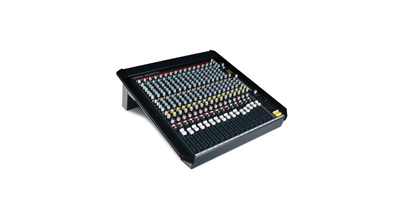
With its simplicity, quality and plentiful inputs, WZ4 16:2 will be loved by seasoned engineers and novice operators alike. This is a true all-purpose mixer, providing a full 16 high specification mic/line inputs in a compact, straightforward format that has made it a consistent best seller.
WZ4 16:2 features our acclaimed 4 band EQ with 2 sweepable mids, high quality 100mm faders, 6 aux sends, 12 segments bargraph metering and the unique QCC connector system for easy desktop, rack or flightcase mounting.
New features for this 4th generation MixWizard console include two newly designed digital FX engines with 20 studio quality FX presets, EQ in/out switching and the option to fit a multichannel USB interface with high quality 16 channel soundcard for easy multitrack recording and 2-track playback.
If you’re looking for professional grade, all-purpose analogue mixers in a compact, rack mountable frame, the MixWizards continue to set the bar.
Specifications- 19” Rack mountable
- 16 mic/line inputs with balanced XLR/TRS jack, insert and direct output
- 100mm faders
- 4 band EQ with 2 swept mids
- 6 Aux sends – 2x pre fade / 2x switched / 2x post fade*
- 2 Stereo returns
- Dedicated mono output fader – can be switched to provide an L+R mono feed for a centre or fill speaker, or sub bass feed
- Independent A-B output for 2-track recording, monitor foldback, speaker fills etc
- Tri-colour, 12 segment bargraph metering
- Twin FX engines with 20 studio quality FX presets
- +48V Phantom Power
- Signal and Peak LEDs
- Lamp socket
- USB multitrack recording option
- Footswitch connector (mutes/ unmute the ST1 FX Return)
*Can be reconfigured with internal jumpers
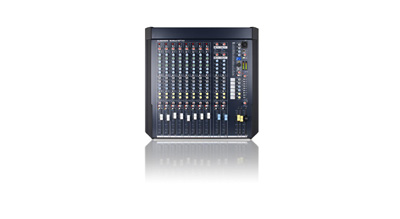
WZ4 12:2 is your ideal companion for those scenarios where you don’t need masses of channels, but you still need to deliver superb audio quality. The 2 dual stereo channels are perfect for stereo playback or for hooking up keyboards and other stereo instruments.
WZ4 12:2 features the acclaimed 4 band EQ with 2 sweepable mids, high quality 100mm faders, 6 aux sends, 12 segment bargraph metering and the unique QCC connector system for easy desktop, rack or flightcase mounting.
New features for this 4th generation MixWizard console include two newly designed digital FX engines with 20 studio quality FX presets, EQ in/out switching and the option to fit a multichannel USB interface with high quality 16 channel soundcard for easy multitrack recording and 2-track playback.
If you’re looking for professional grade, all-purpose analogue mixers in a compact, rack mountable frame, the MixWizards continue to set the bar.
Specifications- 19” Rack mountable
- 8 mic/line inputs with balanced XLR/TRS jack, insert and direct output
- 100mm faders
- 2 Dual Stereo inputs with separate gain and “ON” switches allowing inputs to be selected independently or mixed together
- 4 band EQ with 2 swept mids
- 6 Aux sends – 2x pre fade / 2x switched / 2x post fade*
- 2 Stereo returns
- Dedicated mono output fader – can be switched to provide an L+R mono feed for a centre or fill speaker, or sub bass feed
- Independent A-B output for 2-track recording, monitor foldback, speaker fills etc
- Tri-colour, 12 segment bargraph metering
- Twin FX engines with 20 studio quality FX presets
- +48V Phantom Power
- Signal and Peak LEDs
- Lamp socket
- USB multitrack recording option
- Footswitch connector (mutes/unmutes the ST1FX Return)
*Can be reconfigured with internal jumpers
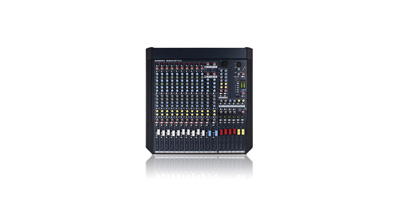
A uniquely versatile live sound mixer, WZ4 14:4:2 is equally at home at Front of House, on Monitors, or doubling up to fill both roles at once.
WZ4 14:4:2 features the acclaimed 4 band EQ with 2 sweepable mids, high quality 100mm faders, 6 aux sends, 12 segment bargraph metering and the unique QCC connector system for easy desktop, rack or flightcase mounting.
This 4th generation MixWizard console now has the option to fit a multichannel USB interface with high quality 16 channel soundcard for easy multitrack recording and 2-track playback.
If you’re looking for professional grade, all-purpose analogue mixers in a compact, rack mountable frame, the MixWizards continue to set the bar.
Specifications
FoH / Monitor / Dual Mode
In FoH Mode, the 4 groups with inserts, 100 faders and XLR outputs can be routed and panned to the LR mix for flexible submixing. The main LR mix has inserts, separate left and right faders, and XLR outputs to feed the main speaker system. EQ and signal processing can easily be inserted on group and main outputs.
In Monitor Mode, the aux mixers are routed to the group and LR faders, inserts and XLR output. The AFL and PFL system is switched to the Mono output to provide an engineer’s “wedge” output. In essence, it’s a perfect 6-mix monitor console with additional outputs available from the group busses via the aux master controls.
In Dual Mode some auxes can be used as monitor and some sub-grouping can be used along with the main LR outputs, allowing the engineer to run FoH sound and some Monitor mixes from the same console.
- 19” Rack mountable
- 10 mic/line inputs with balanced XLR/TRS jack, insert and direct output
- 100mm faders
- Reverse switches swap the function of the group and aux masters in Monitor or Dual Mode applications
- 6 Aux sends – switchable pre/post fade
- 4 Audio groups
- 2 Dual Stereo inputs with separate gain and “ON” switches allowing inputs to be selected independently or mixed together
- 4 band EQ with 2 swept mids
- 6x2 Matrix for providing feeds for in ear monitors, delay speakers, video, broadcast and more
- Oscillator and Pink Noise generator for line-up and speaker testing
- Tri-colour, 12 segment bargraph metering
- +48V Phantom Power
- Signal and Peak LEDs
- Talkback Mic XLR with trim
- Lamp socket
- USB multitrack recording option
'Walk up and go' is a perfect description for the PA Series mixer – all the controls you expect are logically placed so that you stay in control under the pressure of any performance. The 4 band EQ on inputs and outputs and clever output routing are unique and will ensure you get the best out of the system, while features such as individual phantom power switches and SPDIF recording output add professional finishing touches.
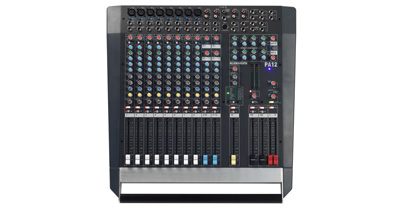
The PA12 is a robust, compact 12 input (8 mono, 2 dual stereo) mixer with a straightforward layout and extensive functionality. With a design and build quality that mirrors professional touring desk, PA12 is an essential addition to any band, school, theatre, or hire inventory.
Easy-to-Mix Controls
The control surface is laid out in an uncomplicated format and the operator can easily see all connections for patching. Pre-fade sends (FB) and post-fade sends (FX) are clearly labelled and colour coded, and there are generous 100mm fader masters with a LED mute button, identical to the channel controls. There is a selection of 16 digital FX to complete the professional design.
Stereos
2 dual stereo channels with RCA and TRS connectors and independent gain controls are included for FX returns and stereo sources, such as CD players and backing tracks. The RCA inputs can feed straight to LR, so providing extra returns. The stereo channels are furnished with 2 band EQ, and can be routed to all 4 auxiliary sends.
A+B Output Channels
The main XLR outputs derive their source from a selectable combination of LR (stereo), L+R (mono), FB1 and FB2, and provide master level trim, meters, slave outputs, patch point for external processors, and the very precise 4 band semi-parametric equalisers. This is extremely flexible and means that the PA can be operated in many different ways. For example, the user may want to run a stereo house system with separate left and right speakers and no monitors, or a mono system with a foldback monitor.
High Performance Preamp
The mic preamp is probably the most important stage in the console’s signal path and its performance is often the measure of the quality of the console. The PA Series uses a high grade dualstage design, developed from Allen & Heath’s acclaimed ML and GL consoles. This ensures optimum matching and very low noise when connecting mic or line sources.
Parametric Output EQ
A 4 band equaliser with swept frequency on each band provides more precise optimisation of the speaker system and control of feedback than the typical fixed frequency graphic type EQ found on similar consoles.
Filter
Each mono input channel is equipped with a 100Hz high-pass filter, an invaluable tool for cleaning up the mix. The majority of live sound sources have very little content below 100Hz, and modern microphones have wide frequency responses and can pick up bleed from nearby low frequency sources such as bass and kick drums. The filter can be used: on vocal channels to reduce mic handling noise and close proximity 'popping’; on drum overhead mics to reduce kick and bass pick up; on higher frequency instruments such as flute and acoustic guitar; and on stage mics to reduce foot noise.
Recording Outputs
There is a digital SPDIF 2-track output available from a RCA phono socket for recording direct to digital media, such as a PC soundcards, DAT and digital audio processors. The recording send can be switched pre-fade if desired. An analogue recording output is also available.
4 Band Channel EQ
The 4 band input EQ is every bit a pro tool. The low [60Hz] and high [12kHz] bands have shelving response, while the high midrange band is sweepable from 350Hz to 6kHz. Low-midrange EQ has a bell response at 250Hz – a frequency chosen to provide reduction of 'muddy'sounds and enhance 'warmth’.
Lamp Socket
A 4 pin lamp connector is provided on the rear of the control surface.
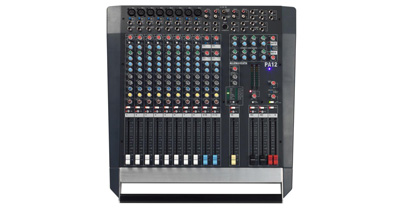
PA12-CP is a sturdy 'walk up and go'powered mixer, guaranteed to deliver loads of weighty power from its Constant Power Amplifier. This well thought out 12 input (8 mono, 2 dual stereo) mixer offers operational flexibility for any live sound situation and engineers of any experience.
Easy-to-Mix Controls
The control surface is laid out in an uncomplicated format and the operator can easily see all connections for patching. Pre-fade sends (FB) and post-fade sends (FX) are clearly labelled and colour coded, and there are generous 100mm fader masters with a LED mute button, identical to the channel controls. There is a selection of 16 digital FX to complete the professional design.
Stereos
2 dual stereo channels with RCA and TRS connectors and independent gain controls are included for FX returns and stereo sources, such as CD players and backing tracks. The RCA inputs can feed straight to LR, so providing extra returns. The stereo channels are furnished with 2 band EQ, and can be routed to all 4 auxiliary sends.
Built-in Amplifier
The PA12-CP contains a built-in amplifier, delivering an impressive 1kiloWatt, able to run a regular stereo PA system with very little external equipment. The objective was to produce a powerful, great sounding amplifier in a compact package for the high-end audio market. The result is not only a well voiced amp with loads of weighty power but also clear, transparent audio quality. The unique 'Constant Power'system ensures that all available power is converted into useable speaker power can guarantee the full 500W RMS per side into 4 ohms OR 8 ohms.
A+B Output Channels
The main amplifier outputs derive their source from a selectable combination of LR (stereo), L+R (mono), FB1 and FB2, and provide master level trim, meters, slave outputs, patch point for external processors, and the very precise 4 band semi-parametric equalisers. This is extremely flexible and means that the PA can be operated in many different ways. For example, the users may want to run a stereo house system with separate left and right speakers and no monitors, or a mono system with a foldback monitor. Alternatively, you may patch into a bigger house system and use the built-in amplifier to provide a pair of equalised stage monitors. The PA12-CP takes the concept of a 'PA in a box'a versatile step further.
High Performance Preamp
The mic preamp is probably the most important stage in the console’s signal path and its performance is often the measure of the quality of the console. The PA Series uses a high grade dualstage design, developed from Allen & Heath’s acclaimed ML and GL consoles. This ensures optimum matching and very low noise when connecting mic or line sources.
Parametric Output EQ
A 4 band equaliser with swept frequency on each band provides more precise optimisation of the speaker system and control of feedback than the typical fixed frequency graphic type EQ found on similar consoles.
Filter
Each mono input channel is equipped with a 100Hz high-pass filter, an invaluable tool for cleaning up the mix. The majority of live sound sources have very little content below 100Hz, and modern microphones have wide frequency responses and can pick up bleed from nearby low frequency sources such as bass and kick drums. The filter can be used: on vocal channels to reduce mic handling noise and close proximity 'popping’; on drum overhead mics to reduce kick and bass pick up; on higher frequency instruments such as flute and acoustic guitar; and on stage mics to reduce foot noise.
Recording Outputs
There is a digital SPDIF 2-track output available from a RCA phono socket for recording direct to digital media, such as PC soundcards, DAT and digital audio processors. The recording send can be switched pre-fade if desired. An analogue recording output is also available.
4 Band Channel EQ
The 4 band input EQ is every bit a pro tool. The low [60Hz] and high [12kHz] bands have shelving response, while the high-midrange band is sweepable from 350Hz TO 6kHz. Low-midrange EQ has a bell response at 250Hz – a frequency chosen to provide reduction of 'muddy'sounds and enhance 'warmth’.
Lamp Socket
A 4 pin lamp connector is provided on the rear of the control surface.
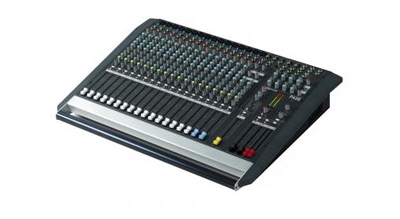
The PA20 is a robust, compact 20 input (16 mono, 2 dual stereo) mixer with a straightforward layout and extensive functionality. With a design and build quality that mirrors the professional touring desks, PA20 are an essential addition to any band, school, theatre, or hire inventory.
Easy-to-Mix Controls
The control surface is laid out in an uncomplicated format and the operator can easily see all connections for patching. Pre-fade sends (FB) and post-fade sends (FX) are clearly labelled and colour coded, and there are generous 100mm fader masters with a LED mute button, identical to the channel controls. There is a selection of 16 digital FX to complete the professional design.
Stereos
2 dual stereo channels with RCA and TRS connectors and independent gain controls are included for FX returns and stereo sources, such as CD players and backing tracks. The RCA inputs can feed straight to LR, so providing extra returns. The stereo channels are furnished with 2 band EQ, and can be routed to all 4 auxiliary sends.
A+B Output Channels
The main XLR outputs derive their source from a selectable combination of LR (stereo), L+R (mono), FB1 and FB2, and provide master level trim, meters, slave outputs, patch point for external processors, and the very precise 4 band semi-parametric equalisers. This is extremely flexible and means that the PA can be operated in many different ways. For example, the user may want to run a stereo house system with separate left and right speakers and no monitors, or a mono system with a foldback monitor.
High Performance Preamp
The mic preamp is probably the most important stage in the console’s signal path and its performance is often the measure of the quality of the console. The PA Series uses a high grade dualstage design, developed from Allen & Heath’s acclaimed ML and GL consoles. This ensures optimum matching and very low noise when connecting mic or line sources.
Parametric Output EQ
A 4 band equaliser with swept frequency on each band provides more precise optimisation of the speaker system and control of feedback than the typical fixed frequency graphic type EQ found on similar consoles.
Filter
Each mono input channel is equipped with a 100Hz high-pass filter, an invaluable tool for cleaning up the mix. The majority of live sound sources have very little content below 100Hz, and modern microphones have wide frequency response and can pick up bleed from nearby low frequency sources such as bass and kick drums. The filter can be used: on vocal channels to reduce mic handling noise and close proximity 'popping’; on drum overhead mics to reduce kick and bass pick up; on higher frequency instruments such as flute and acoustic guitar; and on stage mics to reduce foot noise.
Recording Outputs
There is a digital SPDIF 2-track output available from a RCA phono socket for recording direct to digital media, such as PC soundcards, DAT and digital audio processors. The recording send can be switched pre-fade if desired. An analogue recording output is also available.
4 Band Channel EQ
The 4 band input EQ is every bit a pro tool. The low [60Hz] and high [12kHz] bands have shelving response, while the high-midrange band is sweepable from 350Hz to 6 kHz. Low-midrange EQ has a bell response at 250Hz - a frequency chosen to provide reduction of 'muddy'sounds and enhance 'warmth’.
Lamp socket
A 4 pin lamp connector is provided on the rear of the control surface.
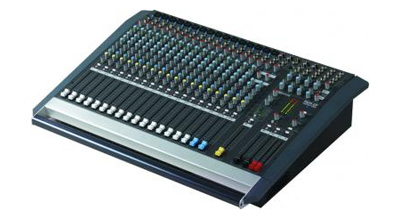
PA20-CP is a sturdy 'walk up and go'powered mixer, guaranteed to deliver loads of weighty power from its Constant Power amplifier. This well thought out 20 input (16 mono, 2 dual stereo) mixer offers operational flexibility for any live sound situation and engineers of any experience.
Easy-to-Mix Controls
The control surface is laid out in an uncomplicated format and the operator can easily see all connections for patching. Pre-fade sends (FB) and post-fade sends (FX) are clearly labelled and colour coded, and there are generous 100mm fader masters with a LED mute button, identical to the channel controls. There is a selection of 16 digital FX to complete the professional design.
Stereos
2 dual stereo channels with RCA and TRS connectors and independent gain controls are included for FX returns and stereo sources, such as CD players and backing tracks. The RCA inputs can feed straight to LR, so providing extra returns. The stereo channels are furnished with 2 band EQ, and can be routed to all 4 auxiliary sends.
Built-in Amplifier
The PA20-CP contains a built-in amplifier, delivering an impressive 1 kiloWatt, able to run a regular stereo PA system with very little external equipment. Our objective was to produce a powerful, great sounding amplifier in a compact package for the high-end audio market. The result is not only a well voiced amp with loads of weighty power but also clear, transparent audio quality. The unique 'Constant Power'system ensures that all available power is converted into useable speaker power guarantee the full 500W RMS per side into 4 ohms OR 8 ohms.
A+B Output Channels
The main amplifier outputs derive their source from a selectable combination of LR (stereo), L+R (mono), FB1 and FB2, and provide master level trim, meters, slave outputs, patch point for external processors, and the very precise 4 band semi-parametric equalisers. This is extremely flexible and means that the PA can be operated in many different ways. For example, the user may want to run a stereo house system with separate left and right speakers and no monitors, or a mono system with a foldback monitor. Alternatively, you may patch into a bigger house system and use the built-in amplifier to provide a pair of equalised stage monitors. The PA20-CP takes the concept of a 'PA in a box'a versatile step further.
High Performance Preamp
The mic preamp is probably the most important stage in the console’s signal path and its performance is often the measure of the quality of the console. The PA Series uses a high grade dualstage design, developed from Allen & Heath’s acclaimed ML and GL consoles. This ensures optimum matching and very low noise when connecting mic or line sources.
Parametric Output EQ
A 4 band equaliser with swept frequency on each band provides more precise optimisation of the speaker system and control of feedback than the typical fixed frequency graphic type EQ found on similar consoles.
Filter Each mono input channel is equipped with a 100Hz high-pass filter, an invaluable tool for cleaning up the mix. The majority of live sound sources have very little content below 100Hz, and modern microphones have wide frequency response and can pick up bleed from nearby low frequency sources such as bass and kick drums. The filter can be used: on vocal channels to reduce mic handling noise and close proximity 'popping’; on drum overhead mics to reduce kick and bass pick up; on higher frequency instruments such as flute and acoustic guitar; and on stage mics to reduce foot noise.
Recording Outputs
There is a digital SPDIF 2-track output available from a RCA phono socket for recording direct to digital media, such as PC soundcards, DAT and digital audio processors. The recording send can be switched pre-fade if desired. An analogue recording output is also available.
4 Band Channel EQ
The 4 band input EQ is every bit a pro tool. The low [60Hz] and high [12kHz] bands have shelving response, while the high-midrange band is sweepable from 350Hz to 6 kHz. Low-midrange EQ has a bell response at 250Hz - a frequency chosen to provide reduction of 'muddy'sounds and enhance 'warmth’.
Lamp socket
A 4 pin lamp connector is provided on the rear of the control surface.
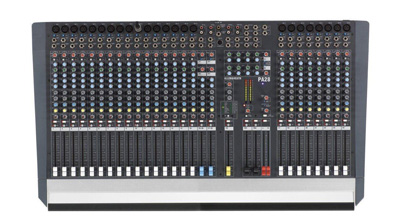
The PA28 is a robust, compact 28 input (24 mono, 2 dual stereo) mixer with a straightforward layout and extensive functionality. With a design and build quality that mirrors Allen & Heath’s professional touring desks, PA28 is an essential addition to any band, school, theatre, or hire inventory.
Easy-to-Mix Controls
The control surface is laid out in an uncomplicated format and the operator can easily see all connections for patching. Pre-fade sends (FB) and post-fade sends (FX) are clearly labelled and colour coded, and there are generous 100mm fader masters with a LED mute button, identical to the channel controls. There is a selection of 16 digital FX to complete the professional design.
Stereos
2 dual stereo channels with RCA and TRS connectors and independent gain controls are included for FX returns and stereo sources, such as CD players and backing tracks. The RCA inputs can feed straight to LR, so providing extra returns. The stereo channels are furnished with 2 band EQ, and can be routed to all 4 auxiliary sends.
A+B Output Channels
The main XLR outputs derive their source from a selectable combination of LR (stereo), L+R (mono), FB1 and FB2, and provide master level trim, meters, slave outputs, patch point for external processors, and the very precise 4 band semi-parametric equalisers. This is extremely flexible and means that the PA can be operated in many different ways. For example, the user may want to run a stereo house system with separate left and right speakers and no monitors, or a mono system with a foldback monitor.
High Performance Preamp
The mic preamp is probably the most important stage in the console’s signal path and its performance is often the measure of the quality of the console. The PA Series uses a high grade dualstage design, developed from Allen & Heath’s acclaimed ML and GL consoles. This ensures optimum matching and very low noise when connecting mic or line sources.
Parametric Output EQ
A 4 band equaliser with swept frequency on each band provides more precise optimisation of the speaker system and control of feedback than the typical fixed frequency graphic type EQ found on similar consoles.
Filter
Each mono input channel is equipped with a 100Hz high-pass filter, an invaluable tool for cleaning up the mix. The majority of live sound sources have very little content below 100Hz, and modern microphones have wide frequency response and can pick up bleed from nearby low frequency sources such as bass and kick drums. The filter can be used: on vocal channels to reduce mic handling noise and close proximity 'popping’; on drum overhead mics to reduce kick and bass pick up; on higher frequency instruments such as flute and acoustic guitar; and on stage mics to reduce foot noise.
Recording Outputs
There is a digital SPDIF 2-track output available from a RCA phono socket for recording direct to digital media, such as PC soundcards, DAT and digital audio processors. The recording send can be switched pre-fade if desired. An analogue recording output is also available.
4 Band Channel EQ
The 4 band input EQ is every bit a pro tool. The low [60Hz] and high [12kHz] bands have shelving response, while the high-midrange band is sweepable from 350Hz to 6 kHz. Low-midrange EQ has a bell response at 250Hz - a frequency chosen to provide reduction of 'muddy'sounds and enhance 'warmth’.
Lamp socket
A 4 pin lamp connector is provided on the rear of the control surface.
Compact, cost-effective and versatile, the XB Series is designed for a broad range of applications from small radio or internet broadcast studios, to larger studios with multiple rooms, hospital radio, university radio and community radio.
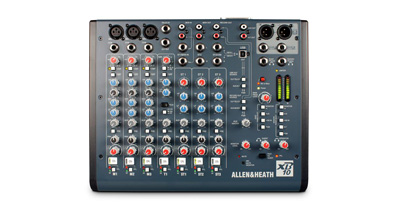
The ultra-compact XB-10 is perfect for small radio or internet broadcast studios, college and university radio stations, padcasting, content creation and more.
Despite its tiny footprint, XB-10 is packed with the kinds of specialised broadcast features that normally come at a much higher price. Radio-friendly tools include a telephone communication (teleco) channel, mic channel ON switch sensing, stereo channel start/cue outputs for CD desk transport control and automatic muting of speaker outputs. A separate monitor mix can be created for operator and guest or presenter, and the operator can speak off-air to the studio or telephone callers using the 'Talk'feature.
XB-10’s preamps use low noise discrete transistor circuitry to achieve high gain and excellent linearity. Each mic channel comes equipped with Allen & Heath’s innovative CompACT compressor to keep the dynamic range of a presenter microphone under control. A variable limiter on the main output ensures that the final mix to air does not saturate expensive broadcast equipment.
The plug-n-play USB connection can be used for VolP telephone calls, recording program material, playing jingles and more.
USB
XB-10 comes with a full duplex USB soundcard built-in and many useful routing options for recording and broadcasting applications.
MusiQ
XB-10 features a responsive 3-band, swept mid frequency EQ design which utilises MusiQ with optimised slope for a variety of sources.
Output Limiter
A variable limiter ensures the level does not exceed a pre-defined level. Back panel option switches allow the limiter to be bypassed. A trim pot is used to vary the threshold and an LED on the front panel indicates when the limiter has triggered.
CompACT Compressor
XB-10 features ComPACT compressor on each of its mic channels. CompACT (Adaptive Compression Technology) is a program-dependent audio leveller. Unlike other compressors, which are effective only at reducing loud sounds, CompACT combines both downward and upward compression with peak limiting. Low level signals are given a gain boost, mid-level signals are mildly compressed with a soft knee response, and high level signals are limited.
- 3 mic/line and 3 stereo inputs
- Telco channel with optional USB routing for VolP
- CompACT compressors on mic channels
- ON switch logic on mic and telco channels
- Start/cue logic outputs on stereo channels
- Separate headphones mix and outputs
- Auto mutes on control room outputs
- Remote mute facility on mic channels
- Responsive 3-band, swept mid EQ with MusiQ
- Configurable USB stereo audio in/out
- XLR main outputs with inserts and variable limiter
- Aux / Alt bus for external processing, recording or auditioning
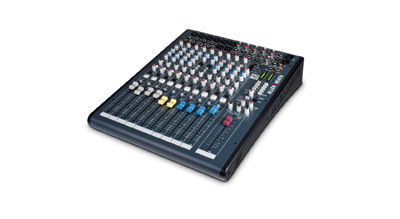
XB-14² offers a host of specialised broadcast features that normally come at a much higher price, including telephone communication (teleco) channels, mic channel ON switch sensing, stereo channel start/cue outputs for playback device control, automatic muting of speaker outputs and much more.
XB-14² incorporates new features and styling based on feedback from the many broadcasters who have built their operations around the original XB-14. With a wealth of routing options, dual stereo channels for up to 7 stereo sources, and the addition of a dedicated Audition bus, enhanced microphone preamps and stereo channel gain range, XB-14² satisfies the demands of small radio and internet broadcasters as well as larger studios with multiple rooms. With no less than 27 logic I/O for remote control and 15 configurable switches, XB-14² is a highly flexible solution.
Features:- 4 mic/line channels
- 4 Dual Source stereo channels
- 2 Telco channels
- HPF and 3-band, swept mid EQ on mono channels
- 2-band EQ on stereo channels
- Variable high pass / low pass filters on Telco channels
- Smooth-ride 100mm faders
- 2-stage, padless pre-amps design
- Fader-start sensing on mono channels
- Start/cue logic outputs on stereo channels
- External meter socket
- Separate headphones mix for engineer/producer and 2 guests
- Auto mutes on control room outputs
- Remote mute facility on mic channels
- Configurable USB stereo audio in/out
- Audition bus for auditioning and off-air recording
- Aux and separate stereo busses for processing/recording
- XLR main outputs with insets
- Input signal and peak metering
Self / Producer Operated
Whether you need a mixer for a self-operated broadcast situation, or whether you have a separate studio and engineer, the XB series has features to fit. Separate monitor mixes can be created for operator and guests or presenter, so the engineer can check levels and cue sources while the presenter or guest can listen to a difference source. The engineer/producer can communicate to the guest or presenter using the Talk feature, as well as speaking off-air with telephone callers. There is also the facility for remote control of channel mutes from the studio using the remote interface connectors – ideal for studio situated mute or 'cough'switches.
DuoPre™ Preamps
The XB-14² pre-amps use a two stage design, with carefully controlled amounts of gain in each stage. When amplifying the signal from the XLR input and gain range is huge (69dB of range to be exact) and is very evenly distributed around the gain control, meaning better control of signal level. There is no “pad” switch, or pad circuit – line level signals are simply plugged into the second stage of the pre-amp by using the line input jack socket. This has the great advantage of lower noise when using the line input.
USB
XB-14² comes with a full duplex USB soundcard built-in and many useful routing options for recording and broadcast applications.
Audition Bus
The dedicated stereo audition bus can be used for auditioning or off air recording. Pressing the buttons marked AUD on the channels required transfers the mix from the program feed over to the audition bus.
Teleco
The two Telco channels provide a selectable clean-feed output (LR PGM), Aux or Audition bus), variable high pass and low pass filters to reduce the frequency range of the channel when used with the telephone caller, and TALK button.
Elements of a good mixer – such as fantastic sound, rugged build quality and imaginative feature sets can be found in the ZED Series. A range of competitively-priced mixers for musicians and sound engineers which will last a lifetime, and make mixing a real pleasure, ZED features sets are incredibly advanced for this level, offering a great mixing solution wherever you are, whatever you're doing-playing live, in the studio or at home, ZED will suit your application perfectly.
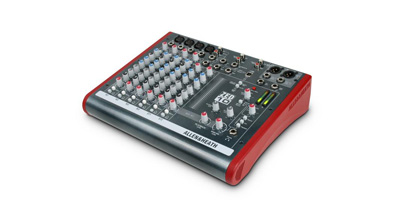
ZED-10 is an amazing little desk for small band mixing. It is ultra-portable for carrying to the gig, and can be used for recording live or in the studio. It comes with configurable USB audio in/out making it easy to capture stereo recordings.
Guitars can be plugged in directly to the mixer using the specially designed high-impedance inputs, while the mixer has two stereo inputs for MP3/CD players or keyboards.
Equipped with professional XLR stereo outputs and a flexible monitoring section with headphone and speaker feed outputs.
Feature:- 4 mic/line inputs, 2 with Class A FET high impedance inputs
- Neutrik mic XLR
- Neutrik ¼ inch jacks
- 3 band EQ with MusiQ
- 2 auxes
- Sound image pan
- Illuminated PFL indicator
- Stereo returns & playback
- All inputs with level control
- 12 bar meters
- Responsive 3-band, swept mid EQ with MusiQ
- 2 stereo sources with MP3 player compatibility
- Separate 2-track record outputs
- Stereo playback input for 2-track replay
- XLR main stereo outputs with inserts
- Comprehensive monitoring
- Configurable USB stereo audio in/out
- Stereo monitor outs
- 48V microphone phantom power
- DI level switching for sub mixing
USB audio flexibility
Getting audio to and from a computer easily is now a common requirement for live sound and music production. The way this has been implemented on ZED is super-flexible and super-easy! No longer do you need to fiddle around the back of your PC to get to the soundcard inputs, only to find that the levels are all wrong and noisy. Just plug in a USB lead to your ZED, select the USB routing on the mixer and the device on your computer and that's it! The quality from CD will then transfer audio to and from your PC or Mac. Switches and connection through jack socket terminals provide different send/return configurations: -
- Main Mix Left + Right (Post master Level)
- Aux + FX bus (Aux is a pre-fade send, FX is a post-fade send)
- Record Bus Left + Right (Separate stereo bus to Main Mix)
- To Playback input (through jack socket break contacts)
- To Stereo 2 channel (through jack socket break contacts)
MusiQ
ZED-10 features a responsive 3-band, swept mid frequency EQ design which utilises MusiQ – with optimised slope (or Q factor) for equalising individual instruments.
Guitar DI
ZED-10's pre-amps are similar in design to MixWizard range of mixers, but with a twist! Inputs 3&4 have a high impedance jack input capable of taking either a normal line level or a low level input from a guitar pickup. These newly designed inputs have been crafted with the aim of replicating the sound of a classic guitar or instrument tube pre-amp in a combo or head amp. Extremely high input impedance ensures loading on pick-ups is minimal and a Class A FET (Field Effect Transistor) circuit powered from 48V is employed to give the valve-like gain stage. There is a gain “Boost” switch associated with the guitar inputs which boosts gain by 26dB to cater for instruments with very low level outputs and the overdrive characteristics of the guitar inputs are very similar to a valve (tube) circuit, being asymmetric and soft. All this makes a wonderfully natural sound to be reproduced from the instrument, full of warmth and character.
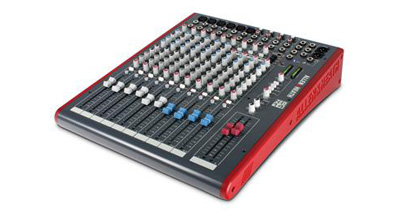
ZED-14 is a fantastic entry-level mixer for small bands, solo performers or AV applications. Its comprehensive feature set, compact size and fine lines combine to make it one of the best small mixers around. Provided with configurable USB audio in/out makes it easy to capture stereo recordings, 6 mic or line inputs, 4 stereo inputs with EQ, there are an incredible 157 controls on the front panel of the ZED-14.
This is a mixer for anymore, from entry-level to professionals, who appreciate fantastic sound, rugged build quality and imaginative features sets. It'll be equally happy running your gig on stage, recording live or mixing down in your studio at home.
Specifications- 6 mono channels
- Neutrik mic XLR
- Neutrik ¼ inch jacks
- Channel insert
- Super wide gain 'DuoPre' mic line input
- 3 band EQ with MusiQ
- 4 auxes
- Illuminated mute
- Sound image pan
- Illuminated PFL & peak warning indicator
- ALPS 100mm faders
- 4 stereo channels with 2-band EQ and inputs for extra sources
- Stereo returns & playback
- All inputs with level control
- 12 bar meters
- Mono/stereo functions on auxes 1&2
- Monitor output section
- Alt stereo output source
- Configurable USB stereo audio in/out
- Cakewalk SONAR X1 LE bundled with mixer
- Rack ears available
USB audio flexibility
Getting audio to and from a computer easily is now a common requirement for live sound and music production. The way this has been implemented on ZED is super-flexible and super-easy! No longer do you need to fiddle around the back of your PC to get to the soundcard inputs, only to find that the levels are all wrong and noisy. Just plug in a USB lead to your ZED, select the USB routing on the mixer and the device on your computer and that's it! The quality from CD will then transfer audio to and from your PC or Mac. Switches and connection through jack socket terminals provide different send/return configurations: -
- Main Mix Left + Right (Post master Level)
- Aux + FX bus (Aux is a pre-fade send, FX is a post-fade send)
- Record Bus Left + Right (Separate stereo bus to Main Mix)
- To Playback input (through jack socket break contacts)
- To Stereo 2 channel (through jack socket break contacts)
MusiQ
ZED-14 features a responsive 3-band, swept mid frequency EQ design which utilises MusiQ – with optimised slope (or Q factor) for equalising individual instruments.
Guitar DI
ZED-14's pre-amps are similar in design to MixWizard range of mixers, but with a twist! Inputs 3&4 have a high impedance jack input capable of taking either a normal line level or a low level input from a guitar pickup. These newly designed inputs have been crafted with the aim of replicating the sound of a classic guitar or instrument tube pre-amp in a combo or head amp. Extremely high input impedance ensures loading on pick-ups is minimal and a Class A FET (Field Effect Transistor) circuit powered from 48V is employed to give the valve-like gain stage. There is a gain “Boost” switch associated with the guitar inputs which boosts gain by 26dB to cater for instruments with very low level outputs and the overdrive characteristics of the guitar inputs are very similar to a valve (tube) circuit, being asymmetric and soft. All this makes a wonderfully natural sound to be reproduced from the instrument, full of warmth and character.
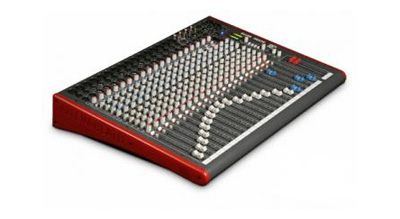
ZED-24 has an incredibly advanced featured-set for a mixer at this level – it has 23 independent sources to the mix, 10 independent outputs, 4 aux sends, Configurable USB audio in/out makes it easy to capture stereo recordings, playback and effects, a unique dual stereo input capability is so packed full of great features that you'd think it could cost much, much more!
Specifications- 6 mono channels
- Neutrik mic XLR
- Neutrik ¼ inch jacks
- Channel insert
- Super wide gain 'DuoPre' mic line input
- 3 band EQ with MusiQ
- 4 auxes
- Illuminated mute
- Sound image pan
- Illuminated PFL & peak warning indicator
- ALPS 100mm faders
- 4 stereo channels with 2-band EQ and inputs for extra sources
- Stereo returns & playback
- All inputs with level control
- 12 bar meters
- Mono/stereo functions on auxes 1&2
- Monitor output section
- Alt stereo output source
- Configurable USB stereo audio in/out
- Cakewalk SONAR X1 LE bundled with mixer
- Rack ears available
USB audio flexibility
Getting audio to and from a computer easily is now a common requirement for live sound and music production. The way this has been implemented on ZED is super-flexible and super-easy! No longer do you need to fiddle around the back of your PC to get to the soundcard inputs, only to find that the levels are all wrong and noisy. Just plug in a USB lead to your ZED, select the USB routing on the mixer and the device on your computer and that's it! The quality from CD will then transfer audio to and from your PC or Mac. Switches and connection through jack socket terminals provide different send/return configurations: -
Send Options:
- Main Mix Left + Right (Post master Level)
- Aux + FX bus (Aux is a pre-fade send, FX is a post-fade send)
- Record Bus Left + Right (Separate stereo bus to Main Mix)
Return Options:
- To Playback input (through jack socket break contacts)
- To Stereo 2 channel (through jack socket break contacts)
MusiQ
ZED-24 features a responsive 3-band, swept mid frequency EQ design which utilises MusiQ – with optimised slope (or Q factor) for equalising individual instruments.
Guitar DI
ZED-24's pre-amps are similar in design to MixWizard range of mixers, but with a twist! Inputs 3&4 have a high impedance jack input capable of taking either a normal line level or a low level input from a guitar pickup. These newly designed inputs have been crafted with the aim of replicating the sound of a classic guitar or instrument tube pre-amp in a combo or head amp. Extremely high input impedance ensures loading on pick-ups is minimal and a Class A FET (Field Effect Transistor) circuit powered from 48V is employed to give the valve-like gain stage. There is a gain “Boost” switch associated with the guitar inputs which boosts gain by 26dB to cater for instruments with very low level outputs and the overdrive characteristics of the guitar inputs are very similar to a valve (tube) circuit, being asymmetric and soft. All this makes a wonderfully natural sound to be reproduced from the instrument, full of warmth and character.
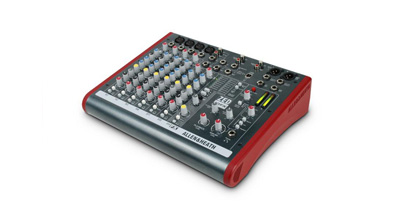
ZED-10FX is an amazing little desk for small band mixing. It is ultra-portable for carrying to the gig, and can be used for recording live or in the studio. It comes with configurable USB audio in/out making it easy to capture stereo recordings.
Guitars can be plugged in directly to the mixer using the specially designed high-impedance inputs, while the mixer has two stereo inputs for MP3/CD players or keyboards. Equipped with professional XLR stereo outputs and a flexible monitoring section with headphone and speaker feed outputs. Plus a set of fabulous effects to give shimmering reverbs and enhance your sound.
- 4 mic/line inputs, 2 with Class A FET high impedance inputs
- Neutrik mic XLR
- Neutrik 1/4 inch jacks
- 3 band EQ with MusiQ
- 1 pre-fade Aux send
- 1 FX send
- Sound image pan
- Illuminated PFL indicator
- Stereo returns & playback
- All inputs with level control
- 12 bar meters
- Responsive 3-band, swept mid EQ with MusiQ
- 2 stereo sources with MP3 player compatibility
- Separate 2-track record outputs
- Stereo playback input for 2-track replay
- XLR main stereo outputs with inserts
- Comprehensive monitoring
- Configurable USB stereo audio in/out
- Stereo monitor outs
- 48V microphone phantom power
- DI level switching for sub mixing
USB audio flexibility
Getting audio to and from a computer easily is now a common requirement for live sound and music production. The way this has been implemented on ZED is super-flexible and super-easy! No longer do you need to fiddle around the back of your PC to get to the soundcard inputs, only to find that the levels are all wrong and noisy. Just plug in a USB lead to your ZED, select the USB routing on the mixer and the device on your computer and that's it! CD quality audio to and from your PC or Mac. Switches and connection through jack socket terminals provide different send/return configurations:-
- Main Mix Left + Right (Post master Level)
- Aux + FX bus (Aux is a pre-fade send, FX is a post-fade send)
- Record Bus Left + Right (Separate stereo bus to Main Mix)
- To Playback input (through jack socket break contacts)
- To Stereo 2 channel (through jack socket break contacts)
MusiQ
ZED-10FX features a responsive 3-band, swept mid frequency EQ design which utilises MusiQ – with optimised slope (or Q factor) for equalising individual instruments.
ZED-FX
ZED-10FX has an essential selection of 16 time-delay effects, designed for small groups who don't want to carry around an effects unit with their gear but who still want great quality FX at their gigs and on their recordings. Our DSP engineers worked hard, crafting and refining beautiful reverb algorithms to enhance every performance. These effects are available nowhere else at this price point – this quality and integration is only available from the ZED-FX. ZED effects are easily controlled using 3 buttons with 9 display LEDs. For example, the ideal delay time can be quickly tapped-in, or the perfect amount of reverb on the lead vocal can be dialled-in. There is one-stop navigation and editing – in fact, it's just as easy as using effects pedals. To alter effects parameters, the TAP button is held down and the up/down buttons pressed to adjust the specific parameter for that effect, for example, the decay length on PLATE, or the depth on CHORUS.
Guitar DI
ZED-10FX's pre-amps are similar in design to our MixWizard range of mixers, but with a twist! Inputs 3 & 4 have a high impedance jack input capable of taking either a normal line level or a low level input from a guitar pickup. These newly designed inputs have been crafted with the aim of replicating the sound of a classic guitar or instrument tube pre-amp in a combo or head amp. An extremely high input impedance ensures loading on pick-ups is minimal and a Class A FET (field effect transistor) circuit powered from 48V is employed to give the valve-like gain stage. There is a gain “Boost” switch associated with the guitar inputs which boosts gain by 26dB to cater for instruments with very low level outputs and the overdrive characteristics of the guitar inputs are very similar to a valve (tube) circuit, being asymmetric and soft. All this makes for a wonderfully natural sound to be reproduced from the instrument, full of warmth and character
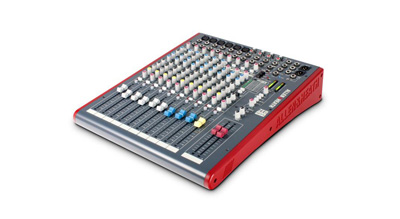
ZED-12FX is ideal for groups who need to travel light. Even with its small footprint, the 12FX squeezes in 4 auxiliary channels and swept semi-parametric EQ on top of the already impressive feature set including configurable USB audio in/out makes it easy to capture stereo recordings.
- 6 mono channels
- 3 stereo channels with 2-band EQ and inputs for extra sources
- 16 internal time-delay effects
- Neutrik mic XLR
- Neutrik 1/4 inch jacks
- Channel insert
- Super wide gain 'DuoPre' mic line input
- 3 band EQ with MusiQ
- 2 pre-fade Aux sends
- 1 post-fade Aux send
- 1 internal FX send
- Illuminated mute
- Sound image pan
- Illuminated PFL & peak warning indicator
- ALPS 100mm faders
- Stereo returns & playback
- All inputs with level control
- 12 bar meters
- Mono/stereo function on auxes 1&2
- Monitor output section
- Alt stereo output source
- Configurable USB stereo audio in/out
- Cakewalk SONAR X1 LE bundled with mixer
- Rack ears available
USB audio flexibility
Getting audio to and from a computer easily is now a common requirement for live sound and music production. The way this has been implemented on ZED is super-flexible and super-easy! No longer do you need to fiddle around the back of your PC to get to the soundcard inputs, only to find that the levels are all wrong and noisy. Just plug in a USB lead to your ZED, select the USB routing on the mixer and the device on your computer and that's it! CD quality audio to and from your PC or Mac. Switches and connection through jack socket terminals provide different send/return configurations:-
- Main Mix Left + Right (Post-fade)
- Main Mix Left + Right (Pre-Fade)
- Auxes 1-2
- Auxes 3-FX
- To Stereo 3 channel
MusiQ
ZED-12FX features a responsive 3-band, swept mid frequency EQ design which utilises MusiQ – with optimised slope (or Q factor) for equalising individual instruments.
DuoPre™
Based on the proven pre-amps from the hugely successful PA series, ZED-12FX has DuoPre pre-amps, which use a two stage design, with carefully controlled amounts of gain in each stage. When amplifying the signal from the XLR input, the gain range is huge - 69dB of range to be exact - and is very evenly distributed around the gain control, meaning better control of signal level. Most of the gain comes from the first stage, so unwanted noise is kept to a minimum. Line level signals are simply plugged into the second stage of the pre-amp by using the line input jack socket, which has the great advantage of less noise when using the line input and also matching to higher input impedance.
ZED-FX
ZED-12FX has an essential selection of 16 time-delay effects, designed for small groups who don't want to carry around an effects unit with their gear but who still want great quality FX at their gigs and on their recordings. Our DSP engineers worked hard, crafting and refining beautiful reverb algorithms to enhance every performance. These effects are available nowhere else at this price point – this quality and integration is only available from the ZED-FX. ZED effects are easily controlled using 3 buttons with 9 display LEDs. For example, the ideal delay time can be quickly tapped-in, or the perfect amount of reverb on the lead vocal can be dialled-in. There is one-stop navigation and editing – in fact, it's just as easy as using effects pedals. To alter effects parameters, the TAP button is held down and the up/down buttons pressed to adjust the specific parameter for that effect, for example, the decay length on PLATE, or the depth on CHORUS.
SONAR X1 LE – Provided Free! So you can immediately start to use it to create your own music – just add a PC and it couldn't be easier to get going. You'll be able to record from your ZED mixer, create tracks and arrange songs, then play back to ZED via the USB port. You can use SONAR X1 LE and your ZED mixer together in many ways – e.g. straightforward recording of a stereo mix, recording tracks individually to build up a song, or using the USB port and software as an effects loop.
Key Features- Powered by SONAR X1
- 32 audio tracks
- 64 MIDI tracks
- 8 simultaneous inputs and outputs
- 24-bit/96 kHz audio quality
- 24 simultaneous effects
- 8 simultaneous virtual instruments
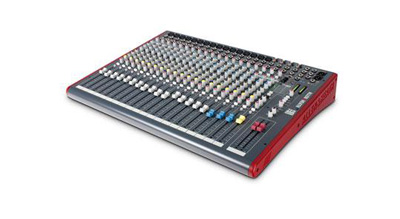
ZED-22FX is ideal for groups who need to travel light. Featuring configurable USB audio in/out makes it easy to capture stereo recordings.
The ZED-22FX easily accommodates vocals, drums, guitar, bass and keys whilst also providing a dedicated FX bus and 16 internal time-delay effects – giving the whole mix extra ambience.
Specifications- 16 mono channels
- 16 internal time-delay effects
- Neutrik mic XLR
- Neutrik 1/4 inch jacks
- Channel insert
- Super wide gain 'DuoPre' mic line input
- 3 band EQ with MusiQ
- 2 pre-fade Aux sends
- 1 post-fade Aux send
- 1 internal FX send
- Illuminated mute
- Sound image pan
- Illuminated PFL & peak warning indicator
- ALPS 100mm faders
- 4 stereo channels with 2-band EQ and inputs for extra sources
- Stereo returns & playback
- All inputs with level control
- 12 bar meters
- Mono/stereo function on auxes 1&2
- Monitor output section
- Alt stereo output source
- Configurable USB stereo audio in/out
- Cakewalk SONAR X1 LE bundled with mixer
USB audio flexibility
Getting audio to and from a computer easily is now a common requirement for live sound and music production. The way this has been implemented on ZED is super-flexible and super-easy! No longer do you need to fiddle around the back of your PC to get to the soundcard inputs, only to find that the levels are all wrong and noisy. Just plug in a USB lead to your ZED, select the USB routing on the mixer and the device on your computer and that's it! CD quality audio to and from your PC or Mac. Switches and connection through jack socket terminals provide different send/return configurations:-
- Main Mix Left + Right (Post-fade)
- Main Mix Left + Right (Pre-Fade)
- Auxes 1-2
- Auxes 3-FX
- To Stereo 3 channel
MusiQ
ZED-22FX features a responsive 3-band, swept mid frequency EQ design which utilises MusiQ – with optimised slope (or Q factor) for equalising individual instruments.
DuoPre™
Based on the proven pre-amps from the hugely successful PA series, ZED-22FX has DuoPre pre-amps, which use a two stage design, with carefully controlled amounts of gain in each stage. When amplifying the signal from the XLR input, the gain range is huge - 69dB of range to be exact - and is very evenly distributed around the gain control, meaning better control of signal level. Most of the gain comes from the first stage, so unwanted noise is kept to a minimum. Line level signals are simply plugged into the second stage of the pre-amp by using the line input jack socket, which has the great advantage of less noise when using the line input and also matching to higher input impedance.
ZED-FX
ZED-22FX has an essential selection of 16 time-delay effects, designed for small groups who don't want to carry around an effects unit with their gear but who still want great quality FX at their gigs and on their recordings. Our DSP engineers worked hard, crafting and refining beautiful reverb algorithms to enhance every performance. These effects are available nowhere else at this price point – this quality and integration is only available from the ZED-FX. ZED effects are easily controlled using 3 buttons with 9 display LEDs. For example, the ideal delay time can be quickly tapped-in, or the perfect amount of reverb on the lead vocal can be dialled-in. There is one-stop navigation and editing – in fact, it's just as easy as using effects pedals. To alter effects parameters, the TAP button is held down and the up/down buttons pressed to adjust the specific parameter for that effect, for example, the decay length on PLATE, or the depth on CHORUS.
SONAR X1 LE – Provided Free! So you can immediately start to use it to create your own music – just add a PC and it couldn't be easier to get going. You'll be able to record from your ZED mixer, create tracks and arrange songs, then play back to ZED via the USB port. You can use SONAR X1 LE and your ZED mixer together in many ways – e.g. straightforward recording of a stereo mix, recording tracks individually to build up a song, or using the USB port and software as an effects loop.
Key Features- Powered by SONAR X1
- 32 audio tracks
- 64 MIDI tracks
- 8 simultaneous inputs and outputs
- 24-bit/96 kHz audio quality
- 24 simultaneous effects
- 8 simultaneous virtual instruments
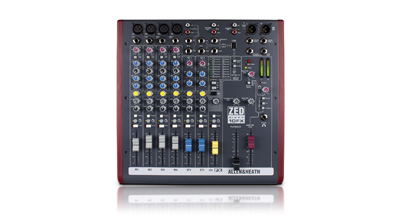
Live or in the studio, ZED60-10FX is an ultra-portable mixer for solo artists and small bands. Allen & Heath's top selling ZED-10FX, the new ZED60-10FX adds premium quality 60mm faders for that intuitive, tactile mixing experience.
This mixer is a guitarist's dream. Two of the 4 mono channels have high impedance jack inputs that can take a normal line level or a low level input from a guitar pickup, so guitars can be plugged straight into the mixer without the need for DI boxes. These inputs have been crafted to recreate the sound of a classic tube preamp in a combo or head amp for incredible definition and warmth. Two stereo inputs are provided for MP3/CD players or keyboards.
ZED60-10FX comes with configurable USB audio in/out, making it easy to capture a stereo recording at the gig or in the studio. The mixer is equipped with professional XLR main stereo outputs, a flexible monitoring section with headphone and speaker outputs, and 16 stunning FX.
Most important of all, ZED60-10FX lives up to the audio and build quality standards that have made Allen & Heath one of the most trusted names in professional audio for more than 40 years.
Specifications- 4 mic/line inputs, 2 with Class A FET high impedance
- 60mm professional quality faders
- Responsive 3-band, swept mid EQ with MusiQ
- Configurable USB stereo audio in/out
- 1 pre-fade Aux send
- 1 FX send
- 2 stereo inputs
- Separate 2-track record outputs
- 16 Internal Effects
- XLR main stereo outputs with inserts
- Comprehensive monitoring
- 48V microphone phantom power
- DI level switching with Gain Boost
- Neutrik XLRs and ¼ inch jacks
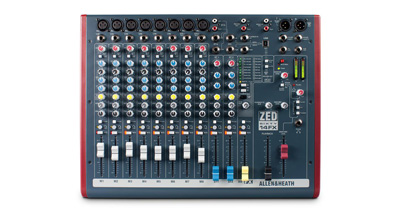
Live or in the studio, ZED60-14FX is a compact, portable mixer that is ideal for small bands.
This mixer is a guitarist's dream. Two of the 8 mono channels have high impedance jack inputs that can take a normal line level or a low level input from a guitar pickup, so guitars can be plugged straight into the mixer without the need for DI boxes. These inputs have been crafted to recreate the sound of a classic tube preamp in a combo or head amp for incredible definition and warmth. Two stereo inputs are provided for MP3/CD players or keyboards.
ZED60-14FX comes with configurable USB audio in/out, making it easy to capture a stereo recording at the gig or in the studio. The mixer is equipped with professional XLR main stereo outputs, a flexible monitoring section with headphone and speaker feed outputs, and 16 stunning FX.
Most important of all, ZED60-14FX lives up to the audio and build quality standards that have made Allen & Heath one of the most trusted names in professional audio for more than 40 years.
- 8 mic/line inputs, 2 with Class A FET high impedance
- 60mm professional quality faders
- Responsiveness 3-band, swept mid EQ with MusiQ
- Configurable USB stereo audio in/out
- 1 pre-fade Aux send
- 1 FX send
- 2 stereo inputs
- Separate 2-track record outputs
- 16 Internal Effects
- XLR main stereo outputs with inserts
- Comprehensive monitoring
- 48V microphone phantom power
- DI level switching with Gain Boost
- Neutrik XLRs and ¼ inch jacks
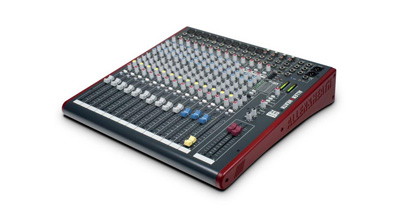
ZED-16FX is ideal for groups who need to travel light. It gives musicians, venues and hires companies access to 10 full mono channels, 3 stereo channels and a high quality FX unit in a compact, rack mountable format. Configurable USB audio in/out makes it easy to capture stereo recordings.
Specifications- 10 mono mic/line inputs
- 3 stereo channels with 2-band EQ
- 16 internal time-delay effects
- Neutrik mic XLRs
- Neutrik 1/4 inch jacks
- Channel insert
- Super wide gain DuoPreTM mic line input
- 3 band EQ with MusiQ
- 2 pre-fade Aux sends
- 1 post-fade Aux send
- 1 internal FX send
- Illuminated mute
- Sound image pan
- Illuminated PFL & peak warning indicator
- ALPS 100mm faders
- Stereo returns & playback
- All inputs with level control
- 12 bar meters
- Mono/stereo function on auxes 1 & 2
- Monitor output section
- Alt stereo output source
- Configurable USB stereo audio in/out
- Cakewalk SONAR X1 LE bundled with mixer
- Rack ears available
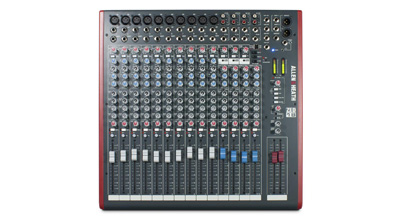
ZED-18 has an incredibly advanced featured-set for a mixer at this level - it gives musicians, venues and hire companies access to 10 full mono channels and 4 stereo channels in a compact, rack mountable format. Configurable USB audio in/out makes it easy to capture stereo recordings.
- 10 mono channels
- Neutrik mic XLR
- Neutrik ¼ inch jacks
- Channel insert
- Super wide gain 'DuoPre' mic line input
- 3 band EQ with MusiQ
- 4 auxes
- Illuminated mute
- Sound image pan
- Illuminated PFL & peak warning indicator
- ALPS 100mm faders
- 4 stereo channels with 2-band EQ
- Stereo returns & playback
- All inputs with level control
- 12 bar meters
- Mono/stereo function on auxes 1&2
- Monitor output section
- Alt stereo output source
- Configurable USB stereo audio in/out
- Global +48V phantom power
- Cakewalk SONAR LE bundled with mixer
- Rack ears available
- Main Mix Left + Right (Post-fade)
- Main Mix Left + Right (Pre-Fade)
- Auxes 1-2
- Auxes 3-FX
- To Stereo 3 channel
MusiQ
ZED-18 features a responsive 3-band, swept mid frequency EQ design which utilises MusiQ – with optimised slope (or Q factor) for equalising individual instruments.
DuoPre™
Based on the proven pre-amps from the hugely successful PA series, ZED-16FX has DuoPre pre-amps, which use a two stage design, with carefully controlled amounts of gain in each stage. When amplifying the signal from the XLR input, the gain range is huge - 69dB of range to be exact - and is very evenly distributed around the gain control, meaning better control of signal level. Most of the gain comes from the first stage, so unwanted noise is kept to a minimum. Line level signals are simply plugged into the second stage of the pre-amp by using the line input jack socket, which has the great advantage of less noise when using the line input and also matching to higher input impedance.
ZED-FX
ZED-18 has an essential selection of 16 time-delay effects, designed for small groups who don't want to carry around an effects unit with their gear but who still want great quality FX at their gigs and on their recordings. Our DSP engineers worked hard, crafting and refining beautiful reverb algorithms to enhance every performance. These effects are available nowhere else at this price point – this quality and integration is only available from the ZED-FX. ZED effects are easily controlled using 3 buttons with 9 display LEDs. For example, the ideal delay time can be quickly tapped-in, or the perfect amount of reverb on the lead vocal can be dialled-in. There is one-stop navigation and editing – in fact, it's just as easy as using effects pedals. To alter effects parameters, the TAP button is held down and the up/down buttons pressed to adjust the specific parameter for that effect, for example, the decay length on PLATE, or the depth on CHORUS.
SONAR X1 LE – Provided Free!
Allen & Heath include Cakewalk SONAR X1 LE with ZED-18 so you can immediately start to use it to create your own music – just add a PC and it couldn't be easier to get going. You'll be able to record from your ZED mixer, create tracks and arrange songs, then play back to ZED via the USB port. You can use SONAR X1 LE and your ZED mixer together in many ways – e.g. straightforward recording of a stereo mix, recording tracks individually to build up a song, or using the USB port and software as an effects loop.
- Powered by SONAR X1
- 32 audio tracks
- 64 MIDI tracks
- 8 simultaneous inputs and outputs
- 24-bit/96 kHz audio quality
- 24 simultaneous effects
- 8 simultaneous virtual instruments
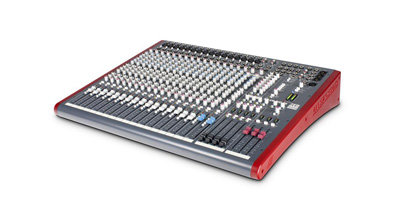
ZED-420 is excellent for bands, houses of worship, theatres or AV applications. It has a truly professional feature set, which will fit any sound reinforcement application and professional PA hire stock. ZED-420 has Configurable USB audio in/out makes it easy to capture stereo recordings, 16 mic or line inputs plus 2 dual stereo inputs, 4-band EQ with MusiQ, 4 sub-groups, 6 auxiliary sends and a 7x2 matrix.
Specifications- 16 mono channels
- 2 dual stereo inputs with 4-band EQ
- Neutrik mic XLR
- Neutrik 1/4 inch jacks
- Channel insert
- Super wide gain 'DuoPre' mic line input
- 4-band EQ with 2 swept mids and in/out switch
- Illuminated mute
- Sound image pan
- Illuminated PFL & peak warning indicator
- ALPS 100mm faders
- 6 auxiliary sends (2 pre, 2 post, 2 pre/post)
- 4 sub groups fed from each channel
- All inputs with level control
- 12 bar meters
- L, R and M main mix outputs
- 2 matrix sections available; can send output to USB
- Individual channel 48V phantom power
- Direct output on every mono channel
- Peak and signal indication on every channel
- Configurable USB stereo audio in/out
- Master level controls on all outputs
- Easy to use layout – all connections and controls on top surface
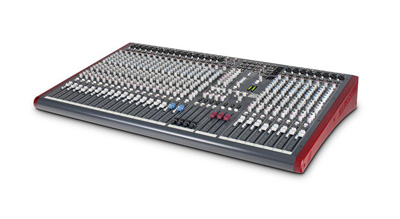
ZED-428 is excellent for bands, houses of worship, theatres or AV applications. It has a truly professional feature set, which will fit any sound reinforcement application and professional PA hire stock. ZED-428 has Configurable USB audio in/out makes it easy to capture stereo recordings, 24 mic or line inputs plus 2 dual stereo inputs, 4-band EQ with MusiQ, 4 sub-groups, 6 auxiliary sends and a 7x2 matrix.
- 24 mono channels
- 2 dual stereo inputs with 4-band EQ
- Neutrik mic XLR
- Neutrik 1/4 inch jacks
- Channel insert
- Super wide gain 'DuoPre' mic line input
- 4-band EQ with 2 swept mids and in/out switch
- Illuminated mute
- Sound image pan
- Illuminated PFL & peak warning indicator
- ALPS 100mm faders
- 6 auxiliary send (2 pre, 2 post, 2 pre/post)
- 4 sub groups fed from each channel
- All inputs with level control
- 12 bar meters
- L, R and M main mix outputs
- 2 matrix sections available; can send output to USB
- Individual channel 48V phantom power
- Direct output on every mono channel
- Peak and signal indication on every channel
- Configurable USB stereo audio in/out
- Master level controls on all outputs
- Easy to use layout – all connections and controls on top surface
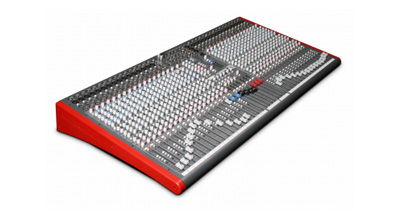
ZED-436 is excellent for bands, houses of worship, theatres or AV applications. It has a truly professional feature set, which will fit any sound reinforcement application and professional PA hire stock. ZED-436 has Configurable USB audio in/out makes it easy to capture stereo recordings, 32 mic or line inputs plus 2 dual stereo inputs, 4-band EQ with MusiQ, 4 sub-groups, 6 auxiliary sends and a 7x2 matrix.
- 32 mono channels
- 2 dual stereo inputs with 4-band EQ
- Neutrik mic XLR
- Neutrik 1/4 inch jacks
- Channel insert
- Super wide gain 'DuoPre' mic line input
- 4-band EQ with 2 swept mids and in/out switch
- Illuminated mute
- Sound image pan
- Illuminated PFL & peak warning indicator
- ALPS 100mm faders
- 6 auxiliary send (2 pre, 2 post, 2 pre/post)
- 4 sub groups fed from each channel
- All inputs with level control
- 12 bar meters
- L, R and M main mix outputs
- 2 matrix sections available; can send output to USB
- Individual channel 48V phantom power
- Direct output on every mono channel
- Peak and signal indication on every channel
- Configurable USB stereo audio in/out
- Master level controls on all outputs
- Easy to use layout – all connections and controls on top surface
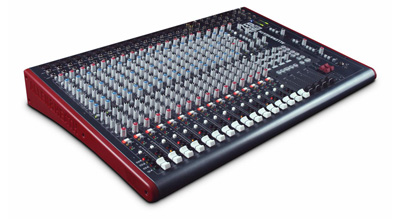
The ZED-R16 is a superbly equipped console with all the crucial parts of the recording process in one box. The best performing preamp in Allen & Heath's entire range is packaged with a high quality analogue to Firewire interface and the most extensive EQ on any mixer at this price point (or even twice the price!). An analogue channel strip so well featured, which sound this good, is a real find at this level.
ZED-R16 combines an analogue recording mixer with a FireWire soundcard, MIDI controls and ingenious 'home-studio' routing so you can build tracks in the studio, record live gigs, mix-down, remix… all through warm analogue circuitry, 4 band fully parametric classic British EQ and out to crisp, precise digital format.
In the Studio
ZED-R16 combines an imaginative feature set with professional build qualify to create the ideal centrepiece for any project studio with big ideas, or larger studios with dedicated live rooms. Control room speaker and alternate speaker outputs, plus two separate artist monitor feeds are provided. In addition to the digital interface, two analogue recording outputs are also available. The ZED-R16 even has a dedicated internal condenser talkback mic. Features such as the dual functions audio/MIDI faders and built in sequencer transport were dreamed up by engineers who have home studios themselves, so they've made sure they've built in features they really need.
Soundcard
The internal soundcard features 18 FireWire inputs and 18 outputs plus 16 ADAT I/O. Each channel on the mixer has its own independent soundcard channels so instruments can be recorded simultaneously (pre or post EQ) and into the sequencer separately. To minimise clock jitter and provide synchronicity between the ZED-R16 and other devices, the mixer is equipped with the professional JetPLL™ digital audio chipset.
Mix-down and live
In addition to multi-track recording, the ZED-R16 allows mixing down in analogue, then recording back into the computer in digital. The bundled SONAR LE software makes this a breeze. The story doesn't stop here however – ZED-R16 can be versatile live FOH mixer too. In this mode, its 4 aux buses become foldback feeds and FX sends, and the main XLR outputs feed the PA system. Recording the live gig is straightforward; the record feed signal can be easily assigned using the four buttons next to the faders.
Preamps
The ZED-R16's pre-amps, which have been specially designed for this application, have a symmetrical ultra linear circuit. The best epitaxial low noise transistors are used in the front end, and active feedback is employed in both phases before the differential amplifier. This results in super-low distortion, while maintaining low noise (-128.5dBu EIN), high CMRR, and a transparent and beautiful sounding pre-amp.
Auxiliary sends
Two pre and two post aux buses can be used as feeds for headphone amplifiers in the studio, FX sends anywhere, or wedge foldback live. The talkback function is either routed to the aux or studio outputs, so is ideal for any environment.
FireWire Flexibility
The digital audio connections are all present on the rear of the desk. Two FireWire connectors allow the ZED-R16 to be connected to a personal computer whilst the second socket daisy chains devices. Two switches change the sample rate and routing selection, while 4 connectors allow inputs and output to ADAT equipment.
ADAT
In addition to the FireWire input and output, the ZED-R16 has 4 ADAT optical sockets. The I/O routing on the ZED-R16 is identical for the FireWire channels and the ADAT optical connection. With a combination of panel switches, the mixer is capable of an incredible 26 simultaneous inputs and outputs. Feed the ZED-R16 from ADAT lightpipe equipment, or record directly out from 16 channels to 2 ADAT machines, or to another soundcard.
MIDI software control
The MIDI section on the ZED-R16 has been designed to control software transport, with extra mappable controllers ready to be user-assignable. With recording now truly in the digital age, ZED-R16 brings the home studio bang up to date. In addition to the ZED-R16's dedicated MIDI controls, all of the channel faders can be switched to become MIDI controllers.
Monitor Section
The ZED-R16 has two signal paths for monitoring: an output for main control room monitor and outputs for an alternative set of monitors for checking mixes. The control room mix can follow either of the two main analogue outputs or the digital main mix, allowing access to all main audio outputs.
Build
The ZED-R16 has been designed using individual vertically mounted circuit boards with each rotary control fixed with a metal nut to the front panel – making a much more robust product that will resist damage and give years of reliable use. ZED-R16 also has professional 60mm faders for ultimate control over your levels.
SONAR X1 LE – Provided Free!
Inclusive of Cakewalk SONAR X1 LE with ZED-R16 so you can immediately start to use it to create your own music.
- Powered by SONAR X1
- 32 audio tracks
- 64 MIDI tracks
- 8 simultaneous inputs and outputs
- 24-bit/98 kHz audio quality
- 24 simultaneous effects
- 8 simultaneous virtual instruments
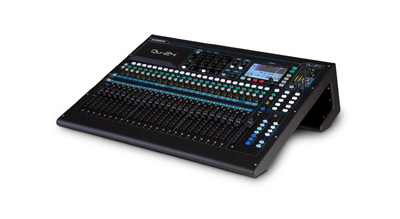
With its responsive touchscreen, 25 motor faders and acclaimed AnalogiQTM recallable preamps, Qu-24 combines exceptional ease of use with class-leading audio performance. Drawing on the technologies and workflow pioneered on the GLD and iLive touring systems, Qu makes Allen & Heath digital mixing more accessible and more compact than ever.
ANALOGIQTM PREAMPS
Qu-24’s twenty four AnalogiQTM total recall preamps feature zero crossing detection and an advanced padless 1dB step gain stage, closely allied to the DSP for optimal gain accuracy and audio transparency. The analogue signal is captured by high class, low latency 24bit analogue to digital converters matched to high quality 24bit digital to analogue converters to deliver the required outputs. The AnalogiQTM design has been refined over many months to offer superb transparency, minimal distortion and an ultra-low noise floor, with a warm, musical sound that is missing from some digital consoles.
THE MIXING EXPERIENCE
Having massive processing power and advanced functionality is great, but it counts for nothing if you can’t access the controls you need in a heartbeat. Once you start using Qu-24 you’ll sense the years of research into ergonomics and the hands-on mixing experience that our team has drawn upon to deliver a wonderfully natural layout and workflow. It’s not about recreating an analogue interface, it’s about creating an experience that’s fluid, comfortable and intuitive for novices, digital natives and old school road warriors alike, making all the benefits of digital mixing technology readily accessible to all.
TOUCH CONTROL
The 800 x 480, sixteen million colour Touchscreen and its dedicated data encoder form the heart of the Qu interface, providing super-fast, easy access to all settings. The user-friendly interface has been designed with clarity in mind. Dedicated keys and screen tabs quickly guide you to meter and RTA views, FX racks, channel processing, USB audio control, scenes, setup menus and much more. K-RIG Series (KV2 Audio)
THE SUPERSTRIP
All your key processing tools are presented in a clean layout on the SuperStrip, with 1 function per physical control. The SuperStrip is complemented by an onscreen Touch Channel for intuitive access to full processing parameters without clutter or complex menu structures. Processing for Mono and Stereo inputs includes trim, polarity, HPF, gate, insert, 4 band PEQ, compressor and delay. The main LR and the Mono mixes have controls for Insert, 1/3 octave GEQ, compressor and delay. The Stereo mixes provide Insert, 4-band PEQ, compressor, delay and balance control.