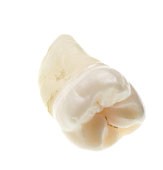
There was once a time when dentists were associated with terror and extreme pain. Believe it or not but back in the 18th century, tooth extractions were done without local anaesthesia! And it was not until the late 18th century when none other than a dentist started using the first anaesthesia which was an ether. It yielded unpredictable results though and it was a very risky venture. But then again, without those first attempts, modern anaesthesia wouldn't have been borne!
But well, that is not the topic we have for this article. Tooth extractions and wisdom tooth surgery are one of the many common oral surgical procedures that are done today. And yes they are done with local anaesthesia nowadays. In fact, there are two choices for your anaesthesia; local anaesthesia and general anaesthesia. And they are very safe too. How many times have you heard the phrase "I am on medical leave. I had my wisdom tooth removed." At least once in your lifetime I bet. Wisdom tooth surgery or tooth extraction for that matter is so common place that it is a wonder that with modern anaesthesia and equipments available many people are still scared of them! Could it be due to fear of the unknown? Many people imagined dentist to be evil people wielding big, sharp and sinister looking instruments. But honestly, dentists are just human like us! And there are many nice ones around too!
When someone goes for a wisdom tooth surgery, they are normally given 5-7 days of medical leave. This is to allow them time to recuperate and also avoid the embarrassment of facing the public with a swollen face. Most of the time they are not debilitated in any sense and they are able to move around and do their normal daily activities. They however will be on soft diet for a while and probably wont be in too much an appetite to eat.
You can either go to a normal dental surgeon or you can go to an oral maxillofacial surgeon to get your wisdom tooth removed. Both are equally adept in surgery with the oral maxillofacial surgeons having a slight upper hand due to their advanced training. Cost wise, the oral maxillofacial surgeon will probably cost more being a specialist and all.
Wisdom tooth surgery is actually part of a wider scope of surgery called dento-alveolar surgery. Any surgery involving tooth in the mouth is termed dento-alveolar surgery and you can have other teeth that may require surgical removal other than your common wisdom tooth. The second most common tooth requiring surgery is arguably the canine which more often than not needs surgical removal. Sometimes cysts are associated with the wisdom tooth or tooth to be removed and these are normally removed together with the tooth.
Wisdom tooth can be erupted, impacted or buried. Erupted wisdom tooth can be simply removed via extraction though in some cases you need surgery to remove them. Impacted wisdom tooth more often than not requires surgical removal and all buried wisdom tooth needs surgery to remove them! The associated degree of impaction will determine the difficulty of removal and the more difficult it is the higher the chance of numbness of the lip, chin and tongue on the side of the wisdom tooth being removed. There is no involvement of motor nerves eg the facial nerve and henceforth movement of the face and speech is not affected. There is also no correlation between wisdom or intelligence with wisdom tooth removal and till proven otherwise that shall remain a myth and an old wife's tale.
But what is important to take note of is to follow the post-operative instructions and medications given by the dentist or oral surgeon. Many a times unnecessary trips back to the doctor have been made on false alarm of bleeding that could have been stopped if they know what to do. And very often, patients panic if not told beforehand when their face swells up. Swelling is normal and part and parcel of healing. Pain too can be controlled with the painkillers given and is normally not a cause for worry but bleeding can be a problem and knowing when is it a problem and when it is not is important.......
After Wisdom Tooth Surgery
Local anesthetics are very important in the field of surgery and medicine and that includes dentistry and oral maxillofacial surgery notwithstanding. They are reversible agents that block nerve conduction in a localized area when injected or applied topically. Noxious stimuli are blocked from reaching the brain hence providing pain control.
Cocaine was the first ever documented local anesthetic and it was first described by Albert Niemann who was a German chemist. He extracted and isolated cocaine from the coca shrub in 1859 not knowing the great impact it would have on the medical and surgical world in the future. Carl Koller experimented with cocaine 20 years later before William Halsted then introduced nerve blocks with cocaine. But there were a number of adverse acute and chronic effects of cocaine such as cardiac overstimulation and vasoconstriction. And of course there was the problem of physical and psychological dependence. It was not until 1904 when the ester procaine was developed that cocaine was used less regularly and they eventually stopped being used. The amide local anesthetic lidocaine was invented in the 1950s and it has been in use even till now due to its excellent anesthetic properties and little side effects.
Local anesthetics can be short acting, intermediate acting or long acting and an ideal local anesthetic will be one which provides pain control for the duration of the surgery and a little more after that. In dento alveolar surgery and wisdom tooth surgery, the local anesthetic of choice is lidocaine with adrenaline. In patients where lidocaine is contraindicated, prilocaine is used and there may be a vasoconstrictor equivalent in the form of octapressin.
In wisdom tooth surgery, the local anesthetic is given in the form of a nerve block called the inferior alveolar nerve block and a long buccal infiltration may also be given. Lidocaine on its own has little side effects with most of the side effects normally contributed by the vasoconstrictor present. The vasoconstrictors act to keep the local anesthetic in the region of the surgery for as long as possible to prolong its effects. Most of the side effects or the vasoconstrictor are on the cardiac system or the heart and that is the reason why lidocaine with adrenaline is normally contraindicated for heart patients.
Sometimes, the oral surgeon may opt to give a longer acting local anesthetic such as bupivacaine to provide longer pain control and to give the patient more comfort post operatively. Topical anesthetics may also be used to superficially numb the area to be injected. This is so when the needle is introduced the patient will not feel the needle prick. However, the pressure caused by the introduction of the local anesthetic into tissue more often than not bring about the sensation of pain itself. That is why new delivery systems are being introduced to deliver the local anesthetic at a slower rate so as to lessen this painful effect.
The traditional method of injection makes use of the local anesthetic housed in a glass cartridge loaded on a dental syringe. An injection needle is mounted on the dental syringe onto which the dental cartridge containing the local anesthetic is then placed. The oral surgeon will then introduce the local anesthetic into the area or region of desire.
The local anesthetic typically last 3 to 4 hours when lidocaine with adrenaline is used. When bupivacaine or marcaine is used however, this effect can last up to 8 hours. The patient must then take care not to accidentally bite on his lip or tongue for the time period.
After the local anesthetic wears off, the patient can start to feel the first inklings of pain and sometimes the oral surgeon might advise taking a pre surgical dose of painkillers such as non steroidal non inflammatories such as mefenemic acid or synflex. And he might also advise taking the prescribed painkillers at the regular dosage rather than taking them only when the pain comes. This will bring about better pain control. Wisdom tooth surgery may involve some bone removal and for some patients, especially those with low pain tolerance, the pain may be a very traumatic experience. But research and studies have shown that the pain can be well controlled with the painkillers that have been mentioned.
Dr NBM has sinced written about articles on various topics from Dental Surgery, Cosmetic Surgery and Plastic Surgery. This article is written by an oral surgeon in government practice. To learn more about ,. Dr NBM's top article generates over 1000 views. to your Favourites.
Cost Of Building Homes Polished granite is also a popular choice for kitchen countertops due to its high durability and aesthetic qualities