The spinnerbait is perhaps the number one lure for Largemouth Bass. It is a lure that is quite versatile and able to be used in many different conditions with many different presentations.
Spinnerbaits come in two main styles. The Willow Leaf Spinnerbait has a blade that is shaped like a willow leaf. The large amount of area for the sunlight to reflect off makes this bait designed for visual attraction. It is best used in conditions where you have available light to use to your advantage. It also works best in clear water where the visual range of a fish is at its longest.
Indiana style spinnerbaits employ a blade that is both circular and is cupped at the edges. This bait is designed to provide attraction though sound. It is used successfully in murky water and especially late at night when the available sunlight is either low or non existent.
The presentation you use when casting a spinnerbait can vary based on conditions. This lure is somewhat weedless and can be used most effectively through moderate to light weed cover. I like to use spinnerbaits in lily pads.
I vary my retrieve, sometimes allowing the bait to cruise between the pads at various different depths between the surfaces of the water and two to three feet below the surface. If this method does not work I will try a stop and go retrieve that causes the bait to occasionally drop in pockets of the pads.
Often you will notice the strike occurs as the bait begins its drop. You must be cognizant of this fact and be ready to set your hook.
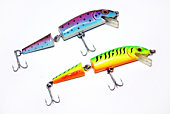
Crankbaits are designed for catching active Largemouth Bass in deeper water. Visually they appear more like a fish than any other bait you will use. The first key consideration is selecting which crankbait to use. There are two factors to lead to the answer of this question:
1) You should try to match the shape and color of the bait to the forage fish of the Largemouth Bass you are angling for. In lakes where shad are the preferred forage species a round silvery crankbait is in order. In rivers where the forage is generally much smaller minnows you would change to a different color and smaller sized bait.
2) The running depth of crankbaits vary, you must choose the right one for the area you are fishing. Ideally a crankbait will have a running depth very close to the bottom. You will in fact like the bait to occasionally hit the bottom. By vary the speed of your retrieve and angle of the rod you can alter this factor somewhat. The primary running depth however is influenced most by the design of the bait itself. The key determining factor is the clear plastic lip near the eye hole. The size and angle of this lip determines how deep the bait runs when it is retrieved.
Best Bass Fishing Lures
Is there one lure that will work best for all type of bass fishing? Veterans of this sport fishing will be quick to tell you that it really depends on why the bass is striking the lure. It could be an instant reaction to a foreign object in the water, an attempt to defend their territory against what is seen as a predator or because the fish wants something to eat. It is highly unlikely that the bass would be trying to defend its territory unless you cast out your line near a nest. Therefore, a bright and shiny lure would grab attention, as would one containing food.
Most of the time the best type of lure to use for fishing bass is shad. However, most shad grow larger than bass, so you need to look for the threadfin shad, which are the main food of bass. Shad tend to be deep in the water during the summer months, which makes it harder for the bass to feed on. This is one time of the year when you are most likely to be really lucky in catching bass because of the scarcity of the food source. You also have to realize that bass are most active during the afternoon hours and do not actively hunt for food once the sun goes down.
Another good lure for catching bass is carp. During the spring, there are a lot of newly-hatched carp in the waters on which bass do feed. During this season, they would be easily attracted by a gold or bronze colored lure shaped like a carp. If there are a lot of carp in the water, though, for the bass to feed on, you will have a hard time getting one to nibble or bite on your lure.
During bass tournaments, you can choose to use a worm, spinnerbait or topbait. Each of these has its advantages and disadvantages. Most bass fishermen like to use crankbaits because of their versatility. You can fish them from anywhere, such as on top of the water, right down to the bottom or somewhere in between. If you want these lures to suspend, then you can add weights to them.
You should make sure your hook is sharp and don't automatically assume that split rings will last forever. They will get rusty, which will weaken them and cause breakage. You should inspect them regularly and replace them with new ones as soon as you notice any damage. Think about the depth of water that you are fishing in when choosing crankbaits. In a river that is 10-12 feet deep, you should use a crankbait that runs at least 15 feet. Using a light line will also let your lure go deeper.
There are different materials in lures as well. Plastic lures are very light and are easier to throw, but wooden ones have more buoyancy in the water. If you are fishing in really cold water, then your best bet with a crankbait lure would be to use a flat sided one and if the water is not clear, use a lure that rattles to attract the attention of the bass.
Cello Lessons For Beginners There are plenty of tips online for those who want to aim at the professional level yet, it takes patience and a lot of practice. Good luck!