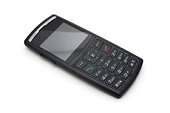
It's lunchtime, and you can't decide what to have today. So you take a stroll outside, just to see what looks good at the various restaurants in the neighborhood. As you're walking along, browsing at the different menus displayed in the front of each restaurant, you get a notification signal on your mobile phone. It's the newly opened bistro on the corner, asking you if you want to receive a coupon and a menu. You respond with a Yes, and the files are sent straight to your phone. There's a full menu and a coupon for a free appetizer with your entree. Lunch sounds good -- let's give it a try. You've just taken part in a Bluetooth Marketing campaign.
So, aside from the funny name, what exactly is Bluetooth Marketing? How does it work? And what about the average consumer? How would they be affected?
Most mobile phone shoppers have probably heard of Bluetooth by now. It's a standard feature on almost every new cell phone sold today, as well as many laptops and desktop computers. One of the more common uses for Bluetooth is to connect to a hands-free headset, but it can actually do a whole lot more. Bluetooth is really just a way for various devices to connect to each other and share information without the need for wires. So, with Bluetooth, your cell phone could also connect to your computer to synchronize your contacts list, transfer songs and ringtones, even upload those pictures you just took with your camera phone. What's more, if your friend also has a Bluetooth phone, you could easily send them your pictures, songs, videos, games, or other files stored in your phone, all without having to worry about having the right cables to connect.
So, how does this relate? Well, through some clever use of technology, companies are now using Bluetooth to send their latest promotions to the mobile phone -- that ubiquitous device that almost everyone uses and carries with them at all times. How does it work?
A compact server, programmed with the necessary software, is placed on site, preferably at a location that receives a large amount of foot traffic. The server will continuously scan the area for Bluetooth enabled devices as they come within range (up to 100 meters). When found, it sends the user a message asking if they wish to receive the advertiser's content. This could be a coupon, a video, Java game or any other multimedia file. If the user responds with a Yes, the file is sent automatically. If they respond with a No, the server logs this decision, and will not ask the same user again the next time they come within range. This is important so people are not constantly prompted to accept content that they don't wish to receive.
And, in contrast to SMS or text messaging, there is never a charge to send or receive files via Bluetooth. What's more, since files don't pass through any cellular carriers, Bluetooth Marketing works even where there is no cell signal, such as subway stations or other "dead" zones.
So what are the benefits and pitfalls, both for prospective businesses looking for a new and unique way to connect with their customers, and for consumers, who may view advertising on their cell phones as a sort of invasion of privacy?
For starters, companies choosing to use this technology can run an ongoing marketing campaign at very little expense. After purchasing the equipment, companies can run their campaigns 24/7 at essentially zero cost. Because files sent by Bluetooth are free, it would not matter if a company sent 10 promotions or 10,000. More importantly, users who choose to accept the message inevitably take the time to look at it. Contrast this with more traditional forms of advertising, which, even in a best case scenario, creates very little impact on the average consumer. Advertisers also have the opportunity to market their products and services based on the proximity of the consumer. For example, restaurants can send coupons to people as they walk by; movie theaters can send video trailers of new releases to people standing in line, etc. What better time to send promotions to customers than when they are physically close?
Of course, from the point of view of the consumer, there may be fears that this technology may raise some privacy issues. Would people be spammed with ads they don't want as they're walking down the street? Will advertisers be able to record their cell phone numbers and use it for marketing purposes? And can people choose to opt-out of this marketing entirely?
In fact, the technology does incorporate ways to resolve these issues. Again, Bluetooth servers must always get permission first from users before any content is sent. And if the user refuses, the software remembers this, and will not ask again in the future. This ensures that only people wishing to receive content will get it -- a benefit to both advertiser and consumer. Also, personally identifiable information is never collected by the system. The server only detects each phone's MAC address, a unique hardware ID, but nothing else. It cannot collect phone numbers or any personal information from any user. People needn't be afraid that their private information is being compromised in any way. And, of course, users can always choose to never participate in any Bluetooth campaign by simply setting their Bluetooth to "invisible", so they won't be found in the first place.
Bluetooth Marketing has been popular in Europe for several years now, and is only now beginning to catch on in the United States. Besides just coupons and promotions, stores can get creative and offer free games or songs to reward customers, companies could use this technology to distribute bulletins to employees, or professionals can use Bluetooth to send business cards to potential clients, ensuring that they always have their correct contact details handy. The possibilities are vast. So the next time you're walking down the street and you get an unexpected message on your phone asking if you want a free cappuccino, just say Yes, and look around you. You may not have noticed the cafe on the corner, but they noticed you!
James Wong has sinced written about articles on various topics from Microsoft Outlook Mail, Mobile Phone Reviews and Customer Service. If you're interested in learning more about Bluetooth Marketing, please contact ZipZone Media, a New York based company specializing in this field. They may be reached at 1-718-969-2436 or on the web at:. James Wong's top article generates over 12100 views. to your Favourites.
Baby Tooth Decay Treatment Root Canal Treatment RCT If tooth decay has progressed to the nerves, an RCTis suggested. The entire pulp is removed and filled with inert material andsealed. A cap is also applied in most cases