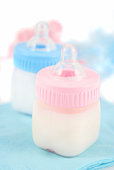
Recent studies have shown that some BPA is residual in baby bottles and can also leach into food prepared in these types of bottles. Normal use which includes sterilization by high temperature steam, microwave ovens and dish washing can cause a break down of polycarbonate and the release of BPA in foods.
Baby foods stored in cans usually suffer long exposure to the polycarbonate inner lining. Again BPA found in the polycarbonate will migrate to the stored food. Normally foods removed from polycarbonate lined cans are covered by PVC derived plastic wraps, another known carcinogen.
BPA is widely used in the manufacture of plastic packaging, the lining of food cans and in some dental fillings. Claims have also been made that BPA behaves in the same manner as diethylstilbestrol (DES) an artificial estrogen banned for pregnant women.
BPA can be found in almost every human in the USA at some level. The reason is that BPA is a very common additive found in half of the formulated plastic resins. Make sure to check the labels and bottom of plastic bottles for the SPI codes, which appear as recycling triangles with numbers and letter codes. The codes are a general guideline for streamlining plastic recycling but can be implemented differently depending on the state of origin.
The first of the SPI codes represents the plastic resin PET or PETA and is represented by the number 1 inside the recycle triangle on the label or bottom of the container. These have no known hazards and are supposedly BPA free. The second SPI code represents the plastic resin HDPE and is represented by the number 2 inside the recycling triangle. HDPE has no known hazards and is used heavily in plastic toys.
PVC is not normally used for food containers but can be used in plastic food wraps. It is labeled a number 3 in the triangle, along with the plastic called LDPE or number 4, it is used commonly in plastic food packaging and squeezable sport bottles.
Polypropylene abbreviated PP and identified by the number 5 is less toxic than most other plastics. Plastic number 5 is used to package foods like butter, margarine and yogurt. Plastic number "6" is polystyrene. Next time you pick up a non-paper egg carton, check the recycle triangle to see if it is also labeled with the letters "PS"
Plastics that are not readily identifiable are labeled OTHER using the number 7 inside the recycle triangle. In general this code indicates that the plastic resin is either made from material not included in plastics 1 - 6 of the SPI code, or a combination of the resins found in plastics 1 - 6.
Blueriver has sinced written about articles on various topics from Health. Baby Gadgets and Gear is the place on the internet for and. Blueriver's top article generates over 9900 views. to your Favourites.
Cannot Pay Credit Cards Providing your child with hands on lessons about credit cards requires some supervision. But the habits you teach them now will follow them once they become more independent