Other Common Names: Grapple plant, harpagon, wood spider.
Habitat:The herb devil's claw is native to southern Africa particularly the Kalahari desert, Namibia and Madagascar.
Description: Devil's claw is a perennial plant with tubers and many round to oval-shaped stems. The leaves have white, hairy undersides. Solitary, red to purple flowers, shaped like trumpets appear in spring followed by the fruit. The name devil's claw comes from the hooks that cover its fruits.
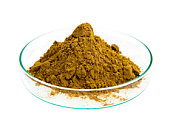
Plant Parts Used: Roots and tuber. The root is collected when the rainy season ends. The traditional use of devil's claw by tribes in Africa involved the root being chopped and dried in the sun for three days to make medicinal preparations. The bitter preparation was used in folk tradition for its analgesic (numbing) and antipyretic (temperature reducing) properties.
European colonists took the plant back to their countries where it was used to treat arthritis. Modern day use of devil's claw is usually though standardised tablets which still contain bitter substances. Devil's claw is also available as a tincture, liquid extract and tea. The major active ingredient is harpagoside and standardisation products can contain anything from 1-8.5% harpagoside.
Devil's Claw Therapeutic Uses, Benefits and Claims
* The modern day main use of devil's claw is as an anti-inflammatory and for pain relief for joint diseases. These effects have been proven by laboratory studies.
* It is recommended that devil's claw be taken for a least 2-3 months before any effect may be experience.
* Osteoarthritis or degenerative joint disease is thought to benefit most from the use of devil's claw. Clinical studies support this and also suggest that devil's claw is as effective as conventional anti-inflammatory drugs.
* Multi-ingredient preparations for arthritic conditions such as rheumatoid arthritis and gout often include the medicinal herb devil's claw.
* Devil's claw is also very popular for mild joint pain.
* Back pain is another condition which is thought to be helped by devil's claw.
* One of the traditional uses of devil's claw is that of an appetite stimulant.
* Other painful conditions that may benefit from the use of devil's claw is headache and general nerve pain.
* Devil's claw can also be used as a digestive tonic; the belief is that it helps in the relief of constipation, diarrhoea and flatulence.
* Traditionally, external use of liquid extracts of devil's claw have been used for sores, ulcers, boils and various skin lesions.
Potential Side Effects of Devil's Claw
The most likely side effect of devil's claw is stomach upsets but it has also been reported to cause headaches, ringing in the ears, loss of taste and appetite. People with allergies may react to devil's claw. Devil's claw should not be taken by people with gastric or duodenal ulcers. People with gall stones should consult their health providers. Pregnant and breast feeding women should not take devil's claw. Devil's claw extracts have theoretically been associated with interactions with blood thinning agents e.g. warfarin, and cardiac drugs so it is important to talk to your health provider if you have heart disease or are taking these drugs.
Devil's Claw Side Effects
Devil's Claw
The medicinal preparations of devil's claw are made from the dried roots of Harpagophytum procumbens, a South African plant. Other common names include grapple plant, and wood or wool spider plant. The fruits have long, branching arms with "clawlike" hooks.
Uses and Benefits:
Since it's introduction to Europe from Africa in the early 20th century, devil's claw has been used most frequently as an analgesic and anti-inflammatory agent for arthritis and other painful musculoskeletal conditions. It has also been used for anorexia and dyspepsia, as a bitter tonic, and as an antipyretic. Topical applications include wounds, ulcers, and pain relief.
Pharmacology:
The main active constituent is harpagoside, an iridoid glucoside thought to have anti-inflammatory activity; however, it does not adequately account for all of the herb's antiinflammatory effects. The anti-inflammatory mechanism of devil's claw appears to be different from that of aspirin or NSAIDs. In vitro, devil's claw does not affect prostaglandin synthetase activity. In humans, administration of 2 g of powdered devil's claw produced no effect on eicosanoid biosynthesis, either by the cyclo-oxygenase or the 5-lipoxygenase pathways.In animal models, devil's claw extracts demonstrated inconsistent anti-inflammatory activity in experimentally induced inflammation. Extracts administered parenterally were more effective than oral administration, and aqueous extracts consistently demonstrated more anti-inflammatory activity than alcohol extracts or isolated constituents.
Concern about degradation of active constituents by gastric acid supports the use of enteric coated preparations.
Devil's claw extracts have anti-arrhythmic activity in animal models, but this effect has not been tested in humans.
Clinical Trials:
The effectiveness of devil's claw has been evaluated in a number of controlled clinical trials for osteoarthritis, low back pain, and other rheumatic and musculoskeletal complaints. Several studies are not available in English, and are thus summarized from other sources. Dosage and preparations varied in the clinical trials, but treatment was generally administered for 4-8 weeks; some involved comparisons with nonsteroidal anti-inflammatory drugs (NSAIDs).
For osteoarthritis, four double-blind, controlled clinical trials have been published. In two placebo-controlled studies (n = 50, 100), treatment with 2.4 g/day of devil's claw dried root or standardized extract produced a statistically significant reduction of pain compared to placebo. Another randomized placebo-controlled trial reported improvement in pain and spinal mobility with a dose of 2 g/day in 89 patients with joint pain. 1o The largest study (n = 122) compared the efficacy of devil's claw to diacerhein, a European non-NSAID drug for osteoarthritis. Devil's claw (2.6 g/day root powder) was as effective as standard doses of diacerhein for treatment of hip or knee osteoarthritis, but the reduction of pain and functional disability did not reach statistical significance for either group. There was a statistically significant reduction in the need for analgesic and NSAID medication in the devil's claw group compared to the diacerhein group.
Adverse Effects:
Devil's claw appears to be well tolerated. Most clinical trials reported no side effects other than occasional cases of mild gastrointestinal upset. One patient withdrew from an uncontrolled clinical study reporting a throbbing frontal headache, tinnitus, anorexia, and loss of taste.
Side Effects and Interactions:
There are no well-documented drug interactions. A theoretical concern about interactions with warfarin, and NSAIDs and other antiplatelet agents, has been raised in the literature. This is based based on one case report of purpura in a patient receiving warfarin and devil's claw; details of this case are unknown. However, no hematologic problems have been observed in clinical trials or in animal models. Anti-arrhythmic effects demonstrated in animal experiments suggest that caution is advisable in using devil's claw with anti-arrhythmics and cardiac glycosides.
Cautions:
Herbal authorities advice caution when using devil's claw (considered a "bitter" herb, which is thought to stimulate gastric acid) in the presence of peptic ulcers, although this potential effect has not been reported or evaluated. Devil's claw is best avoided in pregnancy due to oxytoxic effects in animals. Its safety has not been evaluated during pregnancy or lactation.
Preparations & Doses
Traditionally, 3-6 g/day of dried root is taken in three divided doses for analgesic and anti-inflammatory activity. A smaller daily dose of 0.5-1.5 g has been recommended for anorexia. Clinical trials for pain relief have used doses ranging as low as 0.75-2.6 g/day of dried root, but most studies used extracts corresponding to about 3-6 g/day (2-2.4 g/day of a 2.5:1 solid extract, or 0.6-1.2 g/day of a 5: 1 powdered extract). Liquid preparations are taken as teas, tinctures, or fluid extracts. Some devil's claw products are standardized to harpagoside.
Summary Evaluation:
Devil's claw has traditionally been employed to treat joint pain and digestive problems and appears to be relatively well tolerated.
Both Alien & Peter Thomas are contributors for EditorialToday. The above articles have been edited for relevancy and timeliness. All write-ups, reviews, tips and guides published by EditorialToday.com and its partners or affiliates are for informational purposes only. They should not be used for any legal or any other type of advice. We do not endorse any author, contributor, writer or article posted by our team.
Alien has sinced written about articles on various topics from Pregnancy Problems, Fitness and Get Rid of Bed Bugs. Alien writes for . He also writes for and. Alien's top article generates over 673000 views. to your Favourites.
Peter Thomas has sinced written about articles on various topics from Home Management, Health and The Internet. Peter Thomas is a writer, who writes many great articles on and ayurvedic medicines for common ailments and diseases. Vis. Peter Thomas's top article generates over 22200 views. to your Favourites.
Business Card Printing Business That means your organization should consider what it is they want to do, and how they would like to do it. Only then they can make the right choice