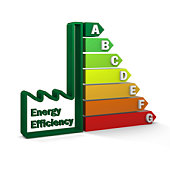
It is generally accepted that the majority of houses in South Africa are energy inefficient as they are not designed or constructed to maximize energy efficiency. It is recognized by the government that we need to become an energy aware society. To this end legislation is being planned to encourage architects and builders to consider energy efficiency in their designs in future.
Building regulations in South Africa are under review with the need to reduce energy demand from industry by 15% in 2015. Standards South Africa has been working on two performance standards SANS 283 and 204 in which standards are being prescribed for all naturally and mechanically ventilated buildings. Energy efficient windows are a particular focus so that contractors and homeowners will have a guide for the planning and design of their development.
The Australian building code has been used as an example because their standards relate to similar climatic conditions that we find in South Africa.
South Africa has been divided into six energy usage zones dependant upon climatic conditions. They are described as
1. Cold Interior
2. Temperate Interior
3. Hot Interior
4. Temperate Coastal
5. Sub-Tropical Coastal
6. Arid Interior.
Energy performance ratings for windows have been established for climatic conditions in numerous countries including USA, most European countries and Australasia. A Label is affixed to a product to indicate the energy effiency ratings
The main factors for which ratings have been decided in these countries are:
1.The U-factor. Expressed as U-value. The rate at which heat is lost from a building. The lower the value the better.
2.The R-value. This relates to how well the window insulates the building and restricts heat transfer. The higher the value the more effective the insulation in resisting heat flow into the building in summer and out of it in winter.
3.SHGC. Solar heat gain co-efficient This indicates how well a product blocks heat from the sun. The lower the number the better. A low SHGC means the window transmits less solar heat.
4.Visible transmittance refers to visible light being transmitted. The higher the VT, the more light is transmitted.
5.Air leakage. Heat loss and gain occur by infiltration of air through the cracks in the window assembly. The lower the AL the better.
6. Condensation resistance. This measures the ability of a product to resist the formation of condensation on the interior surface of that product
For more information on energy performance ratings go to www.nfrc.org
It is important that the above ratings are country specific and so a facility is being built to test South African products and determine the co-efficients for South African climatic conditions and the six energy usage zones. It should be ready early in 2007.
~ Timber Windows Performance Ratings ~
The ratings for timber windows internationally are better than those for metal or PVC windows and are recommended by the WWF as timber windows require less energy, are more efficient and less CO2 is emitted into the atmosphere in their production.
Energy Efficient Building Design Principles
1.Design for climate ? per the energy usage zones and climatic conditions
2.Insulate walls, ceilings, windows and doors ? increase insulation levels
3.Consider building orientation ? main living area windows to the north (if in the southern hemisphere)
4.Position windows to allow cross breezes to ventilate rooms naturally.
5.A light coloured roof reduces the flow of heat from solar radiation better than a dark roof
Energy Efficiency Of Buildings
While there are a number of fine energy courses and certified or degreed programs in the various universities and colleges for those who want to make energy efficiency their career in some form or other, there are also free energy courses for those who simply want to make some energy-efficient improvements in their own homes. Here are some ideas on where to find these credit or non-credit energy courses.
The University of Oregon, for example, offers online energy courses as part of its degreed program for graduates as well as undergraduates. Its commitment to a healthy and energy efficient environment is spelled out on its Web site. Pointing out that the way in which we are exponential using a finite amount of fossil fuel and other non-renewable resources is dooming our successors, the University offers energy courses for those who want to stop this harmful tide.
Included in these energy courses are a basic physics course that teaches the ins and outs of how energy and the environment work in concert with each other. The next course teaches students about renewable energy resources and the other green energy resources that can be put into place. An environment studies course follows these prerequisites, teaching quantitative methods of improving the environment. The study of our population growth and its impact on finite resources is the topic of another of the energy courses. One course is dedicated to the study of the depletion of our ozone. One of the basic energy courses offered on the Web or in Oregon classrooms is a brief look at the basics of fossil fuel ? how it works, how much we have of it, and how it harms the environment. The University also teaches a laboratory class on solar radiation and its use as a renewable energy.
The University actually offers a complete program of environmental studies. Building on a tradition several decades long of research and activism in the area of energy efficiency and environment improvements, the Oregon campuses have packaged their energy courses into a complete environmental program. Its mission is to train energy-efficiency leaders who can creatively solve program, think critically, and, after empowering and instructional energy courses, become responsible and productive citizens.
The University of Oregon energy courses and environmental program are actually interdisciplinary, promoting dialogue that crosses borders and promotes collaboration. More than 100 faculty members participate in these energy courses and activities. They are scattered over thirty campuses and dozens of departments. This degree program enables students to not only take energy courses from scholars of world class renown but also work and learn along side noted researchers. They can develop concrete energy efficiency skills and analytic capabilities as well as gain valuable and relevant hands on skills. These energy courses and this program can then lead to government careers, or work in various non-profit organizations, teaching institutions or private industries.
Energy courses can help one homeowner save her or his own money and energy. They can help a green-energy enthusiast start a satisfying and lucrative career in energy efficiency and assessment. They can also help save the environment for us all.
Both Tony Parker & James Copper are contributors for EditorialToday. The above articles have been edited for relevancy and timeliness. All write-ups, reviews, tips and guides published by EditorialToday.com and its partners or affiliates are for informational purposes only. They should not be used for any legal or any other type of advice. We do not endorse any author, contributor, writer or article posted by our team.
Tony Parker has sinced written about articles on various topics from . K Parker Joinery is one of the premier manufacturers of quality in South Africa. Tony Parker's top article generates over 2400 views. to your Favourites.
James Copper has sinced written about articles on various topics from Finances, Mortgage and Mortgage. James Copper is a writer for where you can find. James Copper's top article generates over 1220000 views. to your Favourites.
A Quote For Car Insurance You never know when you might need to drive someone elses car. With a policy that states you can well, then you can!