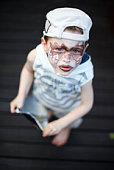
If you'd like to use the most popular designs you should definitely practice animal face painting. Animal themes vary extensively in design-you can create spots, stripes, whiskers, fangs, cat's eyes, dog's "black-eye", pug nose, beaks and so much more! This article will show you the basics of animal face painting and how to further enhance your skills.
First, get to know the basic animal designs. The most popular beginner's design is the butterfly and bunny. Here are other animals you can portray in your animal face painting:
These simple animal designs can already give you a world of different patterns. To get started, here are basic animal details:
1. Spots - can be applied by dotting paint on the face with a round brush. With this simple animal face painting technique you can create Dalmatian spots. Try drawing a circle around one eye and filling it in with solid color to create a dog's "black eye." You can then move on to creating cheetah spots by making solid dots and then creating a circle around them.
2. Making Stripes - you can use stripes to make basic tiger and zebra designs. Create wavy lines across the face with a brush. There are many books available that can show you where to direct those lines.
3. Noses - to make a nose, all you have to do is simply apply a black, pink or red spot on the nose.
4. Beaks - beaks are made by the illusion of "sticking out" of the face. Find detailed instructions from books or online information on animal face painting.
5. Eyes - animals have different kinds of eyes. Paint on a vertical line that has a thicker middle and pointed ends for cat's eyes.
6. Fur and feathers - there are many books that will provide you with information on how to create the illusion of furs and feathers using paint alone.
Prepare yourself for actual face painting now that you know the basics. Here is a basic procedure:
Step 1: Know what color combinations you are going to need for each specific animal design by creating a palette of colors. For example, a tiger is going to need a color palette of orange for the base, black for stripes, yellow for eyes and white for the lower eyelids.
Step 2: Before you begin animal face painting, ask your model if he or she would like the face to be painted entirely or partially. For those who don't want the whole face to be painted, add some animal-like features only in a small area like the eyes or part of the cheek.
Step 3: Begin painting! The typical animal face painting procedure is by first painting on the base with a moist sponge and placing the details or animal patterns with a brush last. Now that you have the basics on animal face painting, learn more about specific procedures on each animal and advanced techniques online.
Rashel Dan has sinced written about articles on various topics from Shopping, Gardening and Family Travel. Learn your basic design now. Find out how you can put a new dimension to your. Rashel Dan's top article generates over 74000 views. to your Favourites.
Apple Cider Vinegar And Skin Find out more by reading our other articles on this topic and other subjects we have written related to it