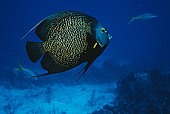
A freshwater tropical fish aquarium can be a wonderfully peaceful and ever-changing decorative item in any room but many people never get to experience them because they simply are afraid that it is too much work to set them up and maintain them properly. But this could not be further from the truth, in fact, an aquarium and can be very easy to set up and maintain if you simply follow two basic rules and those are making sure that tank cycles through its nitrogen cycle probably and never overloading it with tropical fish.
The size of your tropical fish aquarium is also important. If you think you're going to want to keep a lot of fish you better get a big fish tank. Generally, the larger the tank the easier it will be for you to maintain. The size of your aquarium directly relates to how many tropical fish you can keep in it and the more water you have the more of a chance will have to react and fix your water quality should start to go downhill.
In addition to the aquarium, you will need a heater, lighting, the filtration system, substrate (gravel), and a hood. Sometimes you can find these in kits at the aquarium store. Always try to buy the best that you can afford in if you're not sure then asked the store clerk and they'll be a will to explain everything to you.
The first step and setting up your tropical fish aquarium is to wash off all the decorations and the substrate that you be putting in the tank. You can just rinse them off with hot water but if you use soap to be sure to get all the soap off before you put them in the aquarium. Now you are ready to fill up the tank, making sure that it is in its new home and then all the cords can be plugged in and there is a dip in the cord before it reaches the electrical outlet which will ensure that water drips off and not Into your outlet in case of the spill. Make sure all the equipment - the filtering system and heater etc. fit into the tank and that the hood fits tightly on top. Make any cutouts in the hood for equipment that hangs on the side with as little air space as possible.
Fill the aquarium with water that is room temperature and use in aquarium water conditioner. Once it is full, you can do a test run on the filter and heater to make sure everything is working. Now you might be tempted to run right out and buy your first fish, but you must be cautious at this point as you need to cycle your tank in order to get a good bacteria bed growing so that the water will make a nice home for your fish.
Cycling the tank is a critical stage in setting up your freshwater aquarium because this is where the bacteria bed, which filters out the ammonia produced by decaying food fish waste, will be established. if you do not do this step properly, your water will not be at healthy levels to support your fish. during the cycling step, ammonia Is introduced into the tank which causes bacteria to take hold in your substrate and filter. This bacteria will eat the ammonia, making the water quality more hospitable for your freshwater fish but also at the same time it will produce nitrite which is toxic to the fish. Thankfully, at this stage, another bacteria will start to grow which eats the nitrite and releases nitrate. The nitrate is not as harmful and fish tolerate it well and less it gets to very high levels. So, you see, letting your aquarium cycle all the way through to where it is producing nitrate is very important for the water quality and key in setting up your tank properly.
Oddly enough, to get the cycling started you need to put a few freshwater fish in the aquarium. You'll want to choose very hearty fish (like Zebra Danios) so that they can withstand the harsh water conditions present before the cycling. the waste from the flesh will start to introduce the ammonia into the tank and the cycling process will begin. You want to buy a good test kit so you can test the nitrate, nitrite and ammonia levels in the tank which will tell you when the tank is fully cycled and you can add more expensive and prettier fish. your freshwater aquarium will be cycled when the ammonia and nitrite levels are at zero.
Once you have a completed this, you've gone through the first step of successful freshwater aquarium keeping and now you only need to perform regular maintenance and not over load your tank in order to keep the fish tank looking great in your tropical fish healthy.
When adding fish, you want to be sure not to add too many at once or you will upset the delicate balance of water quality in the tank. Try buying one new tropical fish a week until you have as many fish as your aquarium will hold. For best water quality, you want to stick to about 1 inch of fish per gallon of water so a 20 gallon tank could hold about 20 inches of fish which would be probably around 15 fish depending on how big they are.
The maintenance of your tropical fish aquarium should be easy if you stick to a schedule. Obviously, you should be looking at the fish daily to see that they are in good health and you want to be sure that the filter is in heaters are functioning properly. Then once a week, you should try to scrape off any algae that is accumulated. Once a month you should do a partial water change changing out about 25% of the water and adding new water at room temperature with water conditioner in it.
Freshwater Tropical Fish Aquarium
Most of the colors of Mollies are a result of specialized breeding practices from the people who raise them.
It is recommended that Mollies be placed in aquariums containing at least 15 gallons of water, a maximum of ? inch of gravel, and a heater that keeps the temperature of the water between 78 and 82 degrees Fahrenheit. As with Guppies and other livebearers, you should put 1 tablespoon of aquarium salt per 5 gallons of water to help them survive better in fresh water environments. Unique to the Mollies species of fish, they can actually live quite well in complete salt water aquariums as well. Since Mollies have this flexibility, they are a versatile fish that could be compatible in many different aquarium set ups.
Once considered a difficult fish to care for, the Mollies are now being seen as indicator fish as they will be the first fish to provide signs that the aquarium is unbalanced or the water is contaminated. Mollies kept in freshwater tanks require frequent water changes to remain healthy, while Mollies in reef aquariums rarely need a water change.
The best diet for Mollies includes feeding them floating flake food and freeze dried bloodworms on a daily basis, with a few Black Worms fed every other day.
Keep more female Mollies than male Mollies for the best results. The list of compatible fish is fairly long and Mollies can share the tank with several varieties of fish. The best tank mates include Platies and Swordtails, Angel Fish, a single Plecostomus, Corydoras Catfish, or larger Tetras including Red Serpaes, Silver Tips and Black Skirts.
As with any fish, you will need to have adequate room in the tank as well as a good filtration system. Proper lighting is also important for the health of your fish. When introducing Mollies to your tank, be sure you keep them in the bag that you received them and and float that in the fish tank for about 20 minutes to let the water temperature slowly match that of the tank. Then open the bag and mix a small amount of tank water in - let that sit for about 5 minutes. Repeat this last step a few times so that your fish can become acclimate to the water in it's new home before you release them into the tank.
Mollies tend to live an average of 4 or 5 years and reach a size of 5" in length.
Both Lee Dobbins & Lee Dobbins - are contributors for EditorialToday. The above articles have been edited for relevancy and timeliness. All write-ups, reviews, tips and guides published by EditorialToday.com and its partners or affiliates are for informational purposes only. They should not be used for any legal or any other type of advice. We do not endorse any author, contributor, writer or article posted by our team.
Lee Dobbins has sinced written about articles on various topics from Home Management, Diamonds and Install Flooring. Lee Dobbins writes for we you can learn more about choosing, setting up, and maintaining your. Lee Dobbins's top article generates over 246000 views. to your Favourites.
Lee Dobbins - has sinced written about articles on various topics from . Lee Dobbins writes for where you can learn more about fish tank care and freswater tropical fish like. Lee Dobbins -'s top article . to your Favourites.
Bad Credit Vehicle Loan Your adverse credit report will not come in your way of getting a bad credit personal loan provided you are careful while placing collateral with the lender and making extra effort in searching for lo...