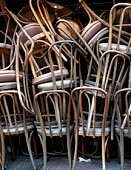
The chair is form of furniture made for sitting. It is usually designed for one person with a back and arm rests. It is also made with four legs for support. However, due to modern design, there are chairs that have no backs and arms (stool), a different number of legs, or designed for more than one person (sofa, couch, loveseat, and bench).
Historically, a chair was an article of dignity rather than ordinary use. Up till now, the chair is used as a symbol of authority in many countries. Committees, boards of directors, and academic departments all have a 'chairperson'. It was only during the 16th century when it became common. Chairs and its various forms were then used as ordinary seats for everyday life and the ones that existed before that period are hard to find.
In ancient Egypt, chairs were made with ebony, ivory, or wood. It usually had designs that showed representations of the legs of beasts or figures of captives. The earliest Greek chairs can be seen from early paintings and sculptures. The chairs were simply a square seat with a bare back and often had sphinx wings as a decoration on the legs. Roman chairs were similar to Greek chairs as they had sphinx designs on them. Roman chairs were usually made from marble which seemed to be the most commonly used material for art and construction. The most famous among the chairs from that time period is St. Peter's antique chair in St. Peter's Basilica. It has wooden portions that have decayed as time passed and ivory carvings that represented the works of Hercules The chair appeared to be Byzantine work of the 6th century, and to be really an ancient sedia gestatoria.
Traditionally, people from China, Japan, and Korea were seated in seiza or cross-legged positions. Seating furniture at that time were simple sitting mats laid on the floor. As cultural exchange with other western countries happened later on, mobile folded stools were developed and later changed to have high backs. Early paintings showed nobles sitting on chairs while they were entertained and served by people. It showed how chairs were used as an article of nobility and was limited to the upper class. However, chairs soon became available to all levels of society.
Thanks to the Renaissance period, chairs have ceased to be a privilege and became available to anybody who can afford to buy one, not just the elite. Chairs, like clothes, have changed a lot in design as time went on. Majority of chairs were made with oak and other hardwood and had no upholstery. When upholstery became common, material such as leather and silk were used to make them. Chairs, until the 17th century, were characteristically massive and heavy. It was only during the introduction of Louis XIII chairs that weight and solidity of chairs were reduced.
In the 20th century, chairs have undergone huge changes in style and design, ranging from plastic chairs to foldable ones. The recliner has become one of its popular forms especially because of the popularity of television and other home entertainment products. Mechanical technology has also created adjustable chairs which are commonly used in offices. Other chairs with specific purposes have also been created, such as massage chairs and wheel chairs. Home Elegance furniture has a wide selection of chairs - Home Elegance sofas, Home Elegance Ottomans, and Home Elegance dining chairs are all well-made and would last for a long time.
Gradlein has sinced written about articles on various topics from Family, Health and Family. . Gradlein's top article generates over 14800 views. to your Favourites.
Control Of Substances Hazardous To Health Regulations With regards to the health hazards that it poses, it is up to you to weigh which is more important, the convenience it offers or the inconvenience of contracting a disease