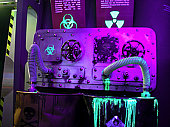
In the simplest terms, hazardous waste is any type of waste which contains some form of hazardous property that could make it harmful to the environment or human health. Unfortunately hazardous waste is not that simple. There are a wide range of different properties that can make waste hazardous, and waste can be classed as hazardous whether the potential harm to the environment or human health would happen straight away or over a period of time.
The characteristics to look out for when determining whether or not a type of waste may be classed as hazardous include toxic, flammable, irritant, infectious, harmful, carcinogenic, oxidising agent, mutagenic and ecotoxic. Examples of hazardous wastes include asbestos, solvents, lead-acid batteries, pesticides, televisions, computer monitors, fridges and fluorescent tubes.
The regulations surrounding hazardous waste were changed on 16 July 2005 when the Hazardous Waste (England and Wales) Regulations 2005 were implemented. This replaced the previous Special Waste Regulations 1996. Special waste was the term previously used to describe hazardous waste.
There are two main documents to help determine whether a particular waste is hazardous or not. These are the European Waste Catalogue (EWC) and the Technical Guidance document WM2. The European Waste Catalogue contains a list of all wastes, which are grouped according to industry or process. All of the different waste types have been assigned a six digit code and hazardous wastes are identified with an asterisk. The WM2 document provides guidance on the classification process and contains a consolidated version of the EWC.
Under the European Waste Catalogue there are two different categories of hazardous waste. These are absolute entries, and mirror entries. Absolute entries in the European Waste Catalogue are wastes that are always classed as hazardous waste. Mirror entries in the European Waste Catalogue are wastes that could be classed as hazardous waste, depending on the concentration of the hazardous elements within the waste.
Wastes that are classed as mirror entries can be quite complicated to determine whether or not they are actually hazardous. The waste has to be assessed to determine whether the potential hazardous element of the waste is present in a concentration which exceeds the threshold level. If the hazardous element meets or exceeds the threshold level, the waste is classed as hazardous. If the hazardous element is present is a concentration lower than the threshold level, then the waste is not classed as hazardous.
If you are unsure whether the waste your business produces is hazardous, it is advisable to contact a specialist hazardous waste disposal company. They will be able to use their knowledge and experience to help identify the waste and provide expert advice as to the correct storage and disposal methods for each of the different waste streams that you may have.
Industrial And Hazardous Waste
Environmental and health concerns have led to a widening of the definition of “hazardous waste”. Most people assume that this term refers only to toxic, chemical or industrial waste, but in fact all businesses are probably now producing some form of hazardous waste that needs to be disposed of carefully and legally.
So, how do you know if you're about to throw away something that's classified as hazardous waste? Follow the checklist below, which isn't exhaustive, but which does cover everyday business items that you might throw in the skip without thinking about it:
• Fluorescent strip lighting
• Acid lead, mercury and NiCad batteries
• Pesticides, including domestic garden pesticides
• Certain paints and decorating products
• Oils
• Solvents
• Aerosols
• Redundant IT equipment
• Old televisions
• Scrap cars
• Fridges, freezers and air conditioning systems
• Chemical, manufacturing or other industrial waste
If your business produces waste in any of these areas, you need to be sure that you are arranging legal disposal. In the UK, many local authorities have put aside areas at public waste sites where you can dispose of small quantities of hazardous waste, but if you produce any of the above regularly, or in any volume, you must arrange for a registered company to collect and dispose of it.
If you are unsure about the classification of the waste your business produces, then seek the advice of an expert. Hazardous waste disposal companies have the knowledge and experience to help you identify and categorise the waste you produce and give you advice on putting together a disposal plan. Depending on how much waste you produce, you can set up a regular collection facility which ensures that your waste is never allowed to build up beyond acceptable levels, and is always disposed of legally and safely.
If you don't have any provision for hazardous waste disposal, or you didn't realise that some of the items in the above list had be classified as hazardous, then you need to get advice as soon as possible.
Both Roberto Bell & Envirogreen are contributors for EditorialToday. The above articles have been edited for relevancy and timeliness. All write-ups, reviews, tips and guides published by EditorialToday.com and its partners or affiliates are for informational purposes only. They should not be used for any legal or any other type of advice. We do not endorse any author, contributor, writer or article posted by our team.
Roberto Bell has sinced written about articles on various topics from Food and Drink, Health and Colon Cleanse. Nicholas Tate is the director of a company called Utopia Waste Management which specialises in. Roberto Bell's top article generates over 90500 views. to your Favourites.
Envirogreen has sinced written about articles on various topics from Home Management. Envirogreen is a leading UK hazardous waste disposal company, which can help businesses and homeowners get rid of hazardous waste safely and legally. Visit our website now by clicking on. Envirogreen's top article generates over 720 views. to your Favourites.