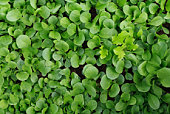
When planning a vegetable garden the first step is alway finding the ideal spot. Most vegetables require lots of sun so choose a location with a southern exposure. Ideally the sunlight is distributed as evenly as possible for the longest period of time. Southern exposure is perfect since the sun shines evenly on each side. North facing shady gardens are fine for ferns and other woodland plants but they are generally not suitable for vegetables and some flowers.
Its always best to plan a garden on paper before planting. Each type of seed will have individual planting requirements, such as spacing and planting depth. If you know before hand the size of your garden you'll be able to determine the number of seeds needed and can plan accordingly. Alternately, if you already have your seed and know the spacing requirements, you will be able calculate the appropriate size garden.
New garden area are likely to be covered with turf grasses. Large garden areas can be tilled and the sod turned under. In small gardens, however, you should remove the sod. To do this cut the edges of the garden with the spade. Then cut narrow strips approximately 1 or 2 feet wide. Sod cut in this way can easily be removed.
Don't throw the sod away, rather sift through the newly tilled garden, pick out the pieces of sod, shake them well and add them to the compost pile. Compost is the ideal soil conditioner for a vegetable garden so throughout the growing season add your garden clippings to the pile. As you remove the sod, break up the big clumps of soil which are left behind. The garden must be tilled well in order to create suitable conditions for planting seed. A seed planted in chunks of soil will rarely survive. Use a grading rake to smooth out the soil once the ground is properly tilled. Once ground is level and smooth, the garden is ready to be planted.
Some spaces may be too rocky to be useful as a vegetable garden. In this case raised beds are necessary. Building raised beds can extend the growing season since the soil is able warm up sooner than the rest of the garden. They also offer better drainage and deep topsoil with little compaction. If you add compost to your garden each year a raised bed may occur naturally. Raised beds are easy to care for and they are protected from the encroaching grass and weeds of its surrounding environment.
In gardens which receive southern exposure vegetables and flowers should be planted in rows which run north and south so the plants are able to receive the sun's rays during the morning on the eastern side, and during the afternoon on the western side. Planted this way, your vegetable will grow more evenly. In order to get the best distribution of sunlight in a garden facing southeast run the rows northwest and southeast. Thoughtful planning and proper planting techniques will result in a successful, productive vegetable garden as well as a very satisfying endeavor for the gardener.
Preparing A Vegetable Garden
The only thing that distinguishes a kitchen vegetable garden from any other sort is that the garden plants are specifically selected to be eaten. Given that, the primary consideration in choosing your plants is what you will use, either for your own consumption or as trade items at a local farmer's market. (Of course the climate in your area and the length of the growing season are also major factors.)
Your primary goals are to save money, to provide yourself with a healthy source of fresh food, and to have some fun in the process. There's nothing quite as satisfying as seeing something you've grown with your own hands on your dinner table. But how to start?
Where to Plant Your Garden
Obviously you can only use the land available to you, if there is any, or you can augment what space you have with containers. Figure out how much room your plug plants will need and plan accordingly. Tomatoes and peppers grow to a large size and do quite well in containers with cages for stabilization. Carrots and lettuce, on the other hand, do well planted in rows.
If you or someone you know is handy with tools and if you have access to a little lumber and some screening material to use in the base of the boxes for drainage, you can use terraced, graduated beds and plant stands to squeeze in as much growing room as possible. Pick a place with plenty of sun that is well drained. Herbs, for instance, take six to eight hours of sun per day.
Your soil will need to be well turned and most likely enriched with a good quality bedding soil available from your local plant nursery. Make sure that the soil your purchase is appropriate for the plants you've selected. Talk with the staff at the nursery and they will help you select the right materials as well as any fertilizers that might be necessary based on your soil type. (It's not a bad idea to take in a small sample of soil for their examination.)
What to Plant in Your Garden
If you want to start small and get a lot of bang for your buck, begin with tomatoes. A single plant can produce more than 100 lbs. of tomatoes over a growing season, an estimate that is actually on the low side. Since tomatoes in the store average 1-2£ ($2-4 USD) per pound and because they are so versatile (tomato juice, sauces, salsas, or simply eaten fresh), the plants alone can significantly augment your diet while being kind to your pocket book. The volume you produce will also make it easy to share with family and friends or to trade your tomatoes at a farmer's market for other kinds of vegetables. (Pepper plants are equally hardy and prolific.)
Other garden staples to consider include:
• Lettuce, which naturally compliments the tomatoes.
• Carrots.
• Okra and eggplant, which are well suited for small “left over” spaces.
• Herbs, which are excellent for spicing dishes, a fragrant addition to your yard, and often a natural insect repellant. Good herb choices include: anise, coriander, dill, fennel, and perennials like thyme, oregano, chives, tarragon, sage, and rosemary.
If you don't plant any other herbs, go with the rosemary. It's incredibly hardy, smells wonderful, is excellent for cooking meats, and can even be dried into potpurri.
How to Tend Your Garden
Frankly, the biggest investment you will most likely spend on your garden won't be monetary, but will rather be a commitment in time planting, weeding, and watering. When you purchase your plants, discuss their needs with the nursery staff. It's always a good idea to select things with similar watering requirement or to arrange your garden in such a way that segments can be watered separately, with some areas receiving more and others less. Learn what insects are likely to damage your plants, how to watch for them, and what to do when they show up. (You don't want to just use any insecticide on your garden. Remember, you're going to be eating these plants!)
In most cases it's a good idea to start small and to add to and expand your garden in subsequent growing seasons as you get more comfortable selecting and caring for your plants. You'll have some failures; everyone does, it's just part of the process. But you'll also augment your diet with healthy, fresh food, cut down on your grocery bill, and create a fun activity for your family or for yourself (and get some exercise in the process.)
Both R Birch & Rana Williamson are contributors for EditorialToday. The above articles have been edited for relevancy and timeliness. All write-ups, reviews, tips and guides published by EditorialToday.com and its partners or affiliates are for informational purposes only. They should not be used for any legal or any other type of advice. We do not endorse any author, contributor, writer or article posted by our team.
Complications Of Rheumatoid Arthritis This is why a large empathizes on natural remedies for rheumatoid arthritis are being explored. This includes the use of over-the-counter natural supplements, nutrients, and topical creams