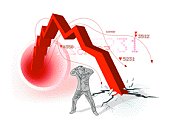
There's no denying it, we're in a serious economic crisis. Financial organizations are collapsing under the weight of bad debt that they have taken on and consumers are experiencing uncertainty and a lack of confidence in the market. As a result, lending companies are lending less money and the average person is watching their expenses very, very closely.
In spite of the crisis, life goes on. People still need to buy homes to live in. And to do that, they need to get a mortgage. Rather than buy a brand-new stick-built home, a preferred solution for consumers (and the institutions that lend them money) might be to custom-build a modular home.
At first, those unfamiliar with the concept might wonder two questions: “aren't modular homes just like mobile homes?” and, “isn't custom building usually expensive?”
Custom modular homes are not mobile homes. They look just like regular homes. The difference is that they are built in units in a factory-like setting by professionals and those units are shipped to the site and put together within just a few days. This method is actually cheaper to build in general AND it allows for customization, because prospective homeowners can select different units and put together the floor plan they want… at a price that is lower than a conventionally built home.
Custom built homes at a price that is lower than a conventional home is attractive to anyone thinking about having a home built. But modular homes are attractive for other reasons, too:
Because modular homes are faster to build than stick built homes (taking weeks instead of months to built and erect), there is less money required in a building loan and it gets paid back faster.
And once built, modular homes cost less to live in because they are more efficient to run and they come with a 10 year warranty.
Lastly, consumers need to spend wisely on a solution but they also need to consider the future… How will they leave the earth for their children? Custom modular homes are more environmentally friendly because they are faster to build and there is less wasted building material. All you need to do is turn on the TV or listen to the radio and you'll hear one company or another advertise its products or services and include in the list of benefits that it's good for the environment. You never heard this as a selling point before but the environment is increasingly become an area of importance for consumers. More and more buyers are making purchasing decisions based on the potential positive or negative impact in the marketplace.
Modular homes address this trend by offering eco-friendly homes that have a low impact on the environment in several ways.
• Air pollution is minimized through the reduced requirement of heavy machinery to operate over a long period of time at a building site.
• Noise pollution is minimized for the same reason.
• Building materials are not wasted because modular homes are constructed in units in a factory-like setting and then shipped to the site for rapid construction.
And that's just during the building process! Afterward, custom modular homes run more efficiently because their insulation is often better (having not been exposed to the elements before installation) and the air exchange is less than site-built homes.
The benefits are clear: In today's tight economic times, custom modular homes are the right answer for consumers who want to spend less now and in the future, who want to enjoy the home they live in, and who want to still make purchasing decisions that are good for the environment.
The Current Economic Situation
Quite simply it means a business which is not affected by slow growth and cuts in spending. This sounds as simplistic as it does stupid, how can a business not be affected; surely all businesses must be affected to a certain extent? It is however possible that where someone may not pay thousands of pounds for a holiday, instead they may pay a few hundred pounds on a new TV (home luxuries), and if we go down the line a bit, someone with less resources may not pay hundreds of pounds for a new TV but may pay for a new Xbox game, and one step further, someone who can no longer pay £30 for a new Xbox game, well, in all intents and purposes is broke.
There is no such thing as a recession proof business. Every business is going to be affected in one way or another, the recession proofing of a business is entirely dependent on the upper management's ability to adapt to current spending and demands. This however was not the subject of the article.
How can the franchise industry benefit from an economic downturn? Again we have a simple answer:
As more people are being made unemployed, many with redundancy packages, there are more people available for employment and purchasing a franchise, a ready made business to take the place of their old job and one with a track record of success. In particular B2B franchises are taking off as seeing an increase in sales due to more small businesses being set up to cope with the demand of higher unemployment
Is it as simple as that though? No, of course not. Although franchise sales "may" rise, and I am expecting this to be the case come the summer of 2009, the income that it is possible to generate per franchise is likely to drop. This does not mean the franchise business is not a viable option but it does mean that the expected turnover figures for each franchised business should be modified accordingly. This drop in turnover for each franchise outlet will mean a decrease in the overall turnover for the franchisor, a drop in their monthly % of profits and despite the expected boost in franchise sales cutbacks are likely to be made in areas of IT, and staff. The only area I foresee staying the same is marketing. Marketing gets pride of place in franchising, most franchisors get a monthly marketing fee from their franchisees and as such their overall budget "should" stay on a relative plateau.
All franchises are based around expansion and branding, if the expected increase in franchise sales happens, along with it comes increased brand awareness as the network grows. This is good news for franchise buyers and existing franchisees as more money gets added to the marketing pot and due to the increased presence across territories the brand goes through a burst of organic growth.
The Good News
For the franchisor
An upsurge in unemployment and redundancy packages could lead to higher franchise sales
For the franchisee
It could well be that despite a change in peoples spending habits; organic growth and paid for marketing could be a real boost for franchise owners and buyers.
The Bad News
For the franchise buyer
For those franchise buyers who do not have the required capital, and/or are experiencing negative equity on their house, raising the capital through the normal method of bank loans could prove tricky.
For the franchisee
Expected turnover could see substantial drops in 2009/10
For the franchisor
% of profits from franchisees are likely to drop over the next 2 years (boosted however by franchise sales)
Both Michael Zenga & Matthew Franchise Anderson are contributors for EditorialToday. The above articles have been edited for relevancy and timeliness. All write-ups, reviews, tips and guides published by EditorialToday.com and its partners or affiliates are for informational purposes only. They should not be used for any legal or any other type of advice. We do not endorse any author, contributor, writer or article posted by our team.
Michael Zenga has sinced written about articles on various topics from Home Management, Home and Home Management. is one-stop resource for modular home floor plans, prices and information. More people everyday are realizing the tremendous value of this. Michael Zenga's top article generates over 60500 views. to your Favourites.