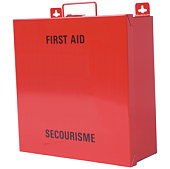
Most medical mishaps -- i.e. accidents of sport, a child riding a bike and falling, running and tripping, going up and down stairs too fast -- require someone to pitch in to help the injured. If one has a proper FIRST AID KIT that a buddy, family member, work associate can use, the chances are good that this lay medical treatment can prevent or at least slow down blood flow or the injury from getting worse. No one thinks about having a first aid kit until it is needed - the same way no one thinks of having a fire extinguisher on hand. It sure is a comforting feeling to have a first aid kit ready if and when the time comes to help a fellow human being.
Please don't forget to replenish the kit as supplies are used.
The Department of Homeland and Security takes an active role to help Americans prepare the contents of a First Aid Kit that will enable them to provide prompt aid to anyone in need of emergency aid.
They suggest you include the following in the First Aid Kit: Disposable gloves, preferably sterilized, (not latex, if allergic, of course), sterile dressing to help any bleeding subside; disinfecting/cleaning /liquid soaps solutions and antibiotic/disinfectant wipes; a salve which will prevent inflammation and infection. Have specific ointment for burns, adhesive white tapes in various widths and the kind with air holes for breathing. Have a solution to wash out the eye or to use to decontaminate the area of a wound. An oral thermometer is advisable. Personal/private needs like insulin, a dosage of medicine for heart problems or an inhaler for asthma sufferers. Periodically check for expired dates so, fresh substances can be substituted for old stock. Additional items for better preparation to assist the injured in a FIRST AID KIT would include: A cellular telephone to contact emergency help (fire /rescue squad/paramedics) aspirin / Ibuprofen to help with pain. A simple instrument like a tweezers could help substantially as could anti-diarrhea pills or liquids, heart burn pills, a jar or tube of petroleum jelly for soothing protection for minor burns, maybe even a laxative.
The New York City Fire Department supports the importance of having a well supplied FIRST AID KIT by listing which items they think are important to include; Acetaminophen, Ibuprofen, and aspirin tablets to treat headaches, pain, fever, and simple sprains or strains (Aspirin should not be used for relief of flu symptoms or given to children.); Ipecac syrup and activated charcoal for treatment after ingestion of certain poisons. (Use only on advice of a poison control center or a local emergency department); elastic wraps for wrapping wrist, ankle, knee, and elbow injuries; triangular bandages for binding injuries and for making an arm sling;, scissors with rounded tips; adhesive tape and 2" gauze for dressing wounds; disposable, instant ice bags For icing injuries and treating high fevers; bandages of assorted sizes for covering minor cuts and scrapes.
Antibiotic ointment should be included to treat minor burns, cuts, and scrapes. Gauze in rolls and in 2" and 4" pads for dressing wounds. Bandage Closures 1/4" and 1" for taping cut edges together. Tweezers to remove small splinters and ticks. Safety pins for fasten bandages. Rubber gloves to protect yourself and reduce the risk of infection when treating open wounds. First Aid Manual and a list of emergency telephone numbers.. At a minimum level of readiness, make sure that the New York Fire Department list of items is part of your FIRST AID KIT, in order to be ready to reduce acute emergencies and prevent them from getting out of control.
To best utilize your First Aid Kit, the following pointers are helpful: If you don't have a proper FIRST AID KIT in a recognized box visible to all, then place the items in a clearly marked bag or container and put it in a place that is known to all and in easy reach. All the following places should have a kit: HOUSE, APARTMENT, TRAILER HOME, TENT FOR OUTINGS, CAR, BUS, TRUCK, MOTOR- CYCLE, MOTOR SCOOTER, EVEN a BICYCLE AND OF COURSE AT WORK. If the Kit is locked, make sure someone knows where the key is. We cannot over-emphasize the importance of periodically checking for expired items. Furthermore, one should take initiative to learn how to use all the contents in the proper way! Take a first aid course which includes CPR. -Teenagers, as well, should know the basics. Review a first aid instructions booklet with them.
As was stated before, let's emphasize that one should consistently inspect the Kit and renew items that are time-expired or even just not fresh or which are brittle. These should be discarded and replaced. It's important to every so often remind yourself how to use all the items which may save a life! Take a course in CPR /first aid in your local hospital, CPR training units, fire dept, paramedic service, etc. Furthermore, you can review some basic help procedure with children who are old enough to comprehend first aid practices. In order to organize the contents of your First Aid Kit, make a list of all its contents and adhere it to the inside lid. Also put a list of emergency phone numbers in the box or container or bag.
Finally, maintain an ongoing list of replacement articles to buy in the Kit, because when the time comes, one wants to have all items ready and fresh.
Rm Coheni has sinced written about articles on various topics from Medicine, Health. About the author: RM Coheni is one of the owners of the Medical Training Aids Web store and has experience as a life guard. You can find more info about the and links to purch. Rm Coheni's top article . to your Favourites.
2008 Tax Law Changes 11. Educators Deduction This Educators deduction for up to 250 for any classroom supplies purchased by educators was revived for 2008