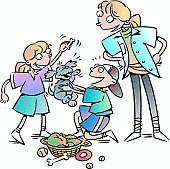
When you decide you want to bring a new puppy home, you need to make sure you are ready for the training that goes along with it. You can't just bring home a puppy and think you can let it outside every now and then and be done with it. It doesn't work that way. You will have an adult dog that jumps on people and one that doesn't listen when you tell it something such as sit or stay or come, it will just keep doing what it wants and you really don't want that in a dog.
The reward system is a great way to train you puppy. This means if you puppy jumps up on you and you don't want them too, do not give them a reward or treat. If you say 'no jump' and the puppy says down, then reward her! One thing to remember is to keep the commands simple, dogs don't understand complicated sentences. Sit, stay, come, off, no, down, potty etc are all you need when training you new puppy.
If you get an adolescent dog or an older dog that is not trained, you must start from the beginning and use the same methods as with a puppy, but be prepared for some resistant's because older dogs are set in their ways just as people have a way of doing things and don't like change.
Repetition is the key to any type of training and anything you want your puppy or dog to do. This works mainly because dogs are repetitive animals. When you want your dog to stop jumping on you, or other people, simply push them down & gently say 'off.' You use the command 'off' rather than down because if you were to train the dog at agility or some other type of competitive sport, down means 'lay down' so 'off' means 'get off.' Gently push the puppy into a sitting position and say 'off' loudly and eventually, she will learn that you don't want her to jump on you that you want her 'off' you.
Now with jumping on other people, it's similar to the 'off' command, only it's 'no jump' and gently pull the puppy to a sitting position. Every command should end in a sitting position and you should always tell the dog 'good girl/good boy' when they have done what you asked of them, even if you needed to assist them. This way they know they will gain your approval and praise if they do something correctly.
The tone of your voice is crucial to training. When you are correcting your puppy or dog, use a flat, monotone voice, but when you are praising the animal, use a high pitched, loving type voice so they know the difference.
When a puppy or dog has done something wrong, such as chewed through your new boots and you discover this when you get home from work, there are a few things to remember here. First is that you don't know when he chewed the boots, so giving him a crack on the nose now would be senseless because he doesn't know what he did three hours ago. Second, hitting your dog shows the dog that aggression is okay and you don't want an aggressive dog. You show the dog your disappointment with the tone of your voice.
Training Your New Puppy
The Basics
* Travel crate: Even if you don't plan on crate training your dog, consider the benefits of owning a crate for other reasons, like transporting an ill or injured puppy to the veterinarian.
* Food and water bowls: If you have a puppy, keep the bowls low and shallow. Tip-proof works well, too. As they grow, you'll likely need to upgrade to larger dishes to accommodate your pet's size.
* Food: Choose an age-appropriate food. Ask your vet or local pet store for recommendations if you're not sure what kind to purchase. Remember that high quality dog food keeps your puppy healthier and happier.
* Collar: Pick a collar that fits properly now. You can always upgrade later if necessary.
* Leash: A six-foot lead works well. Choose the right thickness and strength for your dog. A Chihuahua's needs are very different from the needs of a Rottweiler.
* ID tag: As one of the first things people search for when finding a stray dog, an ID tag can help make sure your puppy makes it home safely. At a minimum, have your phone number engraved on the tag.
* Grooming supplies: Different breeds require different levels of grooming. However, every pup can benefit from a good weekly brushing. It's also a great way to have quiet, bonding time with your new dog.
* Housebreaking supplies: Even adult dogs have accidents, so be prepared with good cleaning supplies.
* Veterinarian: If you don't have a favorite vet already, ask family, friends and neighbors for a recommendation. Have an appointment scheduled within the first few days of bringing your puppy home, so your vet can check for worms, other health conditions, and start her vaccination regimen.
* Flea and tick control: Ask your veterinarian what age your new puppy should be before administering any flea and tick control products.
The Extras
* Obedience classes: Every dog can benefit from learning some basic obedience skills.
* Puppy treats: Yummy treats are the perfect reward when you're working on obedience. Or for when they're just being adorable.
* Toys: Chew toys help satisfy your new puppy's teething needs. If you'd like to teach your dog to retrieve, look at purchasing a few balls, but make sure they're not so small that your dog chokes. A lot of people swear by Kong, an awesome rubber toy you stuff with treats to keep your new pal busy.
* Sour apple spray: Use this product to spray on spots your puppy loves to chew on. It's a terrific deterrent for naughty puppies.
* Baby gates: Want to keep your dog in one area of your house? Use baby gates to corral him. Let's face it; for a lot of us, dogs are our babies anyway!
* Dog house: If your pup will spend any time outdoors, he'll love having his own little house. Fill it with great chew toys and a cozy blanket, and it will be the perfect home away from home.
* Doggie door: Training your dog to use a doggie door when she needs to go outdoors makes life easier for you and your pal.
* Clothing: Depending on where you live, sweaters or snow boots may be required outdoor gear for your dog.
Now that you have the basics on hand, don't forget the most essential items for your new puppy: lots of hugs, kisses, and sweet talk. Best of all, they're free!
Both Tristan Andrews & Jennifer Mcvey are contributors for EditorialToday. The above articles have been edited for relevancy and timeliness. All write-ups, reviews, tips and guides published by EditorialToday.com and its partners or affiliates are for informational purposes only. They should not be used for any legal or any other type of advice. We do not endorse any author, contributor, writer or article posted by our team.
Best Income Tax Software 4.Realize that todays marketing to drive traffic to your Web Site is multi leveled. To be successful you must have links to your site via Articles, Video, Press Releases, and Audio.