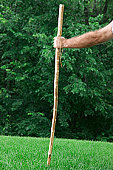
Walking stick ferrules are often overlooked or ignored by users of walking sticks and walking canes. The ferrule is the rubber or metal piece that sits on the bottom of your walking stick or cane - it is the vital piece that comes into contact with the ground during every step you take and it deserves a closer look!
Walking stick ferrules actually date back many centuries. They were originally made out of bone, ivory, horn or metals (e.g. brass) and they used to be quite long - up to eight inches long in some cases. They were often a showpiece and came in a variety of ornate designs and colours.
In the 1800s they started to become much shorter in length and the materials used to fashion the ferrules were also changing, as silver or nickel became the metal of choice in the 19th and 20th centuries. As the walking stick ferrules were also being mass produced, they were also becoming less ornate and decorative and more uniform in their shape and size.
Nowadays, most ferrules are made out of rubber and they are manufactured in their millions in the same shape, size and boring colours. It's amazing that with all the new technology in the world, no-one has ever really improved the simple rubber ferrule - the design has remained pretty much the same for last few hundred years. The reason for this is largely down to a misunderstanding about the true function of the simple walking stick ferrule.
Most people see the primary function of the ferrule as simply to protect the walking stick from wear and tear. For example, wooden sticks are especially sensitive to water damage and if water were constantly allowed to seep into the stick from contact with the wet ground, the wood could become weak and split or even break into two. So protection from the elements is definitely important. But is it the be all and end all for a ferrule?
No! The ferrule could be transformed and offer so much more! For example, one common complaint among users of walking sticks or walking canes is that they develop sore wrists or arms as a result of the constant jarring they get from placing the stick on the ground hundreds or thousands of times a day (note: please consult your doctor for advice if this applies to you). Surely a more advanced ferrule should be able to absorb some of the shock? Furthermore, the ferrule should help the walking stick to grip the surface being walked on, especially when the surface is otherwise very slippery, such as on marble floors or smooth tiles. Essentially, the ferrule should be able to improve your stability and modern technology should be able to enhance the simple ferrule.
If your existing walking stick ferrule is worn through then you should definitely replace it immediately. When you do so, you should investigate some of the more modern walking stick ferrules that are just starting to hit the market. Using modern design techniques and modern materials, some ferrules now offer far superior benefits to the boring old grey rubber ferrules, such as increased grip, shock absorption and improved stability and maneuverability.
Marty White has sinced written about articles on various topics from Make Money Online, Home and Computers and The Internet. FlexyFoot has designed a revolutionary new type of Walking Stick Ferrule. To learn more visit . Marty White's top article generates over 4400 views. to your Favourites.
About The Electric Guitar As far as the guitar playing goes, try to experiment with effects to get a sound that resembles the words of the song you are writing, which would be your mood, or feeling