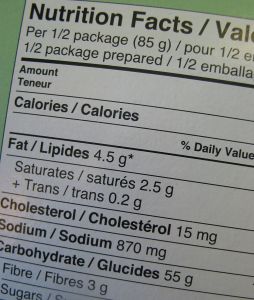
Trans fat is created by modern technology and is foreign to the human body. Basically, trans fat, also known as trans fatty acid, is made when manufacturers add hydrogen to liquid vegetable oils to make the oils more solid in a chemical process called hydrogenation. Hydrogenation increases the shelf life of the vegetable oils containing these fats. Hydrogenated vegetable fats are used as they are claimed to give food desirable taste, shape and texture.
Trans fat can be found in vegetable shortenings, some margarines, crackers, cookies, potato chips, microwave popcorn and other foods made with or fried in partially hydrogenated vegetable oils. Unlike other fats, the majority of trans fat is formed when food manufacturers turn liquid oils into solid fats like shortening and hard margarine. A small amount of trans fat is found naturally, primarily in some animal-based foods.
Unlike other fats, trans fats are neither required nor beneficial for health. Eating trans fat increases the risk of atherosclerosis and coronary heart disease. Health authorities worldwide recommend that consumption of trans fat be reduced to trace amounts. Trans fats from partially hydrogenated oils are generally considered to be more of a health risk than those occurring naturally.
Trans fats not only raise total cholesterol levels, they also deplete good cholesterol (high-density lipoprotein or HDL) which helps protect against heart disease. Due to hydrogenation, trans fats are stiffer and harder than other fats as they are made more solid. The stiffer and harder fats are, the more they clog up your arteries. Trans fats can clog up the arteries that supply blood to the heart and brain, which can lead to heart disease and stroke.
In 2003, Kraft was sued to eliminate trans fat in Oreos cookies. As a result, Kraft eliminated trans fats from Oreos and reduced or eliminated it in about 650 other products. Oreos cookies are as tasty as ever and are still loved by many consumers. This dispels the claim that trans fat make foods taste better.
Since 1990, the fast food industry has been cooking french fries in hydrogenated vegetable oils instead of tropical oils like coconut oil and palm oil. Before that, tropical oils have been used extensively by the food industry as they gave foods many desirable properties. The saturated fats in the tropical oils are highly stable and do not go rancid , as polyunsaturated vegetable oils do. When tropical oils were used, foods remained fresh longer and allowed people to absorb more nutrients from them.
Most vegetable oils contain trans fatty acids and the extensive use of vegetable oil in the Western world has led to the rampage of heart disease, making it the number one killer. Trans fatty acids are also linked to health effects like cancer, multiple sclerosis, diabetes, and other degenerative conditions.
Residents of Sri Lanka eat lots of coconut oil and have one of the lowest rate of heart disease in the world. Populations that are high consumers of coconut oil are among the healthiest people in the world. Avoiding the trans fat in vegetable oil and switching to coconut oil for cooking purposes can be the best decision you make to improve your health right away.
Protect your immune system and nourish your health with virgin coconut oil, Go to:
http://www.BuyVirginCoconutOil.com
What Are Trans Fat
As consumers we had no idea how much trans fatty acids (trans-fat) were in the food we eat. Until now, the U.S. Food and Drug Administration (FDA), after much red tape, is requiring that trans-fats be on all packaged food labels. You will see the new addition right below the saturated fat listing. At least now, Americans in the packaged food they buy can see how much is in there. Trans-fat are worse on the heart than saturated fat and should be avoided in any diet program.
Trans-fat are, in my opinion, the most deadly of the unnatural forms of fat. The FDA estimates that 500 deaths from heart disease will be prevented in the next 3 years, thanks to this new information to consumers. Harvard researchers have estimated that 100,000 lives a year could be saved if people cut trans-fats out of their diets completely.
So what is a trans-fat? Trans-fats are artificially created by a process called hydrogenation. Hydrogenation is adding hydrogen atoms to liquid vegetable oil. This process allows a longer shelf life and stabilizes the flavor. It is also cheaper than other fats, like butter or lard, so many food manufacturers prefer to use it. About 40% of the food on grocery store shelves contain trans-fat. Health officials in New York City estimate that 30% of the restaurants use trans-fats or fry food in them.
Once in the blood stream, trans-fats raise bad cholesterol (low-density lipoprotein, LDL) and lower good cholesterol (high-density lipoprotein, HDL). Trans-fat may raise cholesterol twice as much as saturated fat, which makes it one of the major contributors to heart disease deaths crippling Americans. There are more than 1.4 million Americans dying from heart disease each year. In a Harvard Nurses' Health Study, those who eat more trans-fat were 53% more likely to develop heart disease than those in the study eating low amounts of trans-fat. The high risk group was consuming 6.7 grams a day. You can find the same number of trans-fat in fast food French fries fried in partially hydrogenated oil. Higher incidence of diabetes and gallstone disease may be linked to trans-fat as well.
The National Academy of Sciences (NAS) estimates that there is no safe amount of trans-fat to eat. No one is sure exactly how much trans-fat Americans are eating. One tablespoon of margarine has 3 grams, one doughnut has 5 grams. The best thing you can do is cut trans-fat out of your diet completely. Your heart will thank you. Frito-Lay chips and Pepperidge Farm goldfish crackers have already taken out trans-fat from their food. Most companies still have not taken trans-fat out of their products. There are two grocery store chains that carry no products with trans-fat, Whole Foods and Wild Oats. If you want to rid your diet of trans-fat, you are going to have to read food labels carefully. Besides the grams of trans-fat in the product, you need to check the serving size as well. Some products have small serving sizes to keep their grams total down.
If you want to keep trans-fat out your diet, there are things you can do. Cooking your own food is one of the best ways. You then know what style you are cooking with. Good oils to use are olive, grape seed, rice bran, canola, corn, and safflower oil. Staying away from restaurants that use trans-fat would also be advisable. Look for foods that contain essential fats that our bodies want, like the avocado.
With a little extra effort you can take trans-fat out of your diet. Taking trans-fat out of your diet may be the single best thing you can do to lower your risk of heart disease. There is no known health value of trans-fat, so your body won't be missing anything if you completely get rid of them in your diet.
Both John Goh Goh & Charles Carter are contributors for EditorialToday. The above articles have been edited for relevancy and timeliness. All write-ups, reviews, tips and guides published by EditorialToday.com and its partners or affiliates are for informational purposes only. They should not be used for any legal or any other type of advice. We do not endorse any author, contributor, writer or article posted by our team.
John Goh Goh has sinced written about articles on various topics from Nutrition, Health and Vegetarian Diet. Feel free to use this article on your website or ezine as long as the following information about author/website is included.
Answering Job Interview Questions Try to avoid a direct answer, instead asking your interviewer a clarifying question such as, Can you give me the salary range for this position?