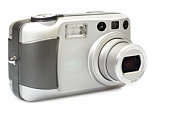
You made some important decisions. You picked out the computer that will do everything you want it to do. The basic minimum is usually the computer, monitor, speakers that were included, and the all-in-one printer/scanner/fax. The keyboard and mouse are connected. The speakers are connected. After you explore the system and all it has to offer, you are likely to want a digital camera.
Depending on what online activities you enjoy there are other accessories. Headphones with built-in-microphone to call friends and chat hands-free. Perhaps a web cam if you have distant relatives you'll never see any other way. But the one thing that allows you to reach out to all of them at once is a digital camera. With it you can put pictures of your life online, make a list of all the people you want to send them to and with one click you send an email with pictures attached to the entire group. Then by saving the email list you simply send new pictures to the same group again and again. You can stay in touch without spending a great deal of time.
The online Photo Album can serve the same purpose. Creating one is easy. You can then send the URL to all your friends and relatives. If this is something you will enjoy - the next step is to buy a digital camera. There are enough choices to make your head spin. It can be tempting to choose one with all the settings that you won't know how to use. It'll seem practical to buy the cheapest model as a learning tool. Either of these choices may be wrong for you.
Before you rush off to the camera store or ebay there are many points to consider.
What level of experience do you have.
What pictures do you plan to take.
How often will you use the camera.
Will you use all the complex settings.
What brand will function with your computer.
How much money do you want to spend.
If you have never taken many pictures and plan to take them on holidays or vacations only you'll choose differently than the computer geek who can't wait to get his hands on all the bells and whistles of that new D-SLR. It has all the features and accessories used by professional photographers. Needless to say, the high price tag also.
At the other end of the spectrum is the economy model that you might consider a good starter camera. You might imagine yourself learning to use it then upgrading when you have more experience. If you go this route it is like tossing $50 or so out the car window. You put batteries in and thats all it tells you how to do. There may be no instructions, no manual to describe the features and no helpline or chatline to use when you are stumped. Among the other bad features, the viewing screen will be too small.
Your journey from noobie to expert photographer is likely to be more successful using a model that falls somewhere between the two extremes. If you have an upcoming event and need a camera for it, why not buy one of the disposable ones. Then give yourself adequate time to research cameras. That way you make an informed choice based on the criteria listed above.
What Digital Camera Is Best
Automatic Mode ? A setting that sets the focus, exposure and white-balance automatically.
Burst Mode or Continuous Capture Mode ? a series of pictures taken one after another at quickly timed intervals with one press of the shutter button.
Compression ? The process of compacting digital data, images and text by deleting selected information.
Digital Zoom ? Cropping and magnifying the center part of an image.
JPEG ? The predominant format used for image compression in digital cameras
Lag Time ? The pause between the time the shutter button is pressed and when the camera actually captures the image
LCD ? (Liquid-Crystal Display) is a small screen on a digital camera for viewing images.
Lens ? A circular and transparent glass or plastic piece that has the function of collecting light and focusing it on the sensor to capture the image.
Megabyte ? (MB) Measures 1024 Kilobytes, and refers to the amount of information in a file, or how much information can be contained on a Memory Card, Hard Drive or Disk.
Pixels ? Tiny units of color that make up digital pictures. Pixels also measure digital resolution. One million pixels
adds up to one mega-pixel.
RGB ? Refers to Red, Green, Blue colors used on computers to create all other colors.
Resolution ? Camera resolution describes the number of pixels used to create the image, which determines the amount of detail a camera can capture. The more pixels a camera has, the more detail it can register and the larger the picture can be printed.
Storage Card ? The removable storage device which holds images taken with the camera, comparable to film, but much smaller. Also called a digital camera memory card.
Viewfinder ? The optical "window" to look through to compose the scene.
White Balance ? White balancing adjusts the camera to compensate for the type of light (daylight, fluorescent, incandescent, etc.,) or lighting conditions in the scene so it will look normal to the human eye.
Both James Brown & David Deane are contributors for EditorialToday. The above articles have been edited for relevancy and timeliness. All write-ups, reviews, tips and guides published by EditorialToday.com and its partners or affiliates are for informational purposes only. They should not be used for any legal or any other type of advice. We do not endorse any author, contributor, writer or article posted by our team.
David Deane has sinced written about articles on various topics from Kitchen Home Improvement, E Books and Kitchen Home Improvement. To find out all you need to know about Digital Cameras, and Digital Photographs, please visit: Submitted by:. David Deane's top article generates over 9900 views. to your Favourites.
Beach Cruiser With Basket If anyone want to get themselves in style a custom cruiser may be right for you.