|
Chronic Cough
It is defined as cough lasting 3 weeks or more. The causes are many ranging from asthma, rhinosinusitis, post infective, gastro-esophageal reflux to lung cancer. As the cause can be serious such as due to tuberculosis or lung cancer, chronic cough in patients must always be investigated. Treatment will depend on the underlying cause.
Haemoptysis
It is defined as blood in the sputum or phlegm. The causes can ranged from infection to lung cancer or due to upper airway causes such as sinusitis or nasopharyngeal carcinoma (cancer). The cause of haemoptysis must be investigated and treatment is given according to the underlying cause.
Lung Infections
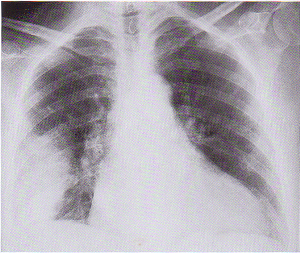 Pneumonia Pneumonia
Infection of the lung giving rise to cough, purulent sputum, fever, breathlessness and occasionally chest pain. Chest x-ray will show a single or multiple patches of consolidation. Antibiotics are necessary for this condition.
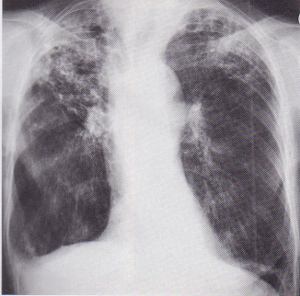 Pulmonary Tuberculosis Pulmonary Tuberculosis
It can present in an acute form of pneumonia with acute symptoms of fever, cough, purulent sputum and breathlessness. More often it presents as a chronic form with prolonged cough, low grade fever, night sweats, loss of appetite, loss of weight and sometimes with blood stained sputum. Antibiotics are needed for a minimum of 6 months.
Acute Bronchitis
It often presents as an irritating cough, fever, breathlessness with symptoms suggestive of asthma as it affects mainly the airways. Treatment is mainly symptomatic relief with cough mixture, bronchodilator and sometimes with antibiotics as well.
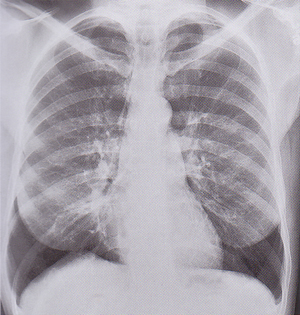 Bronchiectasis Bronchiectasis
A chronic lung condition with dilated and damaged airways as a result of repeated infections. Patients can present with chronic cough, purulent sputum, loss of weight, breathlessness and blood stained sputum. Antibiotics are often necessary for this condition.
Obstructive Lung Diseases
Asthma
It is a common condition in the young resulting in airways obstruction which is reversible with bronchodilator. Often this condition is inherited or due to allergy causing cough, sputum, shortness of breath, wheeze and chest tightness especially in the night. Treatment consists of bronchodilator to open up the constricted airways and steroid to reduce the airways inflammation and allergic reaction.
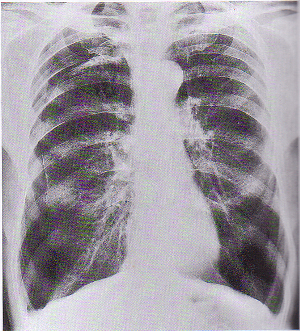 Chronic Obstructive Pulmonary Disease (COPD) Chronic Obstructive Pulmonary Disease (COPD)
It is usually caused by cigarette smoke resulting in permanent damage of the airways. Early symptoms consists of early morning cough and phlegm. Late symptoms are that of exertional breathlessness, increasing phlegm production and weight loss. Treatment consists of bronchodilators, mucolytics and antibiotics. However, to prevent further damage to the airways, patients must stop cigarette smoking.
Lung Cancer
Majority of lung cancer is due to cigarette smoking. Presentation of lung cancer is often a chronic cough with or without blood in the sputum or phlegm. However, in the female, there is a type of lung cancer called adenocarcinoma which is in the non-smoker middle age to elderly female. Early diagnosis of lung cancer through imaging can result in a cure.
Pulmonary Fibrosis
Lung condition leading to fibrosis as "hardening" of the lung tissue. It can be idiopathic i.e. of unknown cause or due to various causes e.g. autoimmune disease (SLE) inhalational injuries (acid) or drugs (Bleomycin). Treatment may not be very effective, otherwise, steroid is the mainstay of treatment.
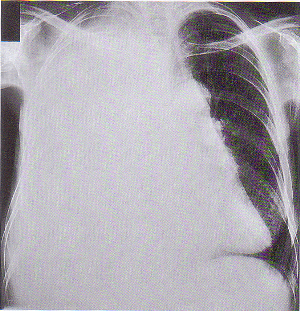 Pleural Effusions Pleural Effusions
Pleural effusion is commonly referred to as "water in the lungs". It is in fact outside the lung in the pleural cavity (potential space or sac between the inner and outer coverings of the lungs). Causes of the pleural effusion ranged from pneumonia (para pneumonic effusion), pulmonary tuberculosis (tuberculoused effusion) to that from lung cancer (malignant effusion). Treatment is usually drainage of the effusion with or without instillation of a sclerosing agent such as Tetracycline or Talc to close the potential space or sac.
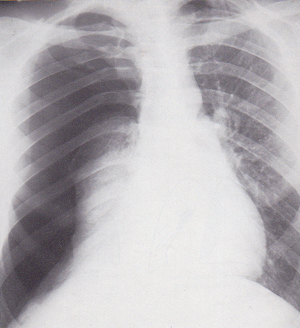 Pneumothorax Pneumothorax
It is due to a break or rupture in the lung tissue resulting in leakage of air into the potential space or sac between the inner and outer coverings of the lung. It can be idiopathic (no known cause) or in Marfan's Syndrome or COPD patients. Treatment is mainly to drain the air leakage by putting in a chest tube.
Obstructive Sleep Apnea (OSA)
It is a condition with narrowing of the upper airways i.e. in the pharyngeal airways resulting in night time snoring and daytime somnolence or sleepiness. It can be dangerous as patient can fall asleep while driving. Also prolonged hypoxia i.e. decrease in blood oxygenation in OSA can also lead to heart failure. Treatment is mainly medical i.e. avoidance of sedatives or alcohol at night, weight reduction and use of CPAP or BIPAP machine or surgical with widening of the pharyngeal airway.
|