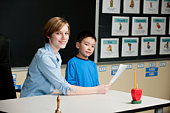
This is an exciting time of year?summer is coming to an end and a new school year is about to begin.
As teachers we are excited, anxious, and nervous?
What will our new class look like?what will my schedule look like?what will this new school year have in store for me?
Teachers around the country are gearing up for another year?getting their rooms set up?designing their lessons for the first weeks of school, making copies, getting in touch with parents etc?and all done with a great deal of excitement, energy, and enthusiasm!
Unfortunately, like every year, that energy starts to fade as the reality of teaching 130 students over 5 or 6 classes a day, every day starts to sink in'or, if you are an elementary teacher, the reality of having the same group of kids all day, every day, for 180 days.
Before you know it you are exhausted and so are your students?the honeymoon period of the first two weeks is over and students start to test the limits of your classroom.
Students start acting out, passing notes, talking when they're not supposed to, even getting into fights?
At this point many teachers start to search out various reward & punishment systems?(putting students names on the board who misbehave, putting check marks next to their names if they continue to misbehave, threats of referrals and detentions, placing marbles in jar when students are good, giving out raffle tickets etc.)
These are mistakes?
These elaborate reward/punishment systems will yield only temporary solutions to ongoing problems. Teachers should be more interested in long-term results rather than short-term results. Worst of all, those who are receiving the rewards are now working for the reward only and those receiving punishment start to resent school. Furthermore, punishment often leads to students seeking revenge, lowering of self esteem, and may even lead to students giving up on school. Often times we'll start to hear students say, "I hate school"
That's the last thing teachers want students to say!
Fortunately it doesn't have to be like this?
Instead of RE-acting to every disturbance teachers should be PRO-active and try to stop classroom disturbances BEFORE they start.
Teachers need to use strategies that increase student motivation, increase class participation, limit student confusion, and stop student procrastination. Basically teachers need to keep ALL of their students actively involved in ALL of their lessons.
This may sound like a difficult task, but it doesn't have to be?not if you use the proactive approach to classroom management.
When teachers use simple teaching strategies to keep their students involved in the lesson they will see an immediate and definite decrease in classroom management problems.
Best of all, these classroom management issues will decrease naturally. Remember, classroom management is not about creating an elaborate system of rewards and punishments. Classroom management is about keeping your students actively involved in every one of your lessons.
Back To School Classroom
Room mothers are usually responsible for planning and hosting holiday parties for the class. Unfortunately, teachers often don't provide much information or guidance, and children have high hopes for a fun party.
Here's what I've learned over the years to make it the most fun for everyone involved.
Know What To Ask The Teacher
Okay, you've volunteered to be a room mother... now what?
You've got to ask questions. I usually send in a note with the following questions, but you could also call the teacher and ask.
- What is the room mother responsible for?
- Are there other parent volunteers?
- How many parties will there be?
- When will they take place?
- Are the parties for the holidays or are they "generic" like a Winter party instead of a Christmas party?
- Is there are budget or is each party donation based?
- How many children are in the class?
- Are siblings welcome?
- Are there any food allergies?
- Do any of the children have any physical disabilities?
- How much time will be allotted for the party?
- When will it start and end?
- Are decorations necessary?
- Are paper supplies like napkins, plates, and cups available through the school cafeteria?
- What activities do you prefer for the party? (Usually there is food, a craft project, and a few games, but your teacher may have a different idea.)
- Will any classroom supplies be available for the party? (Scissors, glue, paper, etc.)
- Is music allowed? (Some classes are too close together to allow for music during the party.)
- Can classroom furniture be moved around?
- Do you have any food preferences or are there any rules about the food? (Our school requires all food brought into the school to be commercially prepared.)
- Will you have access to a refrigerator and/or freezer?
- Are goodie bags appropriate?
- When will you be able to set up for the party?
- If you're hosting a Halloween party or other special event, be sure to ask about costumes or other things relevant to the party.
Once You Have The Answers...
Once you have a good idea of what is expected, it's time to start planning the first party. Try to allow yourself at least three weeks to pull it all together.
Write out your party plan. Be sure to include food, supplies, crafts, and any props you'll need for the party games. Once that's done, you should send out requests for help.
If you need to have other parent volunteers on the party day or you would like parents to send in food and supplies, you'll want to send out your requests for help at least a week or two before the party. Keep a list of who is bringing what and be sure to follow up and remind them the day before the party.
Prepare Ahead As Much As Possible
Preparation is really the key to a successful party. Here are a few tips...
If you plan a craft, have items pre-cut if necessary. Put individual craft supplies into sandwich bags and create one bag for each child to make it easy to pass them out and get started. Be sure to have extra supplies on hand to handle accidents. You should also make up one of the crafts ahead of time so you can show them what they will be making.
If you plan to have goodie bags for the children, prepare them ahead of time and make sure you have one for each child. You may also want to have a couple extra on hand.
Make sure you have a couple of food choices on hand so that everyone will have something that they like. It usually works well to have something sweet, something salty, and a couple of healthy choices like fruit or veggies. Don't forget the drinks.
In addition, you'll want to make sure to have plenty of napkins, cups and plates available. Bring along a roll of paper towels in case there are spills or accidents.
The Day of The Party...
Get there early to set up. You may not have a lot of setup to do, but you'll at least need to set up the food. It will also take some time to bring everything in from the car. Many parents use a wagon to help them get everything into the classroom.
Display all the food for the children to see... you want to try to keep them excited. In addition, you'll want to set up game props, craft supplies, etc. before the party. Children won't be able to wait around for you to get your act together when it's party time.
This is also a good time to let your party helpers (parent volunteers) know what they can do to help out with the party.
One last preparation tip - bring along a couple of trash bags. Clean up as you go as much as possible... picking things up as you go will make spills and accidents less likely and after party cleanup will be a snap.
It's Party Time!
You've done your homework and planned everything out... now it's time to follow your plan and enjoy the party. Be sure to take pictures (they make great classroom gifts later on) and interact with the children. Don't be afraid to talk to them and help them if they need it.
Most of all, try to have fun! If you're having fun and smiling, the kids will have a ball.
Don't forget to pass out the goodie bags at the end of the party!
After The Party
Clean up all the food, pack away the left-overs(unless the teachers or other parents want to take them home), and try to leave the classroom as clean as it was when you arrived.
Last, but not least, thank the parent volunteers and the teachers for their help!
Both Adam Waxler & Chris Yates are contributors for EditorialToday. The above articles have been edited for relevancy and timeliness. All write-ups, reviews, tips and guides published by EditorialToday.com and its partners or affiliates are for informational purposes only. They should not be used for any legal or any other type of advice. We do not endorse any author, contributor, writer or article posted by our team.
Adam Waxler has sinced written about articles on various topics from Lose Weight, Interview Questions and Arthritis Signs. It has never been easier to learn the proactive approach to classroom management! Adam Waxler, a full-time social studies teacher and adjunct education professor, has developed a FREE 5-part classroom management e-course. Learn simple classroom management. Adam Waxler's top article generates over 6600 views. to your Favourites.
Adenoid Cystic Carcinoma Breast Radio frequency ablation is a relatively new technique in the treatment of cancers, generally soft-tissue areas such as the liver and lungs, especially ones that make normal surgery not an option