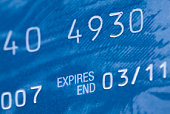
A leading high street bank is introducing new technology that will mean every credit card transaction is examined for fraudulent activity. The programme will affect 10 million credit card accounts and millions of transactions. But as a result, more legitimate transactions will be queried or even cancelled.
It is a fact that card fraud is on the up - it rose 15 per cent in the first half of the year and fraudulent transactions abroad now account for 40per cent of all credit card crime. It is not surprising therefore, that travellers are being advised to take several different payment methods when they go abroad such as cash, travellers' cheques and cards.
Banks previously checked around one quarter of all card transactions but the new system now means all card transactions will be screened in real time, with an acceptance decision made in a tiny fraction of a second. When you insert your card in a machine it now carries out an automatic check against your normal usage patterns and makes a decision about whether that transaction looks real or potentially fraudulent.
For a few years chip and pin technology was successful in reducing fraud but now professional fraudsters have worked a way round it, so card operators are now looking at more sophisticated means of combating the problem.
The problem is that as the banks become more proactive in targeting fraudsters, more legitimate transactions are being queried or declined. And it's not worth telling the bank you're going on holiday. As the whole process is automated, manual over-rides are excluded. This means that you're likely to have your card blocked as soon as you use it abroad.
But a spokesperson from the card issuers' trade body the APACS, said it was something consumers would have to accept. If people expect their banks to prevent fraud we have to expect that from time to time, we have to expect transactions to be periodically queried or card declined, especially abroad. That's a price the banks expect us to accept. So any transaction that is out of your ordinary pattern of expenditure can trigger the alarm bells at your bank.
A representative from ABTA, the travel agents' trade body, said that travellers cannot rely on their credit cards. Their advice is to take a range of payment methods when you go abroad. They suggest that you take cash for immediate expenses plus two cards, preferably from different banks. Then take some travellers' cheques as well for extra security if it goes wrong.
And if you have a mobile phone, take it abroad with you and put the customer care phone numbers for your credit cards into it before you leave. Then if a problem does arise, you may be able to sort it out without leaving the beach!
If you need the credit to finance your holiday, you can always pay for the cash and travellers cheques by credit card. You may be charged a service fee to this but it at least it means that you can have a good time and you can leave your credit card at home.
Credit Card Fraud Reporting
Many people are wary about using their credit cards, especially online, because of the possibility of becoming a victim of fraud. While fraud does happen, and costs hundreds of millions every year, there are some simple steps you can take to protect yourself and make it unlikely that you'll become a victim.
- Online use
The most important rule to follow is to only use your card online at trusted, secure sites. You can recognize a secure site by looking for a yellow padlock symbol appearing in your browser, and also by the address starting with 'https' rather than 'http'. Sites secured like this encrypt all the information sent back and forth to your browser, meaning that it's very dificult indeed for someone to spy out your credit card details.
Also make sure you're confident of the identity of the site asking for your details. Avoid any sites that send you an email asking for your card details - they might not be who they claim to be. It's better to phone the company direct to make sure their request is genuine.
You should never give out your card details in an email, as there is no encryption involved and there's always the danger that a fraudster could intercept your message and gain your details.
Finally in this section, make sure that your virus protection is up to date and that your computer is clean of any 'spyware'.
- Offline use
If at all possible, don't let the card out of your sight when paying, to reduce the opportunity for a fraudster to make a copy of your card. This is easier nowadays with the arrival of the handheld chip and pin input devices that are brought, for example, to your table in a restaurant.
It's advisable not to send card details by fax, as you've no control over how long the fax will be left unattended at the receiving end. A faxed copy of your card number, expiry date, security code and signature makes it altogether to easy for a scammer!
Only give your credit card number over the telephone if it was you who made the call, and you're certain that you're speaking to a genuine person. If someone calls you claiming to be from a company you deal with, and asks for your details, ask for a phone number to call them back on - via a switchboard operator if possible - and verify that the number is correct.
- General
There are several other measures you can take to reduce the chances of becoming a victim of credit card fraud, and most them are pretty much common sense. You should sign any new or replacement cards as soon as you receive them, and cut up the expired cards making sure to cut through the magnetic band on the back.
Never keep your pin numbers written down in your wallet or purse, as if you lose it or it's stolen a fraudster will have both your cards and their pins. Also, report any stolen or lost cards to the issuer immediately, so that they can be cancelled before falling into the wrong hands.
Open your statements and bills as soon as you receive them, and check them carefully for anything you don't recognise. If you spot something you're unsure of, call your card company straight away and ask them for more details. After checking your statements, either file them away somewhere safe, or shred or burn them. Never simply throw them away - they contain far too much valuable information that can be used for fraud purposes.
All this might seem like a lot of work, but remember that with most credit card accounts you won't be held liable for any fraudulent use so long as the fraud hasn't happened through your own negligence. Following the steps above is very powerful evidence to the card issuer that you've done everything possible to protect your account's security, so if you're unfortunate to become a fraud victim then the financial damage to you will be kept as small as possible.
Both Michael Challiner & Michael D. Strauss are contributors for EditorialToday. The above articles have been edited for relevancy and timeliness. All write-ups, reviews, tips and guides published by EditorialToday.com and its partners or affiliates are for informational purposes only. They should not be used for any legal or any other type of advice. We do not endorse any author, contributor, writer or article posted by our team.
Michael Challiner has sinced written about articles on various topics from Finances, Advertising Guide and Quit Smoking. Want a amazing deal on a loan, then visit Loan Helpdesk. At the Loan Helpdesk website you can read information and articles . Michael Challiner's top article generates over 165000 views. to your Favourites.
Michael D. Strauss has sinced written about articles on various topics from Credit Cards, A Secured Loan and Finances. Michael writes for Card Sense UK where you can compare and their features including. Michael D. Strauss's top article generates over 165000 views. to your Favourites.
Checking Account Overdraft Protection 10 dollars in much better than 30, dont you think? So if you are tired of acquiring overdraft charges and you have tried tracking your purchases, it may be a good idea to contact your institution ...