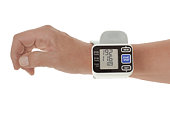
High blood pressure, or hypertension, is often characterized as the silent killer–and for good reason. Although it affects an estimated one in five North Americans, many people don’t experience any symptoms. As a result, less than one-quarter of sufferers actually receive treatment. Left untreated, however, it can severely damage the cardiovascular system, leading to death from stroke, heart attack or kidney failure.
Most high blood pressure patients are candidates for medications, including ACE inhibitors, beta-blockers, calcium channel blockers and diuretics. However, statistics show that of the 20 to 30 million individuals diagnosed with high blood pressure, less than half stay on their medication for more than one year. Moreover, 60 per cent of those who lower their medication do so because of side-effects. Given this information, the use of nutritional and botanical supplements, along with the adoption of a healthier lifestyle, can be of immense benefit in fighting this hidden killer.
Lifestyle and Dietary Approaches
If you wish to either prevent or treat high blood pressure, changing how you eat, sleep, and respond to stress are very important considerations. In the eight-week DASH trial conducted by the Heart, Lung and Blood Institute in 1997, 70 percent of volunteers who eliminated meat and sugar, decreased unhealthy fat intake, and increased fruit and vegetable consumption decreased blood pressure to below 140/90 mm/Hg compared to just 45 percent of those who only ate more fruits and vegetables.
Individuals with high blood pressure should decrease sodium intake to approximately three grams per day and add at least four daily servings of foods rich in potassium (beans, spinach, melon, potatoes, tomatoes, bananas, avocados). Decreasing sodium intake alone has reduced blood pressure by 8.4 mm/Hg systolic and 4.4 mm/Hg diastolic. Moreover, alcohol intake should be reduced to less than two drinks per day. Research has shown that a shift from five to two drinks daily can decrease blood pressure by 8 mm/Hg systolic and 4.4 mm/Hg diastolic.
A structured exercise program is another important factor. In one study, an average weight reduction of 4.5 kg by individuals who were 10 to 65 per cent overweight led to a significant reduction in systolic blood pressure after just six months. In addition, stopping smoking is a must for anyone diagnosed with hypertension.
Stress Management and Sleep
Those with high blood pressure need to employ stress management and relaxation techniques. This concept was investigated by Dr. D. Shapiro and associates from the department of psychiatry and bio behavioural sciences at the University Of California Los Angeles School Of Medicine. Individuals with a mild to moderate increase in blood pressure were given blood pressure-lowering medications and then divided at random into two groups. One group performed simple stress management techniques, while the other did not. Remarkably, 55 percent of those who employed stress-reducing strategies were able to remain medication free, compared to only 30 percent in the control group, as found after a one-year follow-up examination.
A good night’s sleep is also important. Researchers from the University of Pavia in Italy found that high blood pressure patients deprived of sleep had significant increases in blood pressures and heart rates, especially during the evening.
CoQ10, Magnesium and Fish Oil
Several supplements have proven to be of great value in the fight against hypertension. One is coenzyme Q10 (CoQ10), or ubiquinone. One study of 18 patients with high blood pressure concluded that 100 milligrams of CoQ10 daily for 10 weeks lowered systolic and diastolic blood pressure by 10.6 and 7.7 mm/Hg respectively.
In addition to CoQ10, 480 mg of magnesium oxide daily for two months decreased blood pressure on average by 2.5 mm/Hg systolic and 1.4 mm/Hg diastolic over 24 hours in individuals with mild to moderate hypertension. (Those employing magnesium therapy are cautioned that this may lead to episodes of diarrhea.)
Fish oils rich in the omega-3 fatty acids EPA and DHA are also helpful adjuncts in the control of blood pressure. Individuals with mild increases in blood pressure were given either two grams of EPA and 1.4 g of DHA from fish oil (approximately 12 1,000-mg capsules of an 18 percent EPA/12 percent DHA mixture) or a placebo every day for four months. After only eight weeks, blood pressure was reduced by 6 mm/Hg systolic and 5 mm/Hg diastolic. Individuals wishing to try this high-dose fish oil approach should also increase vitamin E intake to 800 IU per day.
Garlic and Reishi Mushroom
For those with mild to moderate elevations in blood pressure, garlic and reishi mushroom may be of value. The use of standardized garlic (Allium sativum) supplements at a dose of up to 900 mg per day for 12 to 16 weeks decreases both systolic and diastolic blood pressure in individuals with moderate elevations in blood pressure. In fact, one study concluded that garlic supplements decreased standing diastolic pressure from 101 to 90 mm/Hg and systolic pressure from 171 to 150 mm/Hg after 12 weeks.
Unlike garlic, the use of reishi mushroom (Ganoderma lucidum or Ling zhi in Chinese) in the treatment of hypertension is not well recognized. However, the conclusions of a recent trial suggest that it may be another helpful, natural, blood pressure-lowering agent. Fifty-five individuals on anti-hypertensive medications with moderate increases in blood pressure were given either 55 mg of concentrated reishi mushroom extract or a placebo, three times a day for one month. Unlike the 14 individuals in the placebo group, those taking the concentrated mushroom extract had a significant reduction in blood pressure.
In conclusion, high blood pressure is a serious problem that affects one in four adults. It is important that individuals afflicted with this problem adopt a healthy lifestyle that includes quitting smoking, reducing stress, eating better, losing weight and increasing exercise. These changes, along with the judicious use of supplements and herbal therapies, can help combat this silent killer.
Alistrol Natural Supplement
Alistrol is a patented, proprietary blend of natural ingredients that have been used for centuries to help support healthy blood pressure. Use Alistrol everyday to help maintain healthy circulation and support cardio-vascular health. Time-tested for safety, the herbal extracts in Alistrol have no known side effects.
Studies confirm this unique blend of natural ingredients support healthy heart function. Helps maintain healthy arteries, helps support blood flow and central and peripheral vascular circulation. Furthermore, Alistrol helps maintain blood flow to the heart and supports healthy blood pressure in the pulmonary artery and all arteries in general.
What is Blood Pressure?
Blood pressure is simply the pressure of blood against the walls of the main arteries. Two readings, systolic (when the heart is contracting) and diastolic (when the heart is relaxing), are measured by a device that records pressure changes in millimetres of mercury (mm/Hg). Various factors–age, stress, diet, exercise–will affect the readings. The following chart shows a continuum of blood pressure values including both healthy and unhealthy states.
Blood pressure
Systolic
Diastolic
Less than 120 mm/Hg
Less than 80 mm/Hg
Mild hypertension
140 to 159 mm/Hg
90 to 99 mm/Hg
Moderate hypertension
160 to 179 mm/Hg
100 to 109 mm/Hg
Severe hypertension
More than 180 mm/Hg
More than 110 mm/Hg
High Blood Pressure A Health
For the majority of people suffering from high blood pressure the only long-term solution is daily pills and frequent monitoring by your physician with alterations to your dose or changes in your pills as required. So just how much better would it be if you could simply have a vaccination for high blood pressure and dispense with your daily pills?
Nearly one in three Americans are presently suffering from high blood pressure but, as a result of the complex mix of drugs often required for treatment, only some one third of those people in fact have got their blood pressure under control. However, this may be set to change.
In a trial conducted earlier this year (2007) 72 patients (65 men and 7 women with an average age of just over 51) suffering from mild or moderate hypertension were given a low dose (100 micrograms) vaccine, a high dose (300 micrograms) vaccine or a placebo. This process was repeated after a month and at the end of twelve weeks.
Two weeks after the last injection it was noted that the people injected with the high dose vaccine were showing a drop in excess of 5 mm Hg in their systolic blood pressure and nearly 3 mm Hg in their diastolic blood pressure reading.
More significant, it was also discovered that the typical, and occasionally dangerous, spike in blood pressure that occurs in the early morning between 5 am and 8 am was also reduced markedly by 25 mm Hg systolic and 13 mm Hg diastolic.
The individuals in the trial all tolerated the vaccine without difficulty and there were no safety issues during the course of the trial.
So precisely how does the vaccine work?
Presently blood pressure is treated using several drugs that are designed to act in different ways. Two of the classes of drugs in common use are angiotensin-converting enzyme (ACE) inhibitors (such as Lotensin, Mavik, Vasotec, Capoten, Altace, Prinivil, Accupril, Monopril and Zestril) and angiotensin-2 (AT-2) receptor blockers (such as Atacand, Avapro, Micardis and Teveten). These drugs block the action of a hormone that causes the blood vessels to constrict and therefore to raise the pressure within the blood vessels.
The vaccine used in the trial, which is called CYT006-ANgQb, works in precisely the same way as these two presently used drugs and so could clearly be an alternative for those people whose condition is now treated with ACE inhibitors or AT-2 receptor blockers.
But what about those people whose blood pressure is currently being treated using the alternatives of beta blockers (such as Sectral, Lopressor, Betapace, Toprol XL, Kerlone, Corgard, Ziac, Inderal, Blocadren, Tenormin and Zebeta) or calcium channel blockers (such as Norvasc, Lotrel, Vascor, Isoptin, Calan, Adalat, Sular, Cardizem, Procardia, Plendil, Tiazac, Nimotop and Verelan)?
Well, it is very early days yet and further trials will be necessary before we see a vaccine in everyday use to control high blood pressure. However, if the researchers are right, it is likely that this vaccine is going to be effective for the majority of sufferers, regardless of the treatment presently being given.
Only time will tell, but this is obviously a very encouraging development.
Both Article Manager & Donald Saunders are contributors for EditorialToday. The above articles have been edited for relevancy and timeliness. All write-ups, reviews, tips and guides published by EditorialToday.com and its partners or affiliates are for informational purposes only. They should not be used for any legal or any other type of advice. We do not endorse any author, contributor, writer or article posted by our team.
Article Manager has sinced written about articles on various topics from Medicine, Travel and Leisure and Other Conditions. Hypertension or is a leading cause of coronary artery disease and stroke of heart.. Article Manager's top article generates over 135000 views. to your Favourites.
Donald Saunders has sinced written about articles on various topics from Health Insurance, Forex Training and Diabetes Treatment. TheBloodPressureCenter.com provides information on a wide range of topics including and. Donald Saunders's top article generates over 165000 views. to your Favourites.
Anti Aging Night Creams Word-of-mouth can usually be trusted when it comes to night creams, and one can enjoy the sensation of knowing how much the night cream will do, while he or she dozes off peacefully for the night