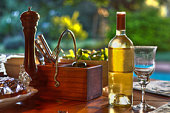
Which comes first - the food or the wine? This is a common debate at the Forster dinner table. I met my husband, Chef Michael Forster, at a food and wine pairing class eight years ago and we have been discussing the topic ever since. When we go out to dinner, I like to first select the wine and then pick an entr'e that works with my favorite wine. Michael instead thinks the food should come first and then the wine should be selected that enhances the dish. Just like any great relationship, we have both had to learn to balance and compromise to make these dining experiences fun for both of us. Understanding the concepts used for food and wine pairing can be quite similar to understanding the dynamics of personal relationships. Use the following tips to simplify your wine and food pairing decisions. These are the keys to creating the perfect match for your next meal.
? We have all heard the sayings "opposites attract," or the converse, "complementary partners make the best matches." Sound like relationship advice? Well it is, but these rules can also be used to create successful food and wine pairings. The Contrasting method uses diverse flavors to play off each other, e.g., when pairing a dry red wine with a New York strip steak, the steaks? juiciness and the wines? dryness counteract each other. The Complementary method matches flavors to enhance them, e.g., rich foods with rich wines or powerful foods with powerful wines. For instance, try pairing a seafood dish in a creamy sauce with a rich, buttery Chardonnay. The richness of the wine will add to that of the dish giving real "power" to the pairing.
? Don't forget to match ?like weights.? No, I am not talking about weight lifting, but rather matching the weight of the wine with the weight of the foods. Light fare with lighter bodied, more delicate wines, and fuller bodied, more intense wines with bigger foods. This is actually one of the food and wine concepts that is most intuitive. Most of us wouldn't think to order a light, fruity Pinot Grigio with a New York Strip steak, or conversely, a glass of hearty Cabernet Sauvignon with a cold seafood salad. Compare it to choosing the right shoes for an outfit; Would you pick a strappy sandal for a conservative business suit? A chunky pump for a flowing floral number? Wine is an accessory that can really enhance your dining experience!
? Understanding the specific wine and flavor reactions that can occur will help in experimenting and creating your own perfect partners. Here are some key concepts:
*Salt lowers the perceived acid in wine. Acid in wine is that tangy or sour sensation you get on your tongue. Imagine biting a lemon that's acid. Salty foods will need higher acid wines. Try tasting a pinch of salt with both a crisp, high acid Sauvignon Blanc and a mellow, lower acid Chardonnay. Notice how each change in the presence of the salt. The acidity of the Sauvignon Blanc will soften but the Chardonnay will most likely end up losing most, if not all of its flavor.
*Tannins in red wines are softened by animal fats in things like meat, cheese, and butter. Tannins, a naturally astringent substances found in grape skins, are also found in some foods like walnuts. Tannins are perceived in our mouths as a sense of dryness. Highly tannic wines can make you feel like you have instant cottonmouth. Try eating a bunch of walnuts or red grapes?you'll end up getting the same sensation. Wines with firmer tannins are a natural pairing with fattier dishes likes red meats, cheeses or stews. Try a Cabernet Sauvignon that has firm tannins with a bite of steak and notice how it softens.
*Sweet wines tone down spicy foods whereas high alcohol dry wines will intensify the heat of spices. Try hot sauce with Moscato d'Asti (a sweet sparkler from Italy) or a slightly sweet Vouvray (a Chenin Blanc from France). Then try the same sauce with an oaky Chardonnay or Cabernet Sauvignon. The first two wines will tone down the heat whereas the last two will make the food taste even spicier.
*High acid wines with high acid foods will create a neutralizing effect rather than intensifying the sourness. Try a Sauvignon Blanc with goat cheese. Separately each is quite acidic, but as a couple they are fabulous!
? What do you do if you want to order one wine to make everyone happy? Often, we are out with friends and ordering totally different food, but we want to share a bottle of wine. There are two grapes that are considered to be "universal" (meaning they can stand up to most food choices). These are dry Riesling and Pinot Noir. They both have the right combination of fruit and acid to complement a wide variety of cuisine.
Remember that the best food and wine pairing is the one YOU like best . . . forget charts, rules, or offending the sommelier. Just like you might not like the men your Mom wanted to set you up with, you might not like the wine suggested by your server or sommelier. So, how do you learn what you like? Taste, taste and taste some more. Consider ordering a few different glasses with each course or experimenting at home to see what you like. You'll notice with a little practice, picking the perfect partner for any meal will come naturally!
?Laurie Forster, The Wine Coach?
International Food And Wine
If these rules are followed correctly your meal will be an experience to remember.
Rule 1: Drink what ever wine is you like the best. Now this sounds quite obvious, doesn't it? You could be shocked at how many wine drinkers get caught up in the notion that only select wines can be drunk with a select meal, this just isn't so! We all have our own wine preferences and when it comes to such wines we all know the wine we like to dine with.
Of course, if you do your research you will find various opinions and most of them will say the same thing, which certain wine goes with certain foods, but at the end of the day the choice of what wine to drink is really up to you, no matter what any review or guide says.
Rule 2: White wine with white meat or fish and red wine with red meat? Not always! For those who have some knowledge of wines will know that white wine goes with white meat and fish and red wine goes with red meat. But being stringent with the rules takes out all the joy of choosing a good wine you truly enjoy.
The pivotal point here is to have faith in your own sense's and what you consider as a good choice. Wine ought to do one of two things when you have a meal; complement or contrast. Not every dish containing fish is done the same way, so with this in mind why then should the white wine with fish rule be stuck to so much?
A good thing to do is consider the dish you are thinking about ordering or cooking, the way it is cooked, the various spices and seasonings added, then when you have considered the following choose a wine that will complement those elements or contrasts and you should end up with far more intense flavours and tastes.
Rule 3: Always read a wine label. Wines from different parts of the worlds are all different, again this sounds obvious, even the popular wines from merlots to Shiraz's and Cabernet's to zinfandels are all different in the way they are produced. A European merlot will be different from the merlot wines found in the states and Australia. A prudent move would be to really think about what you are going to order or what you have decided to cook and how it will be cooked.
In cooking there are many herbs and other things added to the dish, so the decision over what wine to have should follow this train of thought to make sure the wine will blend in well with these various flavours, if this is followed correctly then the meal should be such a memorable experience.
Apart from trying to find out where the wine was produced, it is also smart move to check out some local wineries and vineyards. On the wine label, the more abundant the information the better the wine will be. This will of course lead to one of the most deciding factors when choosing a wine, the price. The finer the wine the more expensive the wine is likely to be.
Both Laurie Forster & Mario Oreilly are contributors for EditorialToday. The above articles have been edited for relevancy and timeliness. All write-ups, reviews, tips and guides published by EditorialToday.com and its partners or affiliates are for informational purposes only. They should not be used for any legal or any other type of advice. We do not endorse any author, contributor, writer or article posted by our team.
Laurie Forster has sinced written about articles on various topics from Wine and Spirits. . Laurie Forster's top article generates over 4400 views. to your Favourites.
Mario Oreilly has sinced written about articles on various topics from Food And Drink, Family and Health. - For all you wine drinkers out there find the wine of your choice. Mario Oreilly's top article generates over 40500 views. to your Favourites.
Acne Free Scar Fade Remember that you can effectively treat acne just by taking good care of your body. Acne treatments are not all about buying antibiotics or drugs from local drugstores