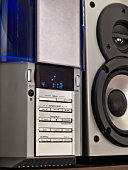
This part can be fun or boring depending on your interest. I will demonstrate an example system that builds a decent system. After that I will show you how to make trade offs and leave out parts that may not be as key to you to keep your system within your budget. I am describing a basic system, to go beyond that is past the scope of this book. Also, you do not have to get everything at once. I put my system together over a few years. With a little planning you can upgrade your system in installments and that way its like getting a brand new system every time you change something instead of getting everything at once!
Basic System:
This is my opinion only but I think that a good system should start off with a excellent head unit that either has a CD player and/or is connected to a CD changer. A good system sounds best when playing CDs, tapes just don’t cut it. Next I think component sets are made with fewer compromises than coaxial speakers. I advice getting a good midrange/tweeter set for the front. Head units don’t have enough power so you will need an amp to drive the component set. In the rear where you only need some "fill" for ambiance you can get away with affordable coaxials and set their level lower than the fronts to keep the sound stage in front. A modest (50x4) 4 channel amp is a good choice here for powering the component set up front and the rear speakers. You could use a good 2 channel amp and run the front and back in parallel on the amp but it would harder to adjust the level between them. Midranges sound best when they do not play bass so you will want a 2 way electronic crossover and use the high pass output to drive your 4 channel amp. I did not forget the bass! Most people are happy with a single 10" woofer or a pair of 12"s. Use an appropriate enclosure and a big amp (at least 75x2, preferably even more). Throw in installation and wiring accessories (like fuses and distribution blocks). Here's an approximate price break down of what this costs in my area. Your prices may be significantly different.
Head unit: $350-$550
4 channel amp for highs: $250-$400
2 channel amp for lows: $250-$650
sub(s) (1-10" to 2-12"): $150-$450
enclosure for sub(s): $0 (free air) - $250 (custom)
component set: $200-$500
coaxials for rear fill: $100-$400
crossover/equalizer: $100-$500
wiring and accessories: $50-$250
installation: $0 (do it yourself) - $100 (basic)
This comes out to $1500-$4000! This does seem steep to spend on a car audio but the things listed are necessary to have a top notch system. Try to find bargains and cut on things, for example if bass is not important to you, don’t buy the bass related items.
Please do not email me asking for recommendations about particular brands. I have not used all the equipment that is out there. I can give recommend components I have used, nothing more. When buying equipment try to spend time listening to it before you buy, especially with speakers. Also try to use equipment that is similar to yours when listening in a store. Try not to be be sold by incredible bargains. Typically these deals are too good to be true. Stick with good names with amps.
Finally, if you are on a inflexible budget (aren't we all?) it works better to upgrade in small steps. The most important thing is to have a car audio system that sounds good to you not someone else. Do not let a salesperson talk you into something you do not need! Good luck!
Before buying any component, plan your system very carefully.
Used Car Audio System
There was a time when automobiles did not have car audio system at all. These days, it is hard to find any type of automotive vehicle that does not have some sort of sound system built in or attached. Car audio systems are very important to most auto owners and the types of systems available have a very wide range. There are also many components that can be used to complete your audio system such as amplifiers, head units, speakers and auxiliary input devices that work together to provide you with a complete system that fits your needs.
An amplifier allows you to increase signals that are processed through the amplifier to make them audible. Basically, amplifiers can take a weak audio signal and boost it to generate a signal strong enough to use speakers. The size of the amplifier needed will be based on the system you are putting together.
Speakers tend to be the main component that is in focus when building a car audio system. Keep in mind that in order for your speakers to perform that their best capacity that you must have other equipment to support so there able to reach it. Various styles will have advantages and disadvantages. Speakers themselves are what take a digital signal and convert them to actual audio. Placement of speakers can also greatly affect the sound quality that the vehicle occupants are able to enjoy.
The head unit is what controls what you actually hear. This includes volume, tuning, bass, treble, and any equalizer options. This is also commonly the device in which you will insert your tape, cd, or input any sort of digital audio.
It is important not to "skimp" on any of these devices when building an audio system if you expect to have a premium sounding system. If any of these components are not quality or do not meet the requirements of your system you will notice when it is complete and at that point it could be costly to reinstall and purchase new equipment.
Purchasing such components online can be a very good way to cut the cost of the equipment. Commonly, car audio purchased from retail locations carry a very large margin so be sure to compare the prices online to your local retailers to see the huge difference. As far as installation goes, make sure you are working with a person or company that you can trust will do a good job with your vehicle along with charging you a reasonable price.
Both Professor Apex & Steven Cancel are contributors for EditorialToday. The above articles have been edited for relevancy and timeliness. All write-ups, reviews, tips and guides published by EditorialToday.com and its partners or affiliates are for informational purposes only. They should not be used for any legal or any other type of advice. We do not endorse any author, contributor, writer or article posted by our team.
Cost Of Acne Laser Treatment Excellent waxing services using a very high-grade, mint oil-infused stripless wax, top-notch laser hair removal, acne laser treatments and skin rejuvenation.