A solar oven is pretty much what it sounds like. It is used to cook food and sterilize water. Most people do not even know they exist, but they are an effective way to cook from both an economic and efficiency point of view.
The basic idea with a solar cooking is to create a box like structure that the sun heats up dramatically. If you have sat in a car in rush hour during the summer, you know the sun can generate a lot of heat. Instead of cooking you in a car, a solar oven focuses on food.
So, how do we cook with it? The box structure is created with dark paneling and then covered with a clear glass or plastic top after pots and food or water has been inserted. The structure is sealed. Much like a car, the sunlight beats through the clear top and heats the interior of the box. As the heat rises, it cooks the items inside. Yes, it produces more than enough heat to do the job. It really is as simple as that.
There are three general types of solar ovens. A solar box works as described in the previous paragraph. A panel oven uses reflective surfaces to focus the sun on a pot to create heat and cook the material inside. A parabolic version is designed to focus the sunlight into the bottom of a concave area upon which sits pots. There are variations of these three forms, but all solar cooking designs are derived from these basic forms.
While cooking with the sun is a fun and efficient, most people will never apply it in their home because of obvious design issues. At a cabin or when camping, however, it is a perfect solution.
The Power Of The Sun
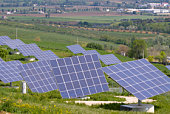
Germany and Japan are often cloudy or foggy but is where most solar panels now sold in the United States are produced. Because of the way solar modules produce power from direct, diffused and reflected light it works great in these conditions. A very high performing solar array can be found on a foggy beach in California.
Measuring Light and How Solar Panels Use It
The following terms related to different aspects of light and their characteristics as they come in contact with different physical formations on Earth. The definitions below will help explain how some residential solar energy systems seemingly in areas with poor sun quality can actually achieve respectable power output.
Irradiance - The rate of solar radiation falling on a given area at a moment in time. Irradiance is measured in units of kW/m2 (read kilowatts per square meter).
Irradiation - The amount of solar energy over time. Irradiation is measured in units of kWh/m2/day and read kilowatt-hours per square meter per day. Different locations through the United States (and the World) have different levels of irradiation. As in previous articles, you can find many maps on the Internet that will show the average annual solar irradiation throughout the United States.
Light Characteristics and Solar Fundamentals
Deflection - The amount of light lost when the solar panels aren't facing the sun squarely as the sun moves across the sky. This loss of light is called deflection. Even though solar cells are etched on the surface into little pyramids to collect light from all angles, coated with a light diffusing coating, and protected with light diffusing glass, more light is deflected when the sun is not directly in front of the panels.
Spectral distribution - The bulk of the solar light spectrum which reaches the Earth's surface is ideally suited for conversion by solar (PV) cells into electrical energy.
The Sun's Position as It Relates to Solar Energy Systems
Two coordinates describe the position of the sun at any given time. These coordinates allow solar technicians to calculate and orientate the solar panels to optimal attract and convert the sun's light into solar generated electricity.
Azimuth - Describes the direction from east to west in degrees (°). North is 0 degrees. East is 90 degrees. South is 180 degrees. West is 270 degrees. This orientation is similar to what can be seen when looking at a compass with all of the degrees marked on its face.
Altitude - Measures how high the Sun is from horizon to zenith. Altitude is measured in degrees as well. Altitude is essentially the height the sun is in the sky. Just like a plane has an altitude that it travels at across the sky as it is measured above the horizon. So does the sun.
Irradiation Example for a Solar Energy System
In the coast area of California, residential solar energy systems are sized using an average of 5.5 sun hours per day. More often than not, most people think or comment that their house gets more like 8 to 15 hours of sunlight per day. This is true but sunlight is different than solar sun hours per day.
The number of hours per day that your house receives direct sunlight must take into account challenges like fog, rainy days, number of night hours, and deflection or the amount of light not converting to energy. The sun hour ratings listed for different places throughout the United States is the amount of solar irradiation available to be converted into electricity by a fixed mounted solar array facing true south at the optimal tilt angle. A solar module produces its full rated power only when in direct sunlight, so when the sun is to the East or the West of the module it is not at full production.
reThinking the Economics of Residential Solar Energy
Doing your part to choose green, solar power can be a bit confusing and complex at times. There are many terms, aspects of the installation, and details about your sun light hours per day that all influence decisions to upgrade your home to solar energy. A very interesting and attractive option currently development in the solar market is the option to rent a residential solar energy system versus having to pay out up to $40,000 for your own solar panels and related equipment.
The economics of residential solar power have changed. Every American homeowner can decide to upgrade to solar energy and avoid large purchase of a solar energy system. Solar energy system rental programs, of which many are new and just emerging, allow the average mortgage holder the opportunity to rent a residential solar electric system without having to purchase an expensive solar system.
Both Richard Solare & Daniel Stouffer are contributors for EditorialToday. The above articles have been edited for relevancy and timeliness. All write-ups, reviews, tips and guides published by EditorialToday.com and its partners or affiliates are for informational purposes only. They should not be used for any legal or any other type of advice. We do not endorse any author, contributor, writer or article posted by our team.
Richard Solare has sinced written about articles on various topics from Family Travel, Home and Home Improvement. Rick Chapo is with SolarCompanies.com, a directory of companies.. Richard Solare's top article generates over 246000 views. to your Favourites.
Daniel Stouffer has sinced written about articles on various topics from Blogging, Health and Entrepreneurship. At Solargies, we plan to make the right Eco-friendly, green solutions available to the American homeowners. My role involves the leadership, communication, and the education related to the adoption solar energy system rentals. We provide homeowners the op. Daniel Stouffer's top article generates over 27100 views. to your Favourites.
American Conquest Fight Back Cheats By limiting your exposure to chargebacks, you can continue growing your businesss revenue while confidently maintaining your merchant account